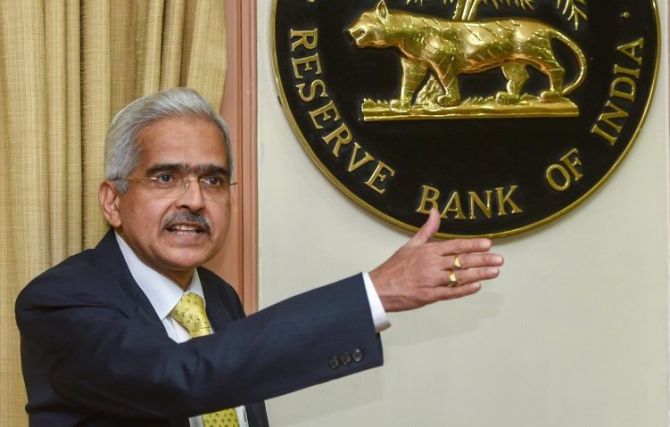
Mumbai/April,17: The Reserve Bank of India on Friday slashed the reverse repo rate, or the rate at which banks park their funds with the central bank, by 25 basis points to 3.75 per cent in order to force financial institutions to lend more.
Addressing the media via video-conference, RBI Governor Shaktikanta Das said the central bank was undertaking a fresh Rs 50,000 crore targeted long-term repo operation (LTRO 2.0) in order to address the liquidity stress of Non-Banking Finance Institutions and microfinance institutions. Banks availing these funds will be required to deploy the same within one month and 50 per cent of the money has been earmarked for midsized NBFCs and MFIs, according to the RBI.
Hinting at further rate cuts going forward, Das added that the inflation trajectory was likely to fall below its target within a
month or two. “….this will create more policy space for the RBI to better address the challenges posed by the Covid-19 outbreak and the lockdown to check its spread,” Das said.
The central bank governor added that the benefits of the earlier LTRO scheme went largely to public sector undertakings and large
corporations. The second version of the scheme would make more capital available to NBFCs and micro-finance sectors.
Das stated that the 90-day non-performing assets norm would not apply on moratorium granted on existing loans by banks.
The central bank also eased the liquidity coverage ratio (LCR) requirement of scheduled commercial banks from 100 per cent to 80 per
cent with immediate effect. LCR is the proportion of highly liquid assets held by a bank to ensure their ongoing ability to meet
short-term obligations. The relaxation is expected to free up more capital for the banks to lend.
The RBI Governor also announced a Rs 50,000 crore special finance facility to all-India financial institutions such as Nabard, Sidbi, NHB as they are not being able to raise fresh resources from the market.