Introduction| When Knowledge Loses Its Moral Purpose: Islam gives knowledge an exalted position and regards scholars as the inheritors of the Prophets. However, the possession of religious knowledge does not automatically make a person righteous, sincere or worthy of religious leadership. Knowledge is a sacred trust, and its true value lies in its ability to cultivate faith, humility, justice, wisdom and service to humanity. The Islamic intellectual tradition makes a significant distinction between Ulama al-Haqq (scholars of truth) and Ulama al-Su’ (scholars of evil). The former employ knowledge for the pleasure of Allah and the moral improvement of society, whereas the latter misuse religious learning for personal ambition, material gain, political influence, fame and self-aggrandisement. Pseudo-scholarship is particularly dangerous because it operates under the appearance of religious authority. It may employ Qur’anic quotations, Hadith, theological arguments and religious terminology while contradicting the ethical principles that these sources are intended to establish.
1. The Qur’anic Warning Against Knowledge Without Righteousness: The Qur’an establishes a close relationship between knowledge and consciousness of Allah: “Among His servants, only those who possess knowledge truly fear Allah” (35:28). This verse identifies reverence for Allah as an essential characteristic of authentic knowledge. A genuine scholar becomes increasingly humble as his understanding deepens. He recognises the limitations of human knowledge and does not regard intellectual achievement as a licence for arrogance or superiority. The Qur’an also criticises those who instruct others in righteousness while neglecting their own conduct (2:44). This warning is particularly relevant to religious scholars, preachers and teachers. Their credibility depends not merely upon what they communicate but also upon their willingness to practise the principles they advocate. Another significant warning appears in the Qur’an’s description of a person who takes personal desire as his deity (45:23). It reminds us that even knowledge can become ineffective when human desires dominate conscience and moral judgment. The fundamental problem of pseudo-scholarship is therefore not necessarily a lack of information; it is the subordination of knowledge to personal interests.
2. Characteristics Of Ulama al-Su’: Scholars of evil are those who misuse religious learning and authority in ways that undermine sincerity, justice and moral responsibility. Their conduct may include:
1. Pursuit Of Worldly Privileges: Using religious knowledge primarily to acquire wealth, prestigious positions, fame or influence.
2. Flattery Of Powerful Individuals: Concealing injustice or compromising truth to secure political or institutional favour.
3. Religious Manipulation: Employing Qur’anic verses and Prophetic traditions selectively to legitimise personal interests.
4. Arrogance And Self-Promotion: Treating themselves as unquestionable authorities and discouraging legitimate criticism.
5. Jealousy And Rivalry: Undermining other scholars because of their achievements, popularity or intellectual contributions.
6. Sectarian Exploitation: Encouraging hostility and division instead of promoting responsible disagreement and mutual respect.
7. Intellectual Dishonesty: Misrepresenting evidence, concealing relevant interpretations or attributing unauthenticated statements to the Prophet Muhammad.
8. Exploitation Of Ordinary Believers: Using people’s religious emotions and limited knowledge to obtain personal advantages.
Nevertheless, these characteristics must be assessed carefully. Receiving a salary, accepting an academic appointment, holding an administrative position or participating in public affairs does not automatically make someone a scholar of evil. The decisive question is whether worldly interests have displaced truth, sincerity and justice.
3. Prophetic Warnings Against the Misuse Of Knowledge: The Prophet Muhammad, peace and blessings be upon him, declared that scholars are the heirs of the Prophets. The Prophets did not leave behind gold and silver; their inheritance was knowledge. Whoever acquires this inheritance receives an abundant share (Sunan Abi Dawud, Hadith 3641; Jami al-Tirmidhi, Hadith 2682). This teaching establishes that scholarship is a responsibility rather than merely a source of status. Scholars must preserve and communicate Prophetic guidance with honesty and integrity. The Prophet also warned against acquiring religious knowledge exclusively for worldly advantage. A person who learns knowledge ordinarily sought for the pleasure of Allah but pursues it solely for worldly gain faces a grave spiritual warning (Sunan Abi Dawud, Hadith 3664). The significance of this teaching lies in the purity of intention. Legitimate remuneration for teaching or research is not condemned; rather, the corruption of religious scholarship through greed and ostentation is strongly discouraged. Another important narration in Sahih Muslim describes individuals whose apparently impressive religious deeds were motivated by the desire for public recognition rather than sincere devotion to Allah (Hadith 1905). It demonstrates that outward religious activity cannot substitute for purity of intention.
“When religious knowledge is exploited for wealth, power, or fame, it fails in its true purpose of guidance. The Muslim world requires sincere scholars who pair deep understanding of the Qur’an and Sunnah with moral courage, integrity, and compassion to uphold justice, resist corruption, and mentor youth. True scholarly greatness lies not in titles or popularity, but in humility, sincerity, and service to humanity as a divine trust—a standard the passage concludes by praying the Ummah upholds.”
4. Imam al-Ghazali’s Critique Of Worldly Scholars: Imam Abu Hamid al-Ghazali, in his celebrated Ihya Ulum al-Din, particularly the Book of Knowledge, offers a profound examination of the moral responsibilities of scholars. He distinguishes between scholars of this world and scholars of the Hereafter. Scholars of the Hereafter seek knowledge to improve their relationship with Allah, purify their character and benefit humanity. Their scholarship is accompanied by humility, sincerity, self-discipline and accountability. By contrast, worldly scholars may turn religious learning into an instrument of prestige, competition, wealth and influence. Their intellectual accomplishments become detached from the spiritual and ethical objectives of Islam. Al-Ghazali’s analysis is particularly relevant today. Academic degrees, publications, institutional positions and public recognition are valuable achievements, but they cannot independently establish moral or spiritual authority. The true measure of scholarship is the character and purpose reflected in its application.
5. The Disappearance Of Genuine Scholars: A major Prophetic warning concerning the future of Islamic knowledge appears in Sahih al-Bukhari and Sahih Muslim. The Prophet explained that Allah does not remove knowledge by taking it directly from people’s hearts; rather, knowledge is removed through the passing away of scholars. Eventually, ignorant individuals are appointed as religious leaders. They issue religious verdicts without adequate knowledge, misleading themselves and others (Sahih al-Bukhari, Hadith 100; Sahih Muslim, Hadith 2673). This Hadith highlights the danger of replacing genuine scholarship with superficial religious popularity. Eloquence, emotional speeches, social media visibility and institutional influence cannot substitute for sound learning, intellectual discipline and moral integrity. Muslim institutions must therefore preserve the writings, manuscripts, lectures, research and intellectual legacies of distinguished scholars while ensuring that younger generations receive rigorous and responsible education.
6. The Need For Intellectual Accountability: Islam commands respect for scholars but does not grant them infallibility. Their interpretations and arguments may be examined, questioned and critically evaluated in the light of the Qur’an and authentic Sunnah. It is equally important not to label individuals as pseudo-scholars merely because of sectarian differences, political disagreements, institutional affiliations or personal rivalries. Such judgments require reliable evidence, fairness and careful consideration of context. A genuine intellectual culture distinguishes between criticism of an argument and condemnation of the person presenting it. It encourages scholarly dialogue, recognises legitimate differences and rejects personal attacks.
Conclusion: Restoring Sincerity, Moral Authority: The phenomenon of Ulama al-Su’ represents a serious challenge to the moral and intellectual health of the Muslim Ummah. When religious knowledge is manipulated for wealth, power, fame or personal advantage, it loses its essential purpose and can become an instrument of exploitation rather than guidance. The Muslim world needs scholars who combine profound knowledge of the Qur’an and Sunnah with intellectual integrity, spiritual consciousness, moral courage and social responsibility. They must defend justice, resist corruption, encourage critical thinking and guide younger generations through wisdom and compassion. The genuine scholar regards knowledge as a divine trust, leadership as a responsibility and service to humanity as an essential expression of faith. His greatness is not measured merely by titles, positions or popularity, but by sincerity, humility, justice and beneficial contribution. May Allah protect the Muslim Ummah from the misuse of religious knowledge, grant it sincere and righteous scholars, and enable those entrusted with religious leadership to remain faithful to truth, justice and the Prophetic tradition. Amin, O Lord of the Worlds.
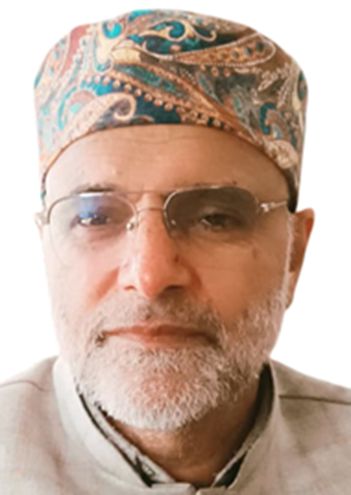
(The author a veteran academician is a former Professor and Head Department of Islamic Studies, Kashmir University. The views, opinions and conclusions expressed in this article are those of the author and aren’t necessarily in accord with the views of “Kashmir Horizon”)
[email protected]