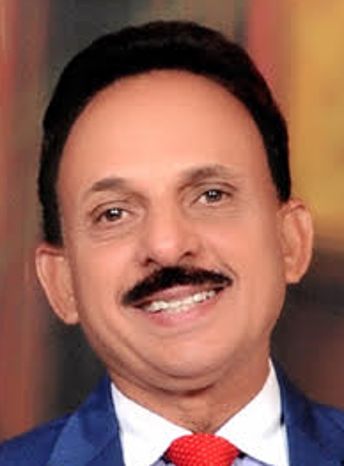
Prof R.K. Uppal
India’s higher education system is witnessing a remarkable expansion of doctoral education. Universities are awarding PhD degrees in increasing numbers, research enrolment is growing, and institutions frequently celebrate the number of scholars graduating under their supervision. However, an uncomfortable question deserves serious national attention: are we producing independent researchers capable of creating new knowledge, or are we merely producing more doctoral degree holders without adequate research competence? A PhD is supposed to represent the highest level of academic achievement, intellectual independence and original contribution to knowledge. Yet, growing concerns about research quality, practical competencies, employability and supervision suggest that the expansion of doctoral education must be accompanied by a much stronger commitment to excellence.
The expression “Half-Baked PhDs” may sound harsh, but it highlights a serious policy concern. A doctoral degree should not be treated as another academic certificate that can be acquired through routine coursework, submission of a thesis and completion of formal procedures. It must demonstrate the scholar’s ability to identify an important research problem, critically examine existing knowledge, apply appropriate methodologies, analyze evidence and produce findings that contribute meaningfully to society. When these essential abilities are missing, the credibility of the entire research ecosystem is weakened.
Recent findings have raised questions about the preparedness of doctoral scholars for the demands of contemporary research and employment. A survey involving 959 PhD scholars reportedly identified gaps in digital research competencies. Interviews with 41 PhD supervisors highlighted 44 essential employability skills and concerns about the effectiveness of doctoral coursework. Another finding indicated that only 2 per cent of surveyed employers intended to recruit fresh PhD graduates, while the placement rate among participating IIT Bombay PhD candidates in 2024–25 was reported at 19.25 per cent. These findings relate to specific samples and should not be generalized to every doctoral scholar or institution. Nevertheless, they deserve attention because they raise important questions about the relationship between doctoral training, research capabilities and career opportunities.
One of the major weaknesses in doctoral education is the growing tendency to measure research performance through quantity rather than quality. The number of publications, conference presentations, citations and completed theses often becomes more important than the originality and practical significance of research. In some cases, scholars are encouraged to produce multiple papers merely to satisfy institutional requirements. This creates opportunities for repetitive research, superficial publications and questionable academic practices. Research should not become a paperwork exercise or a race to accumulate publication certificates. Its real purpose is to discover, question, innovate and contribute to the advancement of knowledge.
“The article examines the growing concerns surrounding the quality of doctoral education in India, including inadequate research skills, weak digital competencies, ineffective supervision, publication pressure, limited employability and insufficient research infrastructure. It questions whether universities are producing independent researchers and innovators or merely increasing the number of PhD degree holders. It calls for urgent reforms to ensure research originality, practical training, ethical supervision and meaningful contributions to society.”
The quality of doctoral supervision is equally important. A supervisor is not merely an authority who approves research proposals, signs progress reports or evaluates a thesis. A supervisor must be a mentor who develops the intellectual confidence, analytical abilities and independent thinking of young researchers. Unfortunately, inadequate mentoring, excessive workloads, poor communication and misuse of supervisory authority can damage the research environment. Universities must establish transparent supervision systems, regular progress reviews, effective grievance mechanisms and accountability for both scholars and supervisors. Academic freedom and mutual respect must form the foundation of the supervisor-scholar relationship.
The University Grants Commission, AICTE and other regulatory bodies must strengthen quality assurance in doctoral education. Accreditation and institutional assessments should give greater weight to research originality, ethical standards, and publications in credible journals, patents, innovation, societal impact and graduate outcomes. Universities should periodically review their doctoral programmes and discontinue practices that encourage mechanical compliance rather than intellectual development. Doctoral coursework must be practical, interdisciplinary and relevant to emerging research challenges.
India’s ambition to become a knowledge-driven economy and achieve Viksit Bharat 2047 cannot be fulfilled through an expansion of academic qualifications alone. The country needs researchers who can develop new technologies, improve public institutions, strengthen industries, address social challenges and contribute to global knowledge. A PhD must represent intellectual maturity, not merely academic seniority.
The time has come to move from PhD production to research excellence. Universities must stop treating doctoral degrees as indicators of institutional success without examining what scholars actually contribute. Supervisors must become mentors, coursework must develop practical competencies, and research must be connected with innovation and societal needs. The objective should not be to produce the largest number of PhDs, but to develop the most capable researchers.
India does not need more doctoral degrees without substance. It needs original ideas, credible research, responsible scholars and meaningful innovation. A PhD should be a symbol of excellence, not a certificate of procedural completion. The real question is not how many PhDs India produces every year, but how many of them create knowledge that makes a difference. The future of Indian research depends not on the quantity of PhDs, but on their quality. Is India Producing Doctoral Degree Holders Without Research Excellence?
(The author is Principal, Guru Gobind Singh College of Management and Technology, Gidderbaha, Punjab. The views, opinions and conclusions expressed in this article are those of the author and aren’t necessarily in accord with the views of “Kashmir Horizon”)
[email protected]