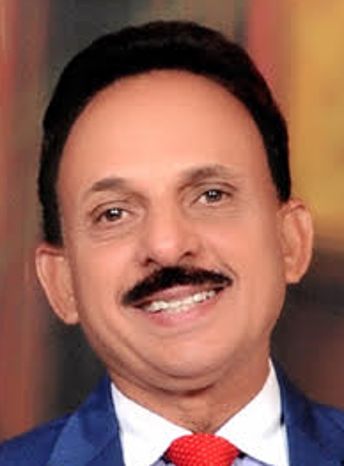
Prof R.K. Uppal
Higher education is supposed to be a mission of knowledge creation, intellectual development, research and nation-building. Universities are expected to nurture critical thinking, encourage innovation and prepare young people for responsible citizenship. However, an uncomfortable question is emerging in India’s private higher education sector: Are professors being appointed to teach students, or are they increasingly being employed to sell education? The growing pressure of admission targets, revenue generation, administrative compliance and institutional marketing is creating an uncertain professional environment for faculty members. For many educators, the challenge is no longer simply to teach and conduct research but to meet management expectations and somehow survive.
The commercialization of higher education has gradually changed the relationship between university management and faculty. In several institutions, professors are increasingly assessed not merely on teaching effectiveness, research contributions, academic mentoring or student outcomes but also on their ability to generate admissions, promote institutional programmes, contact prospective students and achieve enrolment targets. Faculty members are sometimes expected to participate in telephone campaigns, visit schools, persuade parents, promote courses and contribute to institutional marketing activities. Another disturbing issue is the widening gap between responsibilities and remuneration. Many faculty members work under demanding conditions while receiving salaries that do not adequately reflect their qualifications, experience and workload. Contractual appointments, temporary employment, delayed payments and limited career progression create additional uncertainty. Experienced academicians who have devoted decades to teaching and research may find themselves working under conditions that offer little professional security. The result is frustration, declining motivation and the gradual erosion of academic commitment.
Toxic management practices further complicate the situation. Excessive monitoring, intimidating communication, public humiliation, unrealistic deadlines, unnecessary reporting requirements and unilateral administrative decisions can create an unhealthy institutional atmosphere. In some workplaces, disagreement with management is interpreted as disloyalty, while constructive criticism is discouraged. Academic professionals are expected to follow instructions without questioning their feasibility or consequences. Such an environment damages trust, discourages innovation and weakens institutional governance.
The consequences extend far beyond faculty members. Students ultimately suffer when teachers are overburdened with non-academic responsibilities. A professor occupied with admission campaigns, promotional activities and administrative targets has less time for classroom preparation, individual mentoring, research supervision and curriculum innovation. Educational quality cannot be measured merely through admission numbers, fee collection or infrastructure development. The real strength of a university lies in the quality of its teachers, research output, learning environment and graduate competencies.
“The article examines the growing exploitation of faculty members in private universities, highlighting toxic management practices, unrealistic admission targets, low salaries, job insecurity, excessive administrative pressure and declining academic freedom. It questions the commercialization of higher education and calls for faculty dignity, transparent management, fair employment policies and an academic environment that prioritizes teaching, research and educational excellence over revenue generation.”
Private universities have an important role in expanding educational opportunities, introducing innovative programmes, attracting investment and strengthening India’s human capital. Their contribution should not be undermined. Many institutions maintain professional academic environments and provide valuable opportunities to students and faculty. However, commercial sustainability must not become an excuse for compromising employment dignity, academic standards and institutional ethics. Education is an economic activity in terms of resource requirements, but its fundamental purpose must remain educational and social development.
Who will protect the professors? This question deserves serious attention from the University Grants Commission, AICTE, state governments, university authorities and other regulatory bodies. There is a need for transparent faculty recruitment policies, timely salary payments, reasonable workloads, written employment conditions and independent grievance-redressal mechanisms. Admission targets and marketing responsibilities should not become arbitrary measures of a professor’s academic competence. Faculty appraisal must give priority to teaching quality, research, innovation, student mentoring and institutional contribution.
Private universities should establish clear distinctions between academic responsibilities and commercial or administrative functions. Dedicated admission and marketing professionals should handle institutional recruitment activities, while faculty members should be allowed to concentrate primarily on teaching, research and academic development. Management must also promote respectful communication, participative decision-making and a culture in which professional disagreement is not treated as misconduct.
India’s ambition to become a global knowledge economy under Viksit Bharat 2047 cannot be achieved by producing degrees alone. It requires motivated teachers, independent researchers, respected academic professionals and institutions committed to excellence. No university can achieve international standards while neglecting the dignity and security of its faculty.
The fundamental question remains – Should a professor teach, sell or simply struggle to survive? A university that cannot respect its teachers cannot genuinely claim to respect education. The future of Indian higher education will depend not only on buildings, rankings, and infrastructure and admission figures but also on whether its teachers can work with dignity, freedom, security and professional satisfaction. The future of universities must be built on academic excellence, not academic exploitation.
(The author is Principal, Guru Gobind Singh College of Management and Technology, Gidderbaha, Punjab. The views, opinions and conclusions expressed in this article are those of the author and aren’t necessarily in accord with the views of “Kashmir Horizon”)
[email protected]