“Prime Minister’s message reflected the wide scope of police responsibilities in a country as large and diverse as India. Police personnel are required to manage public gatherings, investigate offences, respond to disasters, protect vulnerable citizens and maintain order during situations that can change rapidly.…”
Mohammad Irfan
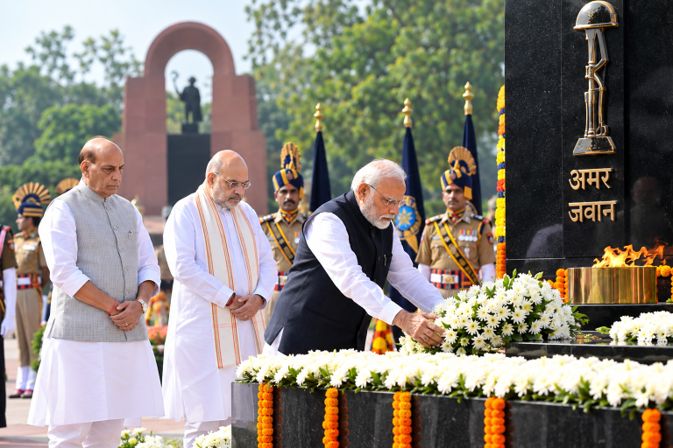
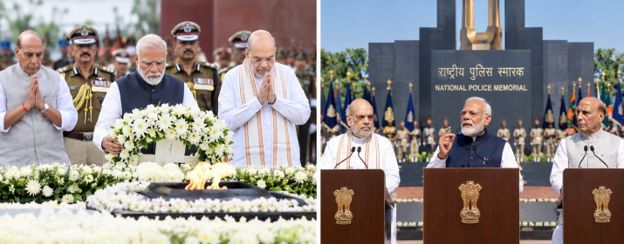 The sacrifices of police personnel, the changing nature of internal security threats and the responsibility of building a safer, more prosperous society emerged as central themes of Police Commemoration Day, as Prime Minister Narendra Modi, Union Home Minister Amit Shah and Defence Minister Rajnath Singh underscored the indispensable role of police and security forces in safeguarding India’s security and development. While PM Modi paid tribute to police personnel who lost their lives in the line of duty, Shah highlighted progress against terrorism and Left-Wing Extremism, setting December 31, 2029, as the target for eliminating the drug menace. Rajnath Singh, addressing the commemoration in 2025, had emphasised the relationship between security, public confidence, technological modernisation and the national ambition of becoming a developed country by 2047. Together, these messages present a broader understanding of policing: national security is not merely about preventing violence or confronting hostile elements; it also involves protecting citizens, strengthening institutions, ensuring justice and creating conditions in which communities can pursue education, livelihoods and development without fear. The occasion also provided an opportunity to reflect on the human cost of maintaining internal security and the responsibility of the state towards families whose loved ones made the supreme sacrifice.
A National Tribute To Extraordinary Service: In his message, Prime Minister Narendra Modi expressed gratitude to police personnel for their commitment under challenging circumstances, recognising their contribution to maintaining law and order, combating crime, responding to emergencies and protecting citizens. He paid solemn tribute to those who laid down their lives while performing their duties, stating that their courage, dedication and sacrifice would remain etched in the nation’s memory. The Prime Minister’s message reflected the wide scope of police responsibilities in a country as large and diverse as India. Police personnel are required to manage public gatherings, investigate offences, respond to disasters, protect vulnerable citizens and maintain order during situations that can change rapidly. Their contribution often becomes visible during major security incidents or emergencies, but much of their work takes place away from public attention. Routine patrols, investigations, crime prevention and assistance to citizens collectively sustain the sense of security necessary for everyday life. The significance of Police Commemoration Day therefore extends beyond remembering those who died in service. It recognises the institutional contribution of police personnel whose work enables communities, businesses, educational institutions and public services to function. The day also highlights the need to strengthen the working conditions, professional capabilities and welfare systems of those entrusted with these responsibilities.
Remembering The Origins Of Police Commemoration Day : Police Commemoration Day is observed annually on October 21 in memory of ten Central Reserve Police Force personnel who laid down their lives in 1959 while confronting an attack by heavily armed Chinese troops at Hot Springs in Ladakh. The incident became a defining moment in the history of police sacrifice and established the foundation for the annual observance.The National Police Memorial in New Delhi, inaugurated by Prime Minister Narendra Modi in 2018, serves as a national symbol of recognition for police personnel who have died in the line of duty. It provides a place where citizens can remember those whose service helped protect the country’s security and integrity. Addressing the commemoration in 2026, Shah said that 36,852 police personnel had made the supreme sacrifice since Independence, including 154 personnel during the year. Their names represent individual lives, families and communities permanently affected by the consequences of duty. The figures also underline the scale of responsibility carried by police organisations across the country, including state police forces, central armed police forces and specialised units deployed in difficult security environments. Home Minister Amit Shah said the nation remained indebted to the fallen personnel and their families, acknowledging that the loss of a loved one could never be adequately compensated. Such recognition carries an important public responsibility. Honouring the fallen must involve not only preserving their memory but also ensuring that their families receive timely assistance, financial security and access to essential services.
Security Gains Create Opportunities For Development: Shah described 2026 as a significant year for India’s internal security, pointing to the government’s announcement that Left-Wing Extremism had been eliminated by March 31, following decades of violence. He recalled that Naxal-related violence between 1981 and March 2026 had claimed more than 3,600 security personnel and approximately 13,700 civilians. The figures illustrate the human consequences of prolonged internal conflict and the importance of restoring stability in affected regions. Home Minister Shah credited the Chhattisgarh Police, Central Armed Police Forces, Central Reserve Police Force and its specialisedCoBRA battalion for their contribution to the campaign against Left-Wing Extremism. He also highlighted improvements in the internal security situation in Jammu and Kashmir and the Northeast, arguing that areas previously associated with prolonged conflict were increasingly positioned to pursue development. The broader significance of such changes lies in the opportunities that security improvements can create. Schools and colleges can operate more consistently, infrastructure projects can advance, businesses can invest and local communities can pursue economic activities with greater confidence. In areas affected by violence, the restoration of normalcy can also improve access to healthcare, administration and welfare programmes. However, the transition from security gains to sustained development requires continued attention to employment, education, connectivity, public services and the concerns of local communities. Security operations can reduce the immediate threat of violence, but lasting stability depends on institutions that remain accessible, responsive and capable of delivering tangible benefits. The challenge is to ensure that peace becomes a foundation for opportunity rather than simply a period of reduced conflict.
The Drug Menace| A National Priority: Home Minister Amit Shah announced a coordinated nationwide campaign against narcotics, setting December 31, 2029, as the target for making India free from the drug menace. He called upon police forces to dedicate the remaining months of 2026 and the following years to a determined campaign, describing narcotics as a threat to future generations, the economy and national security.He also warned that proceeds from drug-related activities could provide financial support to organisations engaged in anti-national activities.The announcement places drug trafficking within a wider framework of public health, organised crime and national security. For law enforcement agencies, the challenge involves identifying trafficking networks, tracing illicit financial transactions, improving coordination across jurisdictions and bringing those responsible to justice. Effective action requires cooperation among police forces, intelligence agencies, border authorities and other relevant institutions.Yet a successful anti-drug strategy cannot depend on enforcement alone. Substance dependence can affect individuals, families and communities, creating consequences for education, employment, physical well-being and social relationships. Prevention, early intervention, treatment and rehabilitation must therefore complement action against traffickers. Schools, colleges, healthcare institutions, community organisations and families can contribute through awareness programmes and support systems that encourage people to seek help. Young people, in particular, need access to credible information, counselling, recreational opportunities and meaningful educational and employment pathways.The 2029 target offers a clear national objective, but its effectiveness will ultimately depend on implementation, coordination and measurable improvements in both enforcement and prevention.The central test will be whether the campaign weakens organised trafficking networks while reducing the harm associated with substance abuse.
From Public Order To Public Trust : Defence Minister Rajnath Singh, addressing Police Commemoration Day in 2025, described police and military institutions as pillars of national security, emphasising that their responsibilities differ but contribute to the common objective of protecting the nation. He noted that the armed forces safeguard the country’s geographical integrity, while the police protect society and its internal security. Singh also highlighted the changing nature of crime, observing that organised criminal activity, terrorism and ideological conflicts could undermine social trust and institutional stability. His remarks placed public confidence at the centre of effective policing. A police force may possess operational strength and advanced equipment, but its long-term effectiveness also depends on the confidence citizens place in its fairness, professionalism and responsiveness. For ordinary citizens, policing is experienced through everyday interactions: the registration of complaints, the conduct of investigations, assistance during emergencies and the treatment of victims. When complaints are addressed promptly and investigations are conducted impartially, public confidence grows. When vulnerable citizens receive protection and legal procedures are followed consistently, the credibility of institutions improves. Citizen cooperation also becomes more effective when people believe that the law protects them fairly. This relationship is particularly important in a diverse society, where public order must be maintained alongside constitutional rights, individual dignity and the peaceful expression of differences.The wider objective is to build policing systems that are firm against crime, professional in their methods and accessible to the communities they serve.
“Digital systems can also support record management, complaint tracking and coordination between agencies, potentially reducing delays and improving administrative transparency….…..”
Modernisation For Emerging Security Challenges: Defence Minister Rajnath Singh highlighted improvements in police capabilities, including modern weapons, surveillance systems, drones, forensic laboratories and digital policing. He also stressed the need for coordination among security agencies and the effective utilisation of resources provided for police modernisation. These developments reflect the changing character of law enforcement. Criminal networks increasingly exploit digital platforms, financial systems and communication technologies, while investigations may require sophisticated forensic analysis and cooperation across geographical boundaries. Technology can improve the speed and accuracy of investigations, strengthen intelligence analysis and help police respond more efficiently to emergencies. Digital systems can also support record management, complaint tracking and coordination between agencies, potentially reducing delays and improving administrative transparency. However, modernisation requires more than purchasing equipment. Personnel must receive appropriate training, investigative procedures must be updated and institutions must develop the capacity to use technology responsibly. Data protection, lawful surveillance, evidence integrity and accountability are equally important. Technological tools should strengthen the rule of law rather than replace professional judgment or established legal safeguards. The effective integration of technology with skilled personnel can help police organisations respond to emerging threats while maintaining public confidence. For India’s development ambitions, a modern and capable police system is an important institutional asset, supporting economic activity, public safety and the reliable functioning of democratic processes.
Police Welfare Is Part Of National Security: The three leaders’ messages also draw attention to the people behind the uniform.Police personnel and central armed police forces often work long hours, serve away from their families and remain on duty during elections, festivals, protests, disasters and security operations. Home Minister Amit Shah specifically acknowledged the contribution of central forces deployed along borders and within the country, noting their role in maintaining security and enabling democratic processes. The sacrifices made by personnel also impose a lasting responsibility on the state towards their families.Financial assistance, timely settlement of benefits, educational support for children, healthcare access and counselling services can help families navigate the consequences of losing a loved one. Support should be accessible through clear procedures, with administrative delays minimised and families informed about their entitlements. The welfare of serving personnel is equally important. Adequate rest, training, equipment, housing, healthcare and opportunities for professional development contribute to morale and operational effectiveness. These measures are not separate from national security. Personnel who are properly equipped, professionally supported and confident in their institutions are better positioned to discharge demanding responsibilities. A culture of institutional care also strengthens recruitment, retention and public respect for police service. Commemoration becomes meaningful when the state’s gratitude is reflected in practical support for those who serve and those who bear the consequences of their sacrifice.
Partnership Between Police And Society: Singh emphasised that police and society are interdependent, arguing that effective policing requires citizens to cooperate with law enforcement and respect the law. This principle recognises that security cannot be sustained by institutions acting in isolation. Citizens can contribute by reporting offences, sharing credible information, resisting misinformation and participating in community initiatives aimed at preventing crime. Community engagement can help identify local concerns early, improve communication and strengthen cooperation between residents and law enforcement agencies.At the same time, police organisations must maintain impartiality, explain their actions where appropriate and provide accessible mechanisms for addressing grievances.Public trust grows when cooperation is based on mutual respect rather than fear or compulsion. Such partnerships can be particularly valuable in preventing drug abuse, protecting children, supporting victims of crime and resolving local disputes before they escalate. They also strengthen social resilience against attempts to spread hostility or disrupt communal harmony. The objective is not to transfer the responsibilities of law enforcement to citizens, but to build a relationship in which professional policing and responsible public participation reinforce each other.
The Road Towards Viksit Bharat: India’s ambition of becoming a developed nation by 2047 requires progress across economic, technological and social sectors. It also requires institutions capable of protecting citizens, enforcing the law and maintaining an environment conducive to development.The messages delivered on Police Commemoration Day connect these national ambitions with the everyday responsibilities of police personnel. Security creates the conditions in which infrastructure can expand, businesses can operate, educational institutions can function and communities can pursue opportunities. Public confidence, in turn, strengthens the legitimacy and effectiveness of institutions responsible for maintaining that security. The elimination of longstanding security threats, the prevention of narcotics-related harm and the modernisation of law enforcement can contribute to this broader objective.
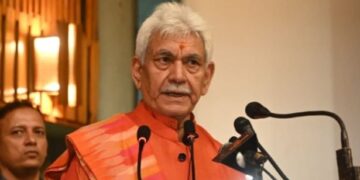
Kashmir Horizon View: Police Commemoration Day honours those who gave their lives in service of the nation, while reminding society that security is sustained through courage, professionalism and collective responsibility. Prime Minister Modi’s tribute recognised the invaluable contribution of police personnel. Shah highlighted the continuing fight against internal security threats and set a national target against the drug menace. Singh’s earlier address emphasised modernisation, public trust and the relationship between security and development. Sinha’s message brought these themes into the specific context of Jammu and Kashmir, with its continuing priorities of peace, counterterrorism, public safety and support for martyrs’ families. Together, these messages point towards a broader national objective: building institutions that can confront threats effectively while protecting citizens’ rights, strengthening social confidence and enabling development.
(“Team Kashmir Horizon” is committed to continuous improvement and invites feedback and suggestions from readers and its followers on social media sites. Reader insights are considered vital for enhancing content quality and empowering the community. The team encourages open communication and values the thoughts and ideas of its audience, believing that such input will enable them to serve the public more effectively. The initiative aims to ensure that readers have the best possible experience with “Kashmir Horizon”. Interested individuals can reach out to us via email at [email protected].)