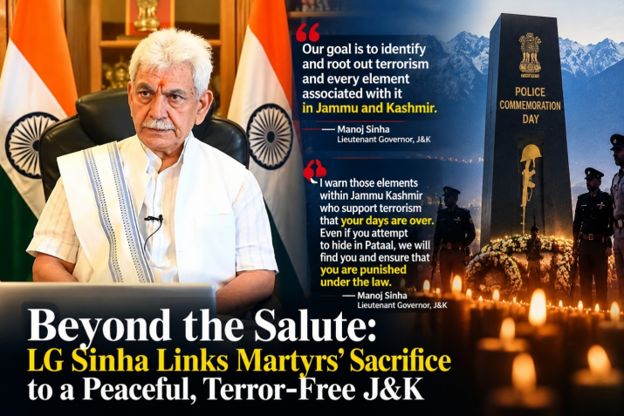
“ Our goal is to identify and root out terrorism and every element associated with it in Jammu Kashmir,” Sinha said, calling upon people to strengthen their resolve against separatist and terrorist elements……..”
Mohammad Irfan
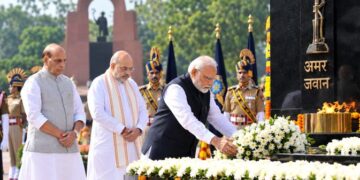
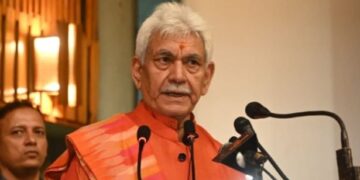
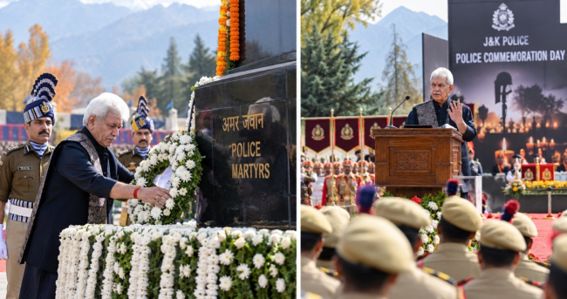 The Jammu and Kashmir Police’s long and difficult battle against terrorism, the sacrifices made by its personnel and the continuing challenge of safeguarding peace formed the centrepiece of Lieutenant Governor Manoj Sinha’s message on Police Commemoration Day on Wednesday, as he paid tribute to police personnel who laid down their lives in the line of duty. Remembering the courage, dedication and patriotism of the fallen personnel, Sinha described their sacrifice as an enduring source of inspiration for Jammu and Kashmir and the country. His message, however, extended beyond ceremonial remembrance, outlining a broader security and governance agenda that places the elimination of terrorism alongside public safety, the welfare of martyrs’ families, protection of vulnerable communities and the creation of conditions necessary for sustained development. The Lieutenant Governor’s address underscored a central proposition: peace in Jammu and Kashmir cannot be measured merely by the absence of violence. It must also be reflected in the safety of ordinary citizens, the protection of their rights, the availability of justice, the prevention of drug abuse and trafficking, and the ability of institutions to function without intimidation. At the same time, his firm warning to those supporting terrorism highlighted the administration’s stated determination to pursue terrorist networks and their support structures through law enforcement. “ Our goal is to identify and root out terrorism and every element associated with it in Jammu Kashmir,” Sinha said, calling upon people to strengthen their resolve against separatist and terrorist elements.
A Legacy Of Sacrifice: Police Commemoration Day is an occasion to remember personnel who have died while performing their duties. In Jammu and Kashmir, the observance carries particular significance because of the prolonged security challenges faced by the police and other security forces. The Jammu and Kashmir Police has operated in circumstances in which routine policing, counterterrorism operations, public order management and emergency response have often overlapped. Its personnel have been required to perform duties ranging from investigating ordinary crimes and maintaining public order to responding to terrorist violence and assisting civilians during natural disasters and other emergencies. Lt Governor Sinha acknowledged this wide-ranging responsibility, describing the force’s history as one marked by courage, discipline and an unwavering commitment to duty. “Thousands of personnel of the Jammu Kashmir Police force have laid down their lives in the fight against terrorism,” he said, adding that their contribution would remain an inspiration for the country. The significance of the tribute lies in recognising that the cost of counterterrorism is not borne exclusively by personnel deployed on the ground. It extends to their families, who must cope with the loss of loved ones and the permanent changes that follow.
Security Remains Central To The Peace Agenda: Lt Governor Sinha’s address placed the elimination of terrorism and its support networks at the centre of the security agenda. He called for a sustained effort to identify and dismantle the elements associated with terrorism and warned those providing support to terrorist activities that they would face action under the law. “I warn those elements within Jammu Kashmir who support terrorism that your days are over. Even if you attempt to hide in Pataal, we will find you and ensure that you are punished under the law,” he said. The statement reflects the administration’s emphasis on pursuing not only those directly involved in terrorist violence but also the networks that facilitate, finance or otherwise support such activities. From a governance perspective, the distinction is important. Terrorist violence can have consequences far beyond the immediate victims, disrupting economic activity, restricting movement, weakening public confidence and undermining the functioning of institutions. Its support structures can also complicate efforts to establish lasting stability. However, a durable security framework requires more than operational success. Intelligence-led policing, effective investigation, coordination among security agencies and timely prosecution are essential components of a sustainable response. Equally important is adherence to the law and due process. Effective counterterrorism depends on the ability of institutions to distinguish between criminal conduct and lawful activity, establish responsibility through evidence and ensure accountability through the justice system. Lt Governor Sinha’s emphasis on punishment under the law provides the legal framework within which the administration’s stated resolve must operate. The broader objective is to create an environment in which terrorism loses its capacity to intimidate citizens, disrupt daily life or undermine confidence in public institutions.
Police, Army And CAPFs Share The Responsibility: The Lieutenant Governor recognised the contributions of the Jammu and Kashmir Police, the Indian Army and the Central Armed Police Forces, describing their role in protecting the country’s security and integrity as particularly important during a period of national transformation. He noted that India was moving towards its ambition of becoming a developed nation and argued that peace, stability and progress in Jammu and Kashmir were essential to that journey. “In this journey, peace, stability, and progress in Jammu Kashmir are of special importance, and the major responsibility of ensuring them rests on the shoulders of the Police, army and CAPFs,” he said. The observation connects security with development. A stable environment allows educational institutions to operate, businesses to expand, tourists to travel, public services to reach communities and young people to pursue opportunities without the disruption caused by violence. For Jammu and Kashmir, where livelihoods in sectors such as tourism, horticulture, handicrafts and services depend substantially on public confidence and uninterrupted economic activity, stability has implications extending well beyond the security establishment. Yet the relationship between security and development works in both directions. While peace creates opportunities for investment and employment, inclusive economic growth, access to education and confidence in public institutions can also strengthen social resilience against violence and radicalisation. The challenge, therefore, is to ensure that security measures and development initiatives reinforce each other. The police have a particularly important role in this process because they are among the public institutions with which citizens interact most frequently. Their conduct during investigations, traffic management, public gatherings, emergencies and routine complaints can influence how people perceive the administration as a whole.
From Counterterrorism To Citizen-Centric Policing : One of the significant aspects of LG Sinha’s message was his emphasis on the police uniform as a symbol of service and responsibility rather than authority alone. He said the true measure of policing lay in ensuring public safety, delivering justice and standing by society during times of need and crisis. This formulation broadens the understanding of police performance. While counterterrorism operations and the prevention of violent incidents remain critical, everyday policing is equally important to public confidence. For a citizen approaching a police station, the effectiveness of the system may be judged by whether a complaint is registered promptly, an investigation is conducted fairly, a victim receives assistance and a grievance is addressed without unnecessary delay. Similarly, vulnerable citizens may assess the credibility of the institution through the protection available to them when they face threats, abuse, exploitation or intimidation.
“Lieutenant Governor’s message placed farmers at the centre of this process, calling on engineers and innovators to develop tools that are practical, affordable and durable.….”
Protection Of Women, Children And Vulnerable Groups: Lt Governor Sinha also called for stronger measures to prevent crimes against women and children, protect vulnerable sections of society and ensure timely justice for victims. He emphasised the need for continuous review of systems designed to monitor and control such crimes, suggesting that existing arrangements must be assessed for their effectiveness and improved wherever necessary. The issue is significant because the experience of safety extends beyond counterterrorism. Women, children and vulnerable individuals require reliable mechanisms to report offences, receive immediate protection and access justice without facing intimidation or repeated hardship. The Lieutenant Governor’s call to review monitoring and control mechanisms is therefore relevant to the larger question of how policing can become more responsive to the everyday concerns of citizens. A secure society is one in which people are protected not only from organised violence but also from crimes and exploitation within their communities and homes.
The Challenge Of Drugs And Narco-Terrorism: The fight against drug trafficking and narco-terrorism was another major priority highlighted in the address.Sinha called for a collective commitment to a drug-free Jammu and Kashmir and stressed the need to confront the networks associated with narcotics and terrorism. The issue has two interconnected dimensions. Drug trafficking is a criminal activity that can generate illicit profits and expose communities, particularly young people, to serious social and health-related harms. Narco-terrorism, meanwhile, raises security concerns where proceeds from narcotics-related activities are used to finance or facilitate terrorist networks. Addressing these challenges requires coordinated enforcement, intelligence sharing, effective financial investigations and action against organised trafficking networks. However, a comprehensive response must also recognise the public-health dimension of substance dependence. Individuals struggling with addiction may require treatment, rehabilitation, counselling and social support alongside appropriate action against those involved in trafficking and exploitation. Prevention is equally important. Awareness programmes, accessible treatment services, community participation and support for families can help reduce the social damage associated with substance abuse. Young people need credible opportunities in education, employment, sports and other constructive activities. Such opportunities cannot replace law enforcement, but they can contribute to stronger communities and reduce vulnerabilities that criminal networks may exploit. The objective of a drug-free Jammu and Kashmir therefore requires a combination of firm action against traffickers, disruption of illicit financial networks, prevention of substance abuse and sustained rehabilitation efforts.
Martyrs’ Families And The Responsibility Of The State: The Lieutenant Governor’s assurance to the families of police martyrs was among the most significant humanitarian elements of his message. Public recognition of sacrifice has symbolic value, but the welfare of families demands practical and sustained measures. The loss of an earning member can affect household finances, children’s education, healthcare access and long-term security. For this reason, welfare programmes must be designed and implemented with attention to the different needs of affected families. Timely payment of benefits, clear communication regarding entitlements, assistance with documentation and dedicated grievance-redressal mechanisms can make a meaningful difference.
Peace As A Collective Responsibility: Lt Governor Sinha called upon citizens to uphold unity, communal harmony and mutual trust while remaining vigilant against forces seeking to disturb peace and stability. The appeal is significant in a socially diverse region where public confidence depends on the ability of communities to coexist peacefully and resolve differences through lawful and democratic means. Security agencies can respond to threats, but lasting peace also depends on the conduct of citizens, community institutions and public representatives. Rumours, misinformation, communal hostility and attempts to provoke violence can damage social relations and create conditions in which insecurity spreads beyond its immediate source. Community participation, responsible communication, awareness of legal obligations and cooperation with lawful investigations can contribute to a more resilient society.
Kashmir Horizon View: Police Commemoration Day provides an opportunity to honour those who made the supreme sacrifice, but it also invites reflection on the responsibilities that follow their sacrifice. The administration’s stated priorities—eliminating terrorism, supporting martyrs’ families, protecting women and children, combating drug trafficking and strengthening public safety—require sustained implementation and measurable outcomes. Progress can be assessed through the effectiveness of investigations, the quality of victim support, the timely delivery of welfare benefits, improvements in access to justice and the ability of communities to participate in public life without fear. The strength of a policing institution is ultimately reflected in its ability to protect citizens while upholding the law. Operational capability, professional integrity, public accountability and sensitivity towards vulnerable people are complementary rather than competing objectives. For Jammu and Kashmir, the stakes are especially high. Lasting peace would create greater space for education, entrepreneurship, tourism, investment and the aspirations of a younger generation seeking stability and opportunity. The sacrifices of police personnel and other security forces have been central to the region’s security experience. Honouring those sacrifices requires continued vigilance against terrorism, but it also calls for institutions that deliver justice, support affected families and protect the dignity and safety of ordinary citizens. As Lt Governor Sinha paid tribute to the fallen personnel, he described their courage as a source of inspiration for strengthening peace, unity and security. The enduring significance of Police Commemoration Day lies in translating that inspiration into institutional responsibility: ensuring that those who serve are supported, those who suffer receive justice, those who are vulnerable are protected and citizens can pursue their lives without fear. For Jammu and Kashmir, that remains the broader promise of peace—not simply the absence of violence, but the presence of security, trust, justice and opportunities for all.
(“Team Kashmir Horizon” is committed to continuous improvement and invites feedback and suggestions from readers and its followers on social media sites. Reader insights are considered vital for enhancing content quality and empowering the community. The team encourages open communication and values the thoughts and ideas of its audience, believing that such input will enable them to serve the public more effectively. The initiative aims to ensure that readers have the best possible experience with “Kashmir Horizon”. Interested individuals can reach out to us via email at [email protected].)