India’s higher education system is expanding at an impressive pace, but a disturbing question is becoming increasingly difficult to ignore: Are we producing more graduates without producing better-educated citizens? Every year, universities and colleges award millions of degrees, new institutions are established, enrolment rises, and postgraduate and doctoral programmes expand. Yet, behind these impressive numbers lies a serious crisis of quality. The country may be producing degrees faster than it is producing knowledge, skills, research and employability.
A degree was once regarded as evidence of learning, discipline, intellectual development and professional competence. Today, in many cases, it has become merely a credential for entering the next stage of life. Students chase marks, certificates, credits and qualifications, while genuine learning, critical thinking and research often receive secondary attention. The danger is not the expansion of higher education itself. The danger is expansion without adequate academic standards.
One of the most visible symptoms is the growing gap between degrees and employability. Thousands of graduates leave colleges every year with impressive certificates but struggle to communicate effectively, solve practical problems, use technology professionally or adapt to workplace requirements. Employers frequently complain that many graduates require substantial additional training before they can perform effectively. This exposes a fundamental weakness: education is becoming increasingly disconnected from the skills demanded by the economy.
The problem begins much earlier than graduation. In several institutions, teaching has become heavily examination-oriented. Students are encouraged to memories rather than question, reproduce rather than analyze, and pass rather than understand. Attendance, internal assessments and examinations can sometimes become procedural exercises instead of instruments for genuine academic development. When learning is reduced to marks, intellectual curiosity inevitably suffers. The crisis becomes even more serious at the postgraduate and doctoral levels. India needs high-quality researchers capable of generating original knowledge, but the rapid expansion of PhD programmes raises questions about supervision, research methodology, infrastructure, publication quality and academic integrity. A PhD should represent years of rigorous intellectual investigation. It must not become simply another qualification added to a résumé.
There is also a growing concern about the commercialization of higher education. Education requires resources, and private participation can contribute significantly to expanding access and improving infrastructure. But education cannot be treated merely as a conventional business. When admission targets, revenue considerations and enrolment numbers begin to dominate academic priorities, the fundamental purpose of a university is weakened.
The situation becomes particularly worrying when students and families pay substantial fees but do not receive corresponding academic value. Higher education is a long-term investment in human capital. If students graduate with debt, degrees and certificates but inadequate knowledge and skills, the entire system fails—not only the student.
Faculty members are another critical part of this crisis. A university cannot become excellent without empowered and motivated teachers. Yet professors in many institutions are increasingly burdened with administrative work, documentation, committees, accreditation exercises, event management and numerous non-academic responsibilities.
“The real challenge before Indian higher education is therefore not how many degrees we can produce, but how much knowledge, competence and character those degrees represent. India does not need more degree factories. It needs stronger universities, better teachers, serious researchers and genuinely educated graduates. The future of Indian higher education must be measured not by the number of certificates it distributes, but by the quality of minds it develops.”
Administrative accountability is necessary, but when paperwork begins to consume the time required for teaching and research, the academic mission suffers. A professor should primarily be a teacher, researcher, mentor and intellectual leader. If faculty members spend excessive time performing tasks unrelated to their core academic responsibilities, institutions may achieve impressive files and reports while classrooms and laboratories remain academically weak. Technology presents another challenge.
Artificial intelligence, digital platforms and online resources have enormous potential to transform education. But technology cannot substitute for intellectual effort. The growing dependence on AI-generated assignments, copied material and superficial online content can create the illusion of learning without actual learning. Universities must therefore teach students how to use AI responsibly—not how to use it as a replacement for thinking.
The National Education Policy 2020 provides an important vision for multidisciplinary education, flexibility, research, innovation, skill development and holistic learning. But policy documents alone cannot transform universities. Implementation requires competent faculty, adequate infrastructure, transparent governance, strong academic leadership and continuous evaluation. India does not need another generation of ambitious educational slogans; it needs serious execution and measurable outcomes.
Quality must become the central indicator of higher education. Universities should be assessed not merely by the number of students enrolled or degrees awarded but by what students actually learn. How many graduates secure meaningful employment? How many develop entrepreneurial capabilities? How much original research is produced? How many patents become useful innovations? How effectively do universities contribute to society and the economy?
Accreditation and ranking systems must also evolve. Institutions should not be allowed to hide academic weaknesses behind attractive infrastructure, promotional campaigns or impressive statistics. Transparent academic audits, rigorous learning-outcome assessments and independent evaluation are essential.
India must also rethink the meaning of expansion. More colleges do not automatically mean better education. More PhDs do not automatically mean more research. More degrees do not automatically mean a more educated society. Quantity matters only when it is accompanied by quality. The solution is not to restrict access to higher education. India needs wider access, but access must be accompanied by standards. Universities must strengthen faculty development, research infrastructure, industry interaction, internships, practical learning and academic integrity. Students must be encouraged to read beyond textbooks, question established ideas, conduct independent research and develop skills that remain relevant in a rapidly changing economy.
Most importantly, society must stop measuring educational success primarily through the number of degrees obtained. A genuinely educated person is not simply someone who possesses certificates. Education should create knowledgeable, skilled, ethical, creative and responsible citizens. India stands at a crucial crossroads. Its demographic advantage can become an extraordinary economic strength if its young population receives high-quality education. But if the country produces millions of graduates without adequate knowledge and skills, the demographic dividend could become a demographic burden.
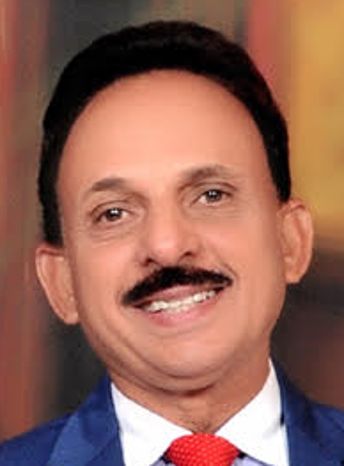
(The author is Principal, Guru Gobind Singh College of Management and Technology, Gidderbaha, Punjab. The views, opinions and conclusions expressed in this article are those of the author and aren’t necessarily in accord with the views of “Kashmir Horizon”)