“There is often a contradiction in the heritage economy: consumers may pay premium prices for products marketed as handmade and traditional, while the person who actually creates the product may receive only a fraction of the final value..…”
Mohammad Irfan
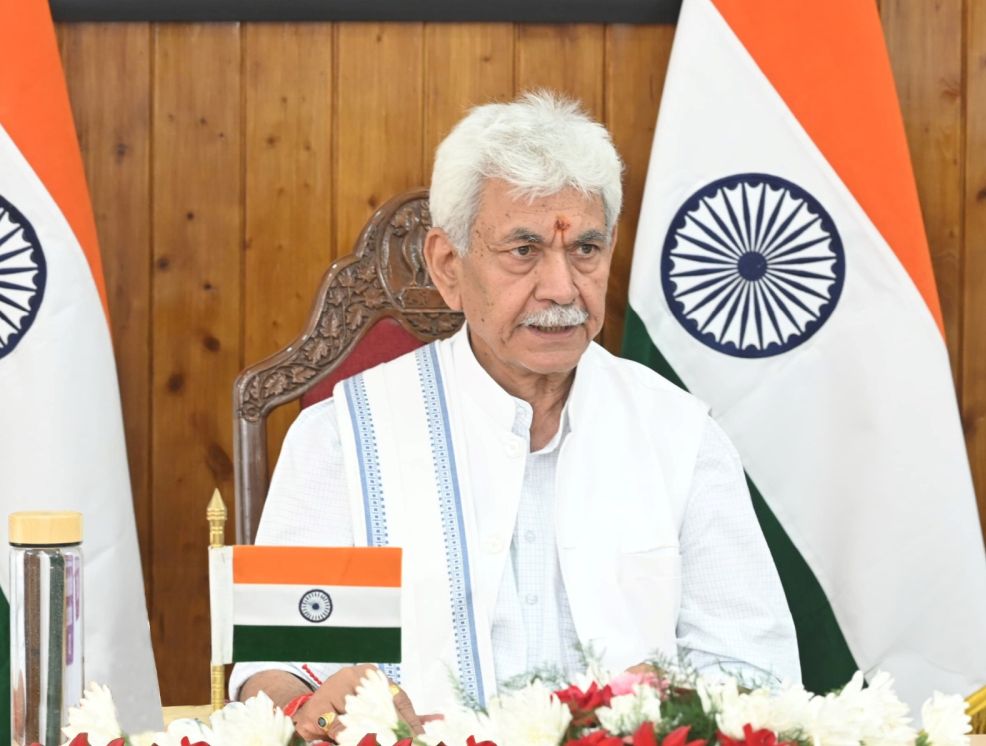
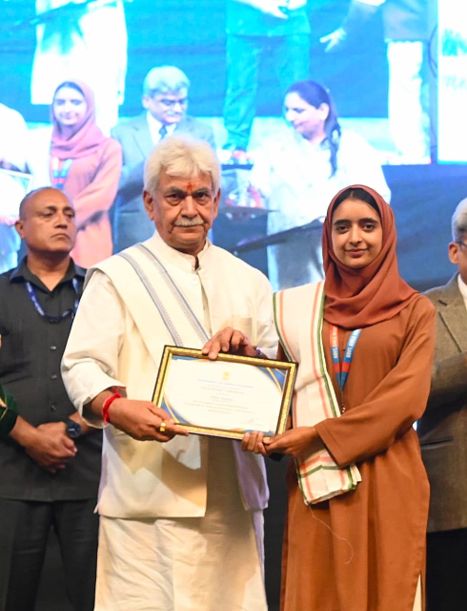 In Kashmir, the story of Pashmina is often told through the finished shawl—the softness of its fibre, the delicacy of its embroidery and the reputation it has earned in markets across the world. But behind every such product lies a much longer story: of skilled hands, inherited knowledge, patient craftsmanship and families whose livelihoods remain closely tied to an art that has survived generations. The Pashmina Artisan Awards 2026, organised by the Pashmeena Entrepreneurs Makers and Artisans (PEMA) Foundation in Srinagar, sought to bring that less visible story to the centre. Lieutenant Governor Manoj Sinha, who attended the ceremony, described the awards as a celebration not merely of individual artisans but of Jammu and Kashmir’s wider cultural prosperity. His remarks placed particular emphasis on women artisans, whose contribution often remains less visible despite their role in several stages of the craft process. “The true prosperity of a society is reflected in the artistry of its weavers and craftswomen,” Sinha said, stressing that the value of Kashmir’s craft economy cannot be measured only through production figures or exports. At a time when traditional crafts are navigating changing consumer preferences, competition from machine-made products, evolving markets and the need to provide sustainable livelihoods to younger generations, the question facing Kashmir is not simply how to preserve Pashmina, but how to make its preservation economically meaningful for the people who produce it. That makes recognition of artisans more than a ceremonial exercise.
The People Behind The Pashmina Label: Every Pashmina shawl represents a chain of specialised skills. The transformation of raw fibre into a finished product involves knowledge that has traditionally moved from one generation to another. The Lieutenant Governor described every Pashmina shawl, Kani product and Sozni embroidery as “a living heritage”, shaped by patience and devotion. That description points to an important distinction between a craft and a commodity. A commodity can be mass-produced and replaced. A traditional craft depends on human knowledge accumulated over decades. Once that knowledge disappears from a community, rebuilding it can be extremely difficult.
For Kashmir, This Makes Artisans An Important Cultural Resource As Well As An Economic One: The Pashmina tradition is particularly significant because its reputation rests on craftsmanship. The value of a genuine handmade product is connected not merely to the raw material but to the time, precision and expertise invested in transforming it into something that carries an identifiable Kashmiri character. This is also why authenticity has become increasingly important. The Government has said that 18 crafts in Jammu and Kashmir have been granted Geographical Indication (GI) tags, while a QR-based authentication system has also been developed. Such mechanisms can potentially help consumers distinguish genuine products from imitations and, in turn, strengthen the market position of artisans. But certification alone cannot secure the future of a craft. The artisan at the end of the production chain must also receive a fair share of the value generated by the final product.
Women At The Centre Of An Old Tradition: One of the defining features of this year’s awards was the focus on women artisans. For generations, women’s contribution to Kashmir’s handicraft economy has often remained within homes and communities, rather than receiving the same public visibility accorded to finished products, traders or brands. Sinha said women artisans are “the silent creators, its custodians and its heartbeat” of the Pashmina tradition. The emphasis is significant because preserving traditional craftsmanship increasingly depends on recognising the people who possess these skills. Women are involved in different stages of the production process, including embroidery and other forms of value addition. Their labour contributes directly to the distinctive character of Kashmiri products, yet the economic value of such work can be difficult to measure when it takes place within household-based production systems.
Greater Recognition Can Therefore Serve Two Purposes: First, it can give artisans social visibility and dignity. Second, it can help create conditions in which traditional skills become economically attractive to younger members of artisan families. If the next generation sees craftsmanship only as low-paid and insecure work, traditional skills may gradually disappear despite their cultural importance. But if craftsmanship provides recognition, stable income, access to markets, social security and opportunities for innovation, it can become a viable livelihood rather than merely a heritage occupation.
Fair Remuneration Is Central To Preservation: The Lieutenant Governor assured artisans of the Government of India’s commitment in four broad areas, beginning with fair remuneration and protection of GI tags. The emphasis on remuneration is perhaps the most important part of the conversation around traditional crafts. There is often a contradiction in the heritage economy: consumers may pay premium prices for products marketed as handmade and traditional, while the person who actually creates the product may receive only a fraction of the final value. Addressing this gap requires stronger connections between artisans and markets. Digital platforms, exhibitions, direct-to-consumer models and organised producer groups can potentially reduce the distance between the maker and the buyer. They can also allow artisans to understand changing consumer preferences and receive better returns from specialised products. The Government’s assurance of expanding access to global markets through e-commerce, exhibitions and digital platforms therefore has relevance beyond promotion. For artisans, market access can determine whether a traditional skill remains economically sustainable. A product may have immense cultural value, but unless there is a dependable market willing to pay for the skill and time involved, cultural recognition alone cannot sustain the artisan community.
Technology Can Protect Tradition Rather Than Replace It: There is sometimes an assumption that modernisation and traditional craftsmanship are contradictory. The experience of Pashmina suggests otherwise. Technology can be used to strengthen traditional production without replacing the human skill that gives handmade products their character. Digital authentication, for example, can help establish provenance. E-commerce can connect artisans with customers outside Kashmir. Social media can allow craftspeople and small enterprises to tell the story behind their products. Digital catalogues can help preserve patterns and designs. Similarly, modern design training can help artisans respond to changing consumer preferences without abandoning traditional techniques. The challenge is to ensure that innovation remains an instrument in the artisan’s hands rather than a substitute for the artisan. That balance will become increasingly important as younger consumers seek products that combine tradition with contemporary design.
“The PEMA Foundation has previously organised editions of the awards in 2023 and 2025. The 2026 edition, according to the Lieutenant Governor, marks a milestone because of its special focus on women artisans…”
A Calibrated Response Rather Than An Open-Ended Conflict: A central feature of the official description of Operation Sindoor has been calibration. The initial Defence Ministry statement explicitly characterised the action as measured and non-escalatory. That distinction matters because military action against terrorist infrastructure across an international boundary or in Pakistan-occupied Jammu and Kashmir carries the risk of escalation. The challenge for policymakers is consequently twofold: demonstrate the capacity and willingness to respond to terrorism while preventing an individual counter-terrorism operation from automatically developing into a broader conventional conflict. The Government’s framing of Operation Sindoor emphasised this balance. The objective was presented as targeting terrorist infrastructure while maintaining limits on the scope of the operation. This represents one of the more significant strategic questions for India’s future counter-terrorism policy: how to retain credible deterrence while keeping escalation under control.
The Role Of Technology: Technology has increasingly become central to India’s counter-terrorism architecture. The Government’s account of Operation Sindoor highlighted indigenous systems and multi-domain capabilities, pointing to drones, air-defence systems and electronic warfare. This technological transition has implications beyond a single operation. The battlefield is changing rapidly. Drones have become relatively inexpensive and widely accessible. Artificial intelligence can assist in analysing large volumes of information. Satellite imagery can improve situational awareness. Electronic warfare can disrupt communications and sensors. At the same time, terrorist organisations can also exploit technology.
This means that technological superiority cannot be treated as a permanent advantage. It requires continuous investment, innovation and adaptation. For India, the emphasis on indigenous defence technology also connects counter-terrorism with the larger objective of defence self-reliance.
From Military Response To A Broader Security Architecture: The evolution described by Modi is not confined to military operations. Counter-terrorism also involves diplomacy, intelligence cooperation, financial tracking, border management and disruption of recruitment networks. The Government’s post-Pahalgam response included diplomatic and economic measures directed at Pakistan, alongside military action. The broader strategy indicates that terrorism is increasingly being treated as a multi-dimensional security challenge. A terrorist organisation does not operate only from a physical camp. It can rely on financing, recruitment, propaganda, logistics and cross-border networks. Consequently, dismantling the physical infrastructure is only one part of the longer-term challenge. Sustained counter-terrorism requires preventing the rebuilding of those networks.
Evolution In India’s Counter-Terror Response Has A Direct Local Significance: For Jammu and Kashmir, the evolution in India’s counter-terror response has a direct local significance. The region has remained at the centre of the cross-border terrorism challenge for decades, while civilians have repeatedly borne the consequences of violence. The Pahalgam attack demonstrated that terrorism continues to have consequences not only for security personnel but also for civilians and the region’s tourism-dependent economy. The response to such attacks therefore has implications beyond the battlefield. Security, tourism, investment, employment and public confidence are interconnected. A reduction in terrorist violence can potentially create greater space for economic activity and normal civic life, although security outcomes depend on a range of factors and cannot be attributed to military operations alone. For Kashmir, the larger objective remains the creation of an environment in which terrorism loses the ability to disrupt civilian life. The central argument advanced by Modi in Mann Ki Baat was that India’s responses since 2016 have communicated a different threshold for dealing with terrorism. The Government’s own later assessment described the 2016 surgical strikes, Balakot and Operation Sindoor as marking a shift towards swift, calibrated responses to cross-border terrorism. The strategic purpose of such a policy is deterrence: creating uncertainty for those planning terrorist attacks about the consequences that may follow. But deterrence is difficult to measure directly. The absence of a particular attack cannot automatically be attributed to any single military operation. Terrorist organisations can also alter tactics, geography and methods in response to counter-measures. What can be observed, however, is the evolution of India’s declared policy and the range of capabilities it has demonstrated.
The Human Cost Remains The Starting Point: Amid discussions of strikes, technology and strategic doctrine, the human cost of terrorism remains the central reason for counter-terrorism efforts. Prime Minister Modi recalled the September 13, 2008 Delhi blasts and the 26/11 Mumbai attacks, as well as the September 11, 2001 attacks in the United States. He noted that Indians were among the victims of 9/11 and paid tribute to those killed. The remembrance serves as a reminder that counter-terrorism policy ultimately concerns the protection of civilian life. The Pahalgam attack reinforced that reality. The victims were not military personnel engaged in combat. They were civilians whose lives were abruptly taken by terrorism. The response, therefore, has a dual purpose: preventing further attacks while preserving the space for ordinary people to live, travel, work and pursue their livelihoods without fear.
A Decade Of Evolution—And The Next Challenge: Ten years after the 2016 surgical strikes, the trajectory highlighted by Modi runs through three major milestones: the cross-LoC action of 2016, the Balakot airstrike of 2019 and Operation Sindoor of 2025.
Kashmir Horizon View: The common thread has been the government’s stated intention to respond more directly to terrorist infrastructure and to combine military capability with intelligence and technological capacity. Operation Sindoor added another layer by demonstrating the importance of jointness, precision systems and indigenous defence technologies, according to official accounts. The next stage will require sustaining these capabilities while ensuring that counter-terrorism remains precise, intelligence-led and focused on protecting civilians. The challenge is also to ensure that military capability is complemented by prevention: stronger intelligence networks, effective border security, disruption of terrorist financing, international cooperation and efforts to prevent radicalisation and recruitment. India’s counter-terrorism experience over the past decade thus points to a broader lesson. Security policy is no longer defined only by what happens after an attack. It increasingly depends on the ability to anticipate threats, identify networks, use technology intelligently, coordinate across institutions and respond proportionately when violence occurs. From the surgical strikes of 2016 to Operation Sindoor, the language of India’s counter-terrorism policy has changed significantly. The enduring objective, however, remains much simpler: to ensure that terrorism does not dictate the lives of India’s citizens.
That is ultimately the measure against which any security doctrine has to be viewed—not merely the reach of its weapons, but its ability to protect lives, preserve stability and create greater confidence in the country’s capacity to confront the threat.
(“Team Kashmir Horizon” is committed to continuous improvement and invites feedback and suggestions from readers and its followers on social media sites. Reader insights are considered vital for enhancing content quality and empowering the community. The team encourages open communication and values the thoughts and ideas of its audience, believing that such input will enable them to serve the public more effectively. The initiative aims to ensure that readers have the best possible experience with “Kashmir Horizon”. Interested individuals can reach out to us via email at [email protected].)