“Prime Minister Narendra Modi reached a major political milestone in June 2026, becoming India’s longest continuously serving elected Prime Minister and marking 25 years in public office since first taking oath as Chief Minister of Gujarat in October 2001”.
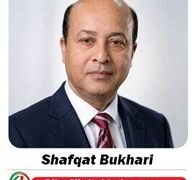
Shafqat Bukhari
Twenty-five years in public office is more than a political milestone. It is a measure of endurance, responsibility and the ability to remain connected with the aspirations of a changing society. For Prime Minister Narendra Modi, the journey that began with his taking oath as Gujarat Chief Minister in October 2001 has evolved into one of the longest continuous tenures at the helm of government in India. In June 2026, he also became the country’s longest-serving continuously elected Prime Minister. The significance of this journey lies not merely in its length but in the scale of transformation that has accompanied it. From Gujarat to the national stage, governance under Modi has increasingly been defined by an emphasis on implementation, technology, infrastructure, welfare delivery and the ambition to position India as a confident global power. When Modi assumed office in Gujarat in 2001, the state was recovering from a devastating earthquake and facing challenges related to drought, infrastructure and economic development. Over the following years, Gujarat became associated with an emphasis on industrial growth, infrastructure and governance. Modi later carried this development-oriented approach to the national level after becoming Prime Minister in 2014. Over the past twelve years, the national policy landscape has witnessed initiatives spanning financial inclusion, sanitation, housing, electricity, digital payments, healthcare, infrastructure, manufacturing and entrepreneurship. The expansion of digital public infrastructure has particularly changed the relationship between citizens and government, making many services and transactions faster and more accessible. The welfare dimension has remained an important part of this journey. Government programmes have sought to provide housing, drinking water, electricity, food security, healthcare and direct financial support to millions of households. According to the Union Cabinet’s June 2026 resolution, more than 25 crore people have moved out of poverty during this period, while major welfare initiatives have expanded access to basic services.
“Prime Minister Narendra Modi’s political journey from 2001 to his national leadership today highlights a key chapter in India’s modern governance. Aligning with the vision of Viksit Bharat 2047, his leadership focuses on empowering youth, women, farmers, entrepreneurs, and technology to drive broad-based growth. As citizen expectations shift from basic access to world-class infrastructure and innovation, PM Modi faces the challenge of sustaining this development momentum to transform national ambitions into everyday prosperity, self-reliance, and global confidence by the centenary of Independence.”
At the same time, the emphasis on economic self-reliance has become increasingly prominent. Make in India, Aatmanirbhar Bharat, semiconductor manufacturing, defence production and support for startups reflect an effort to strengthen domestic capabilities. India’s growing technology ecosystem, expanding infrastructure and increasing focus on artificial intelligence and advanced manufacturing are part of a larger vision of building an economy capable of competing globally. The transformation has also been visible in India’s international engagement. The G20 presidency, the International Solar Alliance, Mission LiFE and India’s expanding engagement with the Global South have contributed to a stronger global profile. The government has increasingly projected India not simply as a large market but as a country seeking a greater role in shaping global conversations. Perhaps the most important feature of the 25-year journey is the emphasis on long-term national goals. The vision of Viksit Bharat by 2047 seeks to connect present-day reforms with the centenary of Independence. The focus on youth, women, farmers, entrepreneurs and technology reflects an attempt to make development an increasingly broad-based national project. Twenty-five years also represent a changing India. The aspirations of citizens today are different from those of 2001. Expectations have moved from basic connectivity and access towards quality infrastructure, innovation, global opportunities and higher standards of living. Modi’s political journey has unfolded alongside this transformation. As he enters another phase of public service, the larger challenge is to sustain the momentum of development while translating national ambitions into tangible improvements in the everyday lives of citizens. The journey from Gujarat in 2001 to the national leadership of today remains a significant chapter in contemporary India’s governance story. The next milestone, therefore, is not simply about looking back at twenty-five years. It is about carrying forward the aspiration of building an India that is more prosperous, capable, self-reliant and confident in the world.