“For LG Sinha, the post-2019 phase represents an opportunity to move the region’s public conversation from the constitutional question that dominated much of its recent history towards development, opportunity, peace and empowerment.…”
Mohammad Irfan
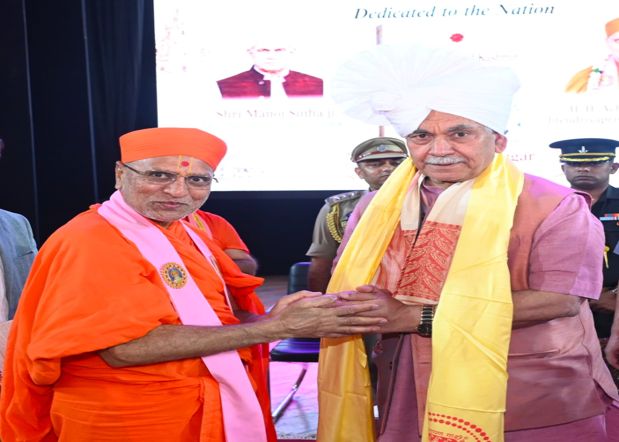
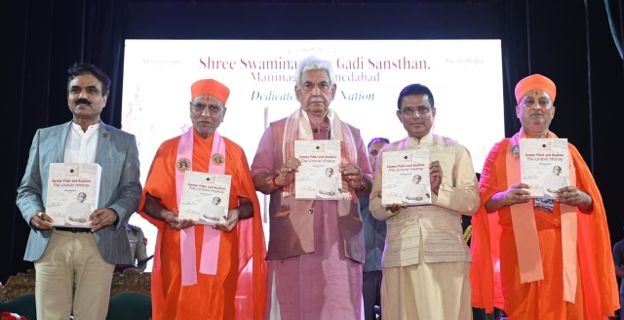 The launch of the book “Sardar Patel and Kashmir: The Untold History” in Srinagar has brought the constitutional history of Jammu Kashmir, particularly the legacy of Article 370, back into the centre of public discussion. Launching the book on September 22, Lieutenant Governor Manoj Sinha described the abrogation of Articles 370 and 35A in August 2019 as the fulfilment of what he termed Sardar Vallabhbhai Patel’s “unfinished dream”. He said the constitutional changes had opened new possibilities in education, employment, entrepreneurship and development for the youth of Jammu Kashmir and placed the Union Territory at the threshold of what he described as a new future. The remarks gave the book launch a significance extending beyond the publication itself. At its heart was a larger question: how should the political and constitutional transformation of Jammu Kashmir since 2019 be understood, and what does the legacy of Sardar Patel mean for the region’s future? Article 370 had for decades been one of the defining constitutional features of Jammu Kashmir. The provision created special constitutional arrangements for the erstwhile state and governed the manner in which provisions of the Indian Constitution were extended to it. In August 2019, the Union government issued Constitutional Orders 272 and 273, while Parliament enacted the Jammu and Kashmir Reorganisation Act, 2019. The latter reorganised the former state into the Union Territories of Jammu and Kashmir and Ladakh. The Supreme Court, in its December 2023 judgment, upheld the constitutional changes relating to Article 370 and held that the Constitution of India was fully applicable to Jammu Kashmir. For LG Sinha, the post-2019 phase represents an opportunity to move the region’s public conversation from the constitutional question that dominated much of its recent history towards development, opportunity, peace and empowerment. That transition is now increasingly being presented as the next chapter in Jammu Kashmir’s journey.
Article 370| From Constitutional Arrangement To Historical Turning Point: The story of Article 370 is inseparable from the complicated circumstances under which Jammu Kashmir became part of India in 1947. Unlike many other princely states, Jammu Kashmir’s accession occurred in the context of conflict and a rapidly changing political environment. The subsequent constitutional relationship between the state and the Union evolved through Article 370 and a series of Presidential Orders. Over the decades, the provision became a major point of political debate. Supporters of the earlier arrangement viewed it as an important constitutional expression of Jammu Kashmir’s distinctive circumstances, while successive governments and political groups debated its scope, permanence and implications for integration. The 2019 changes fundamentally altered that constitutional framework. The Supreme Court’s judgment of December 2023 is particularly important in understanding the legal status of the transformation. The Court recorded that Constitutional Orders 272 and 273 had the effect of applying the entire Constitution of India to Jammu Kashmir and abrogating Article 370 as it stood before those orders. It also upheld the constitutional validity of the Jammu and Kashmir Reorganisation Act, subject to the directions contained in its judgment. Thus, what had once been a defining constitutional distinction is now part of a new legal and administrative framework. It is this change that Sinha described at the book launch as consigning the “era of Article 370” to history. His interpretation is that the change has created a new starting point for Jammu Kashmir—one in which political energy can increasingly be directed towards economic development, social opportunity and institution-building.
Why Patel’s Legacy Enters The Article 370 Debate: The choice of Sardar Patel as the central figure of the new book gives the Article 370 discussion a historical dimension. Patel was one of the principal figures responsible for the integration of princely states into the Indian Union after Independence. As Deputy Prime Minister and Home Minister, he worked closely with V.P. Menon during a period when the political map of newly independent India was still taking shape. The integration of hundreds of princely states was among the most consequential tasks facing the new government. At the Srinagar event, Sinha described Patel as the “architect of modern India” and credited his determination, organisational ability and practical approach with helping bring 562 princely states into a united country. The LG’s central argument was that Patel’s vision of national unity has contemporary relevance for Jammu Kashmir. He went further, saying that had Patel been given responsibility for Jammu Kashmir, some of the problems endured by its people for decades might not have arisen. That is Sinha’s historical assessment, rather than an established counterfactual, but it reflects the central argument he sought to draw from Patel’s legacy. The new book consequently provides a platform for examining Patel’s position on Kashmir and the circumstances surrounding the region’s integration.
2019 As A New Constitutional Chapter: For Jammu Kashmir, August 2019 represented a decisive institutional break with the previous constitutional arrangement. The Union government presented the changes as a measure to bring Jammu Kashmir fully into the constitutional and administrative framework applicable elsewhere in India. The reorganisation also altered the region’s administrative structure. The ertwhile state was divided into two Union Territories: Jammu and Kashmir, with a legislature, and Ladakh, without a legislature. The Jammu and Kashmir Reorganisation Act received presidential assent on August 9, 2019. The Supreme Court’s 2023 ruling subsequently became an important legal milestone in determining the constitutional validity of the changes. For the administration in Jammu Kashmir, the importance of this legal and constitutional settlement lies in what it believes should follow from it. The argument is that once the long-standing constitutional dispute has been substantially settled, greater attention can be directed towards governance and development. That is why Sinha connected Article 370 with education, employment, entrepreneurship and infrastructure rather than treating the issue purely as a question of constitutional history.
From constitutional integration To Economic Integration: The next stage of the Jammu Kashmir story is increasingly being framed around economic integration. Constitutional integration establishes a legal relationship, but economic integration depends on whether people, businesses and institutions are able to participate fully in wider markets and opportunities. This is where infrastructure becomes important. Road connectivity, railway expansion, digital networks, airports, logistics facilities and urban infrastructure can reduce the economic disadvantages associated with geography. For Jammu Kashmir, where difficult terrain has historically affected connectivity and transportation costs, infrastructure can have an especially significant multiplier effect.
A Road Does More Than Reduce Travel Time: It can allow farmers to reach markets faster, enable tourists to access new destinations, connect students with educational institutions, facilitate movement of goods and encourage private investment. The same principle applies to digital connectivity. A young entrepreneur in Kashmir can increasingly serve customers outside the region without physically relocating. Digital services, e-commerce, software, online education and creative industries can all expand the economic space available to young people. This is why Sinha’s emphasis on the digital economy and startup culture is significant.
“LG Sinha described the youth of Jammu Kashmir as the region’s “most valuable asset” and stressed the need to channel their energy towards nation-building.The emphasis represents a shift in the narrative.For years, much of the national conversation around Jammu Kashmir centred on security, terrorism, constitutional status and political uncertainty……..”
Artificial Intelligence Youth As The Bridge Between The Two Eras: The most important link between the history of Article 370 and the future of Jammu Kashmir may be its youth. A constitutional transformation has limited meaning unless it is reflected in the lives and opportunities of the next generation. Sinha described the youth of Jammu Kashmir as the region’s “most valuable asset” and stressed the need to channel their energy towards nation-building. The emphasis represents a shift in the narrative. For years, much of the national conversation around Jammu Kashmir centred on security, terrorism, constitutional status and political uncertainty. The emerging policy narrative increasingly seeks to place education, skills, startups, technology, tourism and employment alongside security concerns. This does not mean that security challenges have disappeared. Rather, the argument is that lasting stability requires economic and social opportunities as well. A young population needs more than political assurances. It needs high-quality education, employable skills, entrepreneurship opportunities, access to capital, modern infrastructure and the confidence to build its future locally.
The startup Opportunity: Jammu Kashmir’s economic structure has traditionally relied heavily on agriculture, horticulture, tourism, government employment and small businesses. These sectors remain important, but the digital economy offers an opportunity to diversify. Startups can operate in areas ranging from tourism technology and handicrafts to agriculture, logistics, education, healthcare and software. The region’s unique products and cultural assets can also be taken to national and international markets through digital platforms. The challenge will be to build an ecosystem around these ideas. Entrepreneurs require incubation facilities, mentorship, finance, skilled employees, reliable connectivity and access to customers. Universities and colleges can become important parts of this ecosystem by connecting research with commercial applications. Srinagar and Jammu, in particular, have the institutional base to develop stronger innovation ecosystems. Sinha’s vision of these cities as centres of education, trade and innovation therefore reflects an attempt to connect the post-2019 phase with a more diversified economic future.
Development As The Next Measure Of Integration: The strongest test of any new political or constitutional phase is ultimately development. For ordinary citizens, constitutional arrangements matter, but so do employment, healthcare, education, roads, electricity, tourism and household incomes. The post-2019 narrative will therefore increasingly be judged by measurable outcomes. If constitutional integration is accompanied by greater economic integration, more investment, improved infrastructure and wider employment opportunities, the changes will acquire a practical meaning in people’s lives. This is also why Sinha’s four priorities—peace, infrastructure and connectivity, youth empowerment, and cultural revival—are interconnected. A peaceful environment encourages investment. Infrastructure connects markets. Youth entrepreneurship generates employment. Cultural tourism creates opportunities while preserving identity. Together, these elements can form a broader development model.
Peace Remains The Foundation: Sinha placed peace and security at the top of his priorities, reiterating the administration’s policy of zero tolerance towards terrorism. For any development strategy in Jammu Kashmir, security remains a fundamental consideration. Tourism requires visitors to feel safe. Businesses require predictable conditions. Infrastructure projects require stability. Students and professionals need an environment in which they can pursue education and careers without disruption. At the same time, development can reinforce stability by giving young people greater economic opportunity and creating stronger links between communities and institutions. This makes peace and development mutually reinforcing rather than competing objectives. The broader challenge for governance is therefore to ensure that security measures, economic development and public services advance together.
Culture As A Source Of Strength: The fourth pillar highlighted by Sinha is cultural heritage. Jammu Kashmir possesses a distinctive cultural inheritance that includes historic architecture, crafts, literature, music, cuisine, pilgrimage traditions and diverse local practices. The post-Article 370 development narrative can incorporate this heritage not only as a tourism product but as an important component of social identity. Handicrafts and traditional industries provide livelihoods to thousands of families. Heritage tourism can create opportunities for local guides, artisans, hospitality providers and small businesses. Cultural preservation can also strengthen young people’s connection with their communities. In this sense, development does not necessarily mean replacing traditional identities with modern economic models. It can instead mean finding ways in which heritage becomes an asset within a modern economy.
A Fresh Examination Of History: The launch of Sardar Patel and Kashmir: The Untold History also raises an important question about how Jammu Kashmir’s history should be studied. Sinha called for historical narratives to be examined with honesty and impartiality and urged writers to treat history as a mirror of truth rather than an instrument of glorification. That approach is particularly relevant to Kashmir. The region’s modern history has been interpreted through different political perspectives, and several aspects remain contested among historians and political actors. A stronger engagement with archival material and primary sources can help broaden the debate. The value of historical research lies not necessarily in producing a single interpretation but in enabling citizens to understand why particular decisions were taken, what alternatives existed and what consequences followed. That becomes especially important when historical events continue to shape contemporary politics.
Patel’s Idea Of Unity And Today’s Jammu & Kashmir: The central theme of Patel’s legacy, as presented at the Srinagar event, is national unity. His integration of princely states created the territorial and administrative foundation of the Indian Union. Sinha’s argument is that the constitutional changes of 2019 should be viewed within this longer story of integration. The analogy has a clear political dimension, but it also offers a framework for considering what integration means beyond constitutional provisions. Modern integration is not simply territorial. It also involves economic participation, equal access to institutions, mobility, education, technology and opportunities. If Jammu Kashmir’s young people can participate fully in India’s expanding digital and entrepreneurial economy, integration acquires an economic dimension. If students can access educational opportunities across the country, it acquires a social dimension. If businesses in Jammu Kashmir can access national markets without structural barriers, it acquires a commercial dimension. And if the region’s cultural identity continues to flourish within this larger national framework, integration need not imply cultural uniformity. This is close to the idea Sinha invoked through “Ek Bharat, Shreshtha Bharat”—unity alongside diversity.
Looking Beyond The Article 370 Debate: The constitutional debate around Article 370 dominated Jammu Kashmir’s political discourse for generations. The 2019 changes and the Supreme Court’s 2023 judgment have now created a substantially different constitutional landscape. The challenge for the coming years is to move from constitutional settlement to institutional and economic consolidation. That means strengthening schools and universities, developing industries, improving healthcare, expanding tourism, encouraging entrepreneurship, building infrastructure and creating employment. It also means ensuring that young people see a future in which their ambitions can be realised within Jammu Kashmir. This is perhaps the most consequential shift in the narrative. The question is no longer only how Jammu Kashmir should be positioned constitutionally within India. It is increasingly about what kind of economy and society the region can build within that framework.
A New Chapter After A Long Constitutional Debate: The book launch has therefore provided an opportunity to connect three different periods of Jammu Kashmir’s history. The first is the period of Independence and the integration of princely states, in which Sardar Patel emerged as a central nation-builder. The second is the long constitutional era in which Article 370 became one of the defining features of Jammu Kashmir’s relationship with the Union. The third is the post-2019 period, in which the constitutional framework has been fundamentally altered and the region is being presented with a development-oriented future. Sinha’s message is that these three periods should not be viewed in isolation. For him, the legacy of Patel provides a historical lens through which the 2019 changes can be interpreted, while the post-2019 period should ultimately be judged by the opportunities it creates for the people of Jammu Kashmir. That makes development the most important next chapter.
From History To Opportunity: The lasting significance of the Article 370 transformation will ultimately depend on what Jammu Kashmir makes of the new constitutional environment. The region possesses considerable strengths: a highly educated youth population, internationally recognised tourism destinations, a strong horticulture sector, traditional handicrafts, an expanding infrastructure network and major educational institutions. Its geography, culture and natural resources can also support new economic opportunities. The task is to connect these strengths with modern markets. That requires investment, innovation and skills. It requires young people to become participants in the digital economy. It requires universities to become centres of research and entrepreneurship. It requires cities to become hubs of trade and innovation. And it requires rural areas to be connected to markets and services. This is where the post-370 narrative moves from politics to policy.
Kashmir Horizon View: At the Srinagar launch, Sinha described the book as a “lighthouse” illuminating Patel’s vision of a united and confident India. The metaphor is significant because the event was ultimately less about looking backwards than about drawing lessons for the future. Patel’s contribution to India’s integration belongs to history. Article 370’s constitutional journey has entered a new phase following the 2019 changes and the Supreme Court’s 2023 judgment. The next challenge is to ensure that Jammu Kashmir’s future is defined increasingly by peace, opportunity and development. The LG’s four priorities provide one such framework: security, connectivity, youth empowerment and cultural revival. Each addresses a different requirement of a modern economy and society. Together, they suggest a development model in which peace creates stability, infrastructure creates access, youth create innovation and culture creates identity and economic opportunity. For Jammu Kashmir, this could represent a significant transition—from a political narrative dominated for decades by constitutional questions towards one increasingly centred on human development. The history of Article 370 will continue to be studied and debated. So will the role of Sardar Patel in Jammu Kashmir’s early constitutional history. But the most important measure of the next chapter will be practical: whether young people find greater opportunities, whether businesses grow, whether infrastructure connects communities, whether tourism and traditional industries expand, and whether peace becomes sufficiently durable for development to take deeper root.
(“Team Kashmir Horizon” is committed to continuous improvement and invites feedback and suggestions from readers and its followers on social media sites. Reader insights are considered vital for enhancing content quality and empowering the community. The team encourages open communication and values the thoughts and ideas of its audience, believing that such input will enable them to serve the public more effectively. The initiative aims to ensure that readers have the best possible experience with “Kashmir Horizon”. Interested individuals can reach out to us via email at [email protected].)