“LG Sinha described the recruitment process as part of a broader transformation in employment opportunities since 2019, particularly for young people from ordinary families……”
Mohammad Irfan
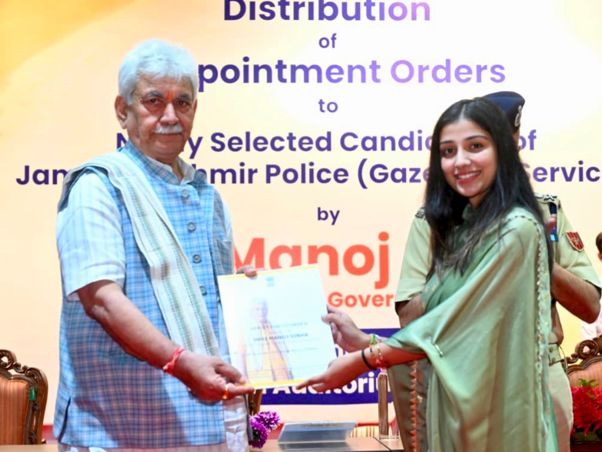
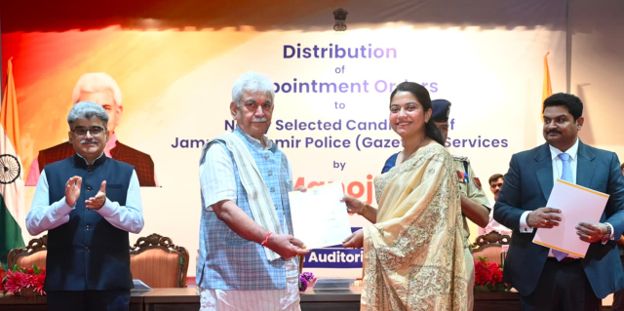 The appointment of 29 officers to the Jammu Kashmir Police (Gazetted) Service marks more than the beginning of new careers for a group of young professionals. It represents the entry of a new generation into an institution whose responsibilities extend from maintaining public order and protecting citizens to upholding the rule of law and strengthening public confidence in governance. At a ceremony in Srinagar, Lieutenant Governor Manoj Sinha handed over appointment letters to the newly selected officers and described the documents as symbols of the trust placed by the people of Jammu Kashmir in those who have chosen a career in public service. The occasion brought together two important themes shaping Jammu Kashmir’s administrative and security landscape: merit-based opportunities for its young population and the continuing professionalisation of its policing institutions. For the newly appointed officers, the appointment letters mark the culmination of a demanding selection process conducted by the Jammu Kashmir Public Service Commission (JKPSC). For the administration, the occasion represents another step towards creating a professional cadre of officers equipped to respond to the changing requirements of policing and public service. The Lieutenant Governor’s message to the officers was therefore centred not only on their achievement but on the responsibilities that accompany it.
A Career Built On Merit: The selection of officers through a transparent competitive process is an important element of modern public administration. The Lieutenant Governor congratulated the newly appointed officers on successfully completing an intense selection process and praised the JKPSC for maintaining fairness, impartiality and credibility. He described the recruitment process as part of a broader transformation in employment opportunities since 2019, particularly for young people from ordinary families. The significance of merit-based recruitment extends beyond the individuals who receive appointment letters. When public employment is determined through transparent competitive examinations, it creates an opportunity for young people from different social and economic backgrounds to compete on the basis of their education, preparation and ability. The Lieutenant Governor referred to examples of candidates from families of vegetable vendors and labourers securing government positions through talent and hard work. Such examples carry a wider message for young people across Jammu Kashmir: professional achievement can be built through education, perseverance and competitive excellence. The JKPS cadre, in this context, becomes not only a professional service but also an avenue through which the region’s educated youth can contribute directly to public institutions. The appointment of the 29 officers thus carries significance both for policing and for the wider culture of public service.
From Selection To Service: The appointment letter marks the beginning rather than the conclusion of the officers’ journey.Before assuming their full responsibilities, the newly appointed officers will undergo mandatory police training designed to prepare them for the operational, administrative and ethical dimensions of their profession. Police training is particularly important because modern policing requires much more than physical preparedness.Officers have to understand criminal law, investigation procedures, technology, cybercrime, intelligence gathering, community engagement, human rights, disaster response and crisis management. They also have to develop leadership qualities because gazetted officers frequently operate at the intersection of public administration, policing and community concerns. The transition from an examination hall to a police academy therefore represents a transition from academic preparation to professional responsibility. The Lieutenant Governor reminded the officers that the uniform would bring with it authority, but that authority would have to be exercised with integrity and compassion. This balance between authority and human sensitivity is central to the modern understanding of policing. A police officer is often the first representative of the state encountered by a citizen during moments of crisis, distress or uncertainty. The manner in which officers respond can therefore shape public perceptions of the entire institution.Professionalism, accessibility and fairness can strengthen confidence, while disciplined conduct can reinforce respect for the law. The new officers have consequently been entrusted with a role that combines enforcement with service.
Guardians Of Peace And Public Confidence: The Lieutenant Governor described the newly appointed officers as future guardians of peace, dignity and justice. The phrase reflects the broadening responsibilities of policing in a changing environment. Traditional policing responsibilities remain important, but the nature of security challenges has evolved considerably.Technology has changed crime, communication and financial systems. Criminal networks can increasingly operate across jurisdictions and use digital platforms to coordinate activities. The Lieutenant Governor specifically referred to challenges including terrorism, radicalisation, cryptocurrency-linked terror financing and money laundering. For a new generation of police officers, understanding these emerging forms of crime will be essential.The modern police officer increasingly needs technological awareness alongside traditional investigative skills.Cybercrime investigations, digital evidence, financial intelligence and online radicalisation require specialised knowledge and coordination with other agencies. This creates an opportunity for the Jammu Kashmir Police to further develop specialised expertise among its younger officers.The officers joining the service today will potentially spend decades working in an environment in which technology will continue to transform policing.Their training and professional development can therefore become a long-term investment in the future capabilities of the institution.
The Human Face Of Policing: While technology and security remain important, policing ultimately involves people.The Lieutenant Governor’s emphasis on compassion and sensitivity highlighted this dimension of police work. Citizens approach the police for a wide variety of reasons — from reporting crimes and seeking protection to resolving disputes, assisting vulnerable people and responding to emergencies. For many citizens, the police station is one of the most visible points of contact with government. This makes the conduct of police personnel particularly important. The Lieutenant Governor urged the officers to combine authority with compassion and ensure that human sensitivity remained part of their actions.His guiding principle — “Do not harass the innocent; do not spare the guilty” — places fairness at the heart of policing. The principle carries a simple but important message: effective law enforcement must protect innocent citizens while ensuring that those responsible for offences are dealt with according to law.For the new officers, this approach can provide an ethical framework for exercising the considerable authority attached to the uniform.
The Uniform, Its Responsibility: The khaki uniform has a powerful institutional identity in India.It represents authority, discipline and responsibility, but it also represents public expectations. The Lieutenant Governor told the newly appointed officers that the respect commanded by the uniform would depend on their honesty, courage and conduct. This places individual behaviour at the centre of institutional credibility. An officer’s professional conduct can influence how citizens view the police force as a whole. For young officers beginning their careers, this makes integrity a professional asset as much as a personal value. The ability to make decisions under pressure while remaining committed to law and procedure is one of the defining requirements of police leadership. The Lieutenant Governor urged the officers to maintain honesty, courage and humility even in difficult circumstances.These qualities are particularly relevant for officers who will eventually be responsible for teams, investigations and public order responsibilities.
“Digital platforms, online complaint systems, CCTV networks, forensic technologies and data-based policing are changing the way police agencies interact with citizens and investigate offences.Young officers with familiarity with technology can play an important role in accelerating this transition….”
Leadership Through Service: The new JKPS officers are also joining the service at a time when public expectations from government institutions are evolving.Citizens increasingly expect government services to be accessible, responsive and technology-enabled.
Police Organisations Are Part Of This Transformation: Digital platforms, online complaint systems, CCTV networks, forensic technologies and data-based policing are changing the way police agencies interact with citizens and investigate offences.Young officers with familiarity with technology can play an important role in accelerating this transition. At the same time, technological advancement has to remain connected to the fundamental principles of policing: legality, fairness, accountability and public service. The new generation of officers can therefore contribute to a model of policing that combines technological capability with human understanding. Their role will extend beyond conventional law-and-order functions to include community engagement, crime prevention and public awareness.
Building On The Legacy Of Jammu Kashmir Police: The Lieutenant Governor also highlighted the sacrifice, devotion and courage of senior officers and personnel who have served Jammu Kashmir over the decades.The newly appointed officers are joining an institution with a long and demanding operational history. For them, that history represents both a legacy and a responsibility.The Jammu Kashmir Police has worked across a diverse geographical and social environment, from urban centres to remote rural areas and difficult terrain. Its personnel have responsibilities ranging from routine policing and traffic management to investigation, emergency response and security duties. The new officers will inherit this institutional experience while bringing their own education, technological awareness and professional perspectives. The combination of institutional experience and new talent can strengthen the organisation’s ability to adapt to future challenges. Young officers, in particular, can become an important bridge between established policing practices and emerging technologies. Their generation has grown up in an environment shaped by smartphones, digital communication, social media and rapidly evolving technology. These experiences can become valuable professional skills when appropriately integrated into policing.
The Wider Opportunity For Youth: The appointment ceremony also carries significance beyond the police organisation. It sends a broader message about the role of Jammu Kashmir’s young people in public institutions. The region has a large and increasingly educated youth population. Competitive government examinations offer one avenue through which young professionals can enter public service and contribute to administration. The success of candidates from ordinary families can encourage others to pursue education and competitive examinations. The story of merit-based selection is therefore also a story of aspiration. A young person preparing for a competitive examination is investing time, education and personal effort in the possibility of serving society. When that effort results in selection, it demonstrates the value of perseverance and professional preparation. The 29 newly appointed JKPS officers now become examples of that journey. Their careers will potentially take them through different districts, police units and specialised assignments, giving them opportunities to work closely with communities across Jammu Kashmir.
Public Service As A Lifelong Commitment: The Lieutenant Governor’s remarks repeatedly placed service above personal achievement.
That Distinction Is Important: A government appointment provides professional stability and responsibility, but a career in public service carries a larger social purpose.For police officers, this purpose is particularly visible because their decisions can directly affect citizens’ safety and security. The appointment letters therefore represent what the Lieutenant Governor described as the hopes, dreams and faith of the people. This idea can shape the professional culture of the new officers. Their success will not be measured only by promotions or administrative achievements. It will also be reflected in how effectively they protect citizens, prevent crime, assist victims, maintain public order and uphold the law. A police officer’s greatest professional achievement can ultimately be the confidence that citizens place in the institution. Preparing for tomorrow’s security environment The security environment facing police organisations is becoming increasingly complex. Terrorism remains a major security concern, while technological developments have created new forms of financial crime, cybercrime and online radicalisation. The use of crypto currency and sophisticated financial channels in illegal activities requires police officers to develop expertise beyond traditional investigation methods. The newly appointed officers will enter the service at an important point in this transformation. Their training can prepare them to combine conventional policing skills with cyber capabilities, financial investigation, intelligence analysis and modern forensic methods. Continuous professional education will be important throughout their careers. The advantage of a new generation of officers is that they can develop specialised expertise from the beginning of their service. Some may eventually contribute to cybercrime investigation, others to intelligence, forensic science, community policing, counter-terror operations, traffic management or administrative leadership. Together, this diversity of expertise can strengthen the overall policing system.
A Culture Of Integrity: At the heart of the Lieutenant Governor’s message was a simple expectation: integrity must remain non-negotiable. Police officers exercise significant authority, and the legitimacy of that authority ultimately comes from the law and public trust. Integrity ensures that authority is exercised responsibly. The call to choose duty even when circumstances become difficult is therefore particularly relevant to young officers. Their careers will inevitably bring challenging situations requiring judgment, patience and courage. Maintaining professional ethics during such moments can define the quality of their leadership. The emphasis on humility is equally important. Leadership in policing involves command, but it also involves listening. An officer who understands the concerns of citizens, colleagues and subordinate personnel can build stronger teams and more effective relationships with communities.
Kashmir Horizon View: The 29 officers receiving their appointment letters represent the beginning of a new chapter in their professional lives and another generation of leadership for the Jammu Kashmir Police.Their induction combines merit, education, training and public responsibility. As they progress through their careers, they will encounter a Jammu Kashmir that continues to evolve economically, socially and technologically. Their policing responsibilities will evolve alongside it. The future police organisation will increasingly depend on technology, specialised knowledge, community participation and professional leadership. But the fundamental principles will remain constant: protect citizens, uphold the law, respect human dignity and act with integrity. The appointment ceremony at Srinagar brought these principles together. The appointment letters symbolised opportunity, but they also represented responsibility. For the officers, the next stage is training, followed by years of public service. For Jammu Kashmir, their induction represents an investment in a new generation of professional police leadership. Their journey begins with the khaki uniform, but the Lieutenant Governor’s message made clear that the true strength of that uniform will come from what the officers bring to it — honesty, courage, compassion, discipline and an unwavering commitment to duty. As these young officers move into their professional lives, they carry with them not only the authority of the Jammu Kashmir Police but also the expectations of the people they will serve. Their appointment is therefore more than a career milestone. It is an invitation to contribute to peace, security, justice and public confidence and to become part of the continuing institutional journey of Jammu Kashmir’s police service. The ceremony has placed the spotlight on 29 individuals. Their careers, however, have the potential to influence something much larger: the future culture of policing in Jammu Kashmir.
(“Team Kashmir Horizon” is committed to continuous improvement and invites feedback and suggestions from readers and its followers on social media sites. Reader insights are considered vital for enhancing content quality and empowering the community. The team encourages open communication and values the thoughts and ideas of its audience, believing that such input will enable them to serve the public more effectively. The initiative aims to ensure that readers have the best possible experience with “Kashmir Horizon”. Interested individuals can reach out to us via email at [email protected].)