A PhD is supposed to be a journey of intellectual discovery, academic freedom and mentorship. At the centre of that journey stands the research supervisor—a person expected to guide the scholar, strengthen the research, encourage independent thinking and help transform a student into an original researcher. But what happens when the relationship built on trust begins to resemble a relationship built on fear?
This is one of the uncomfortable questions that Indian higher education can no longer afford to ignore: When should a PhD student stop trusting the supervisor? The question is not about ordinary academic disagreements. A good supervisor has every right to criticize a student’s methodology, reject weak arguments, demand better evidence and insist on higher standards. Serious research requires intellectual discipline. Students cannot expect unconditional approval from supervisors.
The problem begins when academic authority is converted into personal power. A PhD supervisor can influence almost every aspect of a scholar’s academic life—research progress, thesis submission, publications, conference opportunities, recommendations and, in many cases, the student’s future career. Such enormous power requires equally strong accountability. Unfortunately, in some institutions, supervision has become a one-sided relationship in which the student is expected to obey rather than think.
That is where trust begins to collapse. A supervisor should challenge a scholar’s ideas, not threaten the scholar’s future. A supervisor should correct mistakes, not humiliate the student. A supervisor should provide guidance, not create dependency. And above all, a supervisor should protect academic integrity, not pressure a scholar to compromise it.
One of the clearest reasons for a student to reconsider trust is when a supervisor asks for research misconduct. Fabricating observations, manipulating results, suppressing inconvenient findings, copying material or presenting someone else’s work as one’s own cannot be justified in the name of completing a PhD. A degree obtained at the cost of academic integrity is not an achievement; it is a liability.
Another serious warning sign is exploitation. PhD scholars are researchers, not personal assistants. Asking students to perform legitimate research-related duties is one thing. Using them repeatedly for personal errands, administrative chores, unrelated work or other activities that have little connection with their research is quite another. When a student’s academic progress becomes dependent on pleasing the supervisor personally, mentorship has already begun to deteriorate.
Authorship is another major test of trust. A supervisor who contributes substantially to research deserves appropriate academic credit. But students should not be expected to surrender authorship simply because the supervisor occupies a position of authority. Nor should supervisors routinely place their names on work to which they have made little or no meaningful contribution. Young researchers need recognition for their intellectual labour. Taking credit from a scholar is not mentorship—it is exploitation.
“A PhD student should not stop trusting a supervisor because the supervisor says “no.” The student should reconsider trust when “no” becomes intimidation; when guidance becomes control; when criticism becomes humiliation; when mentorship becomes exploitation; and when academic authority is used to compromise integrity or threaten the student’s future. The purpose of supervision is to make the scholar strong enough to stand independently. If a supervisor needs the student to remain fearful in order to remain powerful, something has gone fundamentally wrong with the PhD system.”
There is also a quieter form of academic abuse: deliberate obstruction. A supervisor who repeatedly withholds feedback, changes requirements without reasonable explanation, unnecessarily delays approvals or keeps moving the goalposts can effectively hold a student’s degree hostage. One delay may be genuine. A persistent pattern is something else.
The most damaging environment, however, is one governed by fear. Some scholars become afraid to disagree with their supervisors. They hesitate to ask questions. They stop proposing alternative ideas. They avoid reporting problems. They may even accept poor research practices because they fear retaliation.
This destroys the very purpose of doctoral education. A PhD is not supposed to produce obedient researchers. It is supposed to produce independent thinkers. The irony is painful. Universities often speak about innovation, critical thinking, entrepreneurship and research excellence. Yet if a doctoral scholar cannot respectfully challenge a supervisor’s argument, how can that scholar be expected to challenge established knowledge?
Academic freedom must begin at the doctoral level. This does not mean that students should abandon supervisors whenever they receive criticism. Nor should every disagreement be labelled harassment. Research is difficult. Supervisors have demanding responsibilities, and students also have obligations. Deadlines, revisions and rigorous questioning are part of serious scholarship.
The dividing line is power used for academic development versus power used for personal control. Universities therefore need stronger mechanisms to protect doctoral scholars. Grievance systems must be genuinely independent. Students should have safe channels to report harassment, coercion, research misconduct and unreasonable obstruction without fear that complaining will destroy their careers. Silence is not always patience. Sometimes silence simply allows unhealthy power to grow. India wants more PhDs, more research papers, more patents and more globally competitive universities. But quantity without academic dignity will not create a world-class research system. A PhD factory can produce degrees; only a healthy academic culture can produce scholars.
The ultimate test of a supervisor is simple: What happens when the student begins to think independently? A good supervisor feels proud. A controlling supervisor feels threatened. That difference says everything. India does not merely need more PhDs. It needs better supervision, stronger accountability and a culture in which scholars can research without fear. Because the ultimate measure of a supervisor is not how many students obeyed—but how many scholars learned to think for themselves.
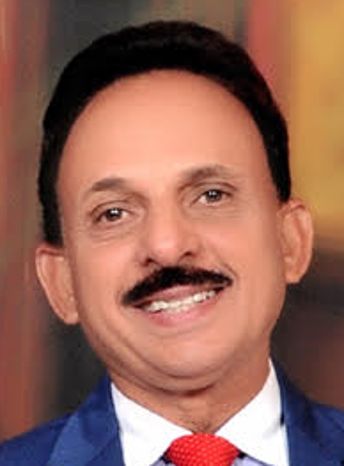
(The author is Principal, Guru Gobind Singh College of Management and Technology, Gidderbaha, Punjab. The views, opinions and conclusions expressed in this article are those of the author and aren’t necessarily in accord with the views of “Kashmir Horizon”)
[email protected]