Says “7.8% GDP Growth , Upgraded Credit Ratings Shows Strength Of India’s Resilient Economy, UPI’s 11-Nation Footprint A Global “Civilisation Story”
New Delhi|Sept, 8 : Prime Minister Narendra Modi on Tuesday said India’s reform process would move at an even faster pace despite global economic uncertainties, while calling for a broader fintech revolution that goes beyond digital payments to cover credit, insurance, savings, investments and pensions.
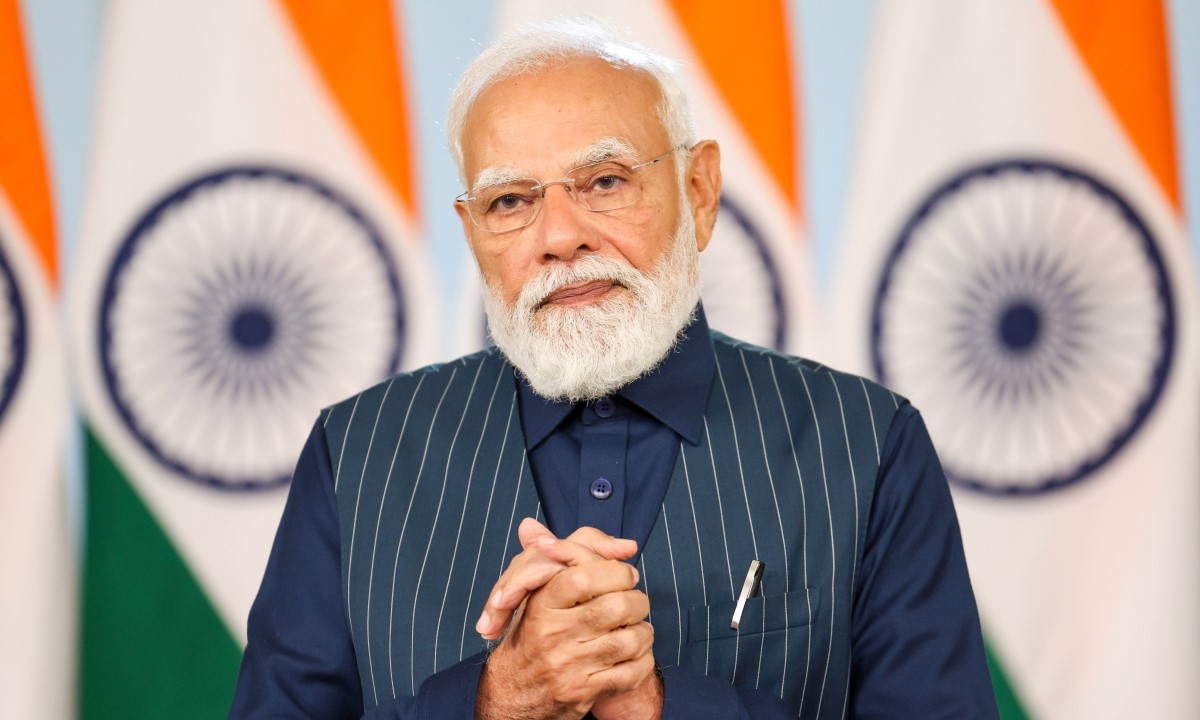
Inaugurating the seventh edition of the Global Fintech Fest (GFF) 2026 in Mumbai, Modi said India’s structural growth momentum remained strong despite a challenging global environment and cited the country’s 7.8 per cent GDP growth in the April-June quarter as evidence of its resilience.
“India’s reform express will move forward at an even faster pace,” the Prime Minister said, asserting that India’s economic trajectory continued to inspire confidence at a time when global economies and supply chains were facing turbulence.
“The April to June quarter has been the most challenging. And even in this, when India grows by 7.8 per cent… then the world gets a new confidence,” Modi said.
He also pointed to India’s upgraded sovereign credit ratings and growing risk-taking capacity, saying these developments were strengthening confidence in the economy and giving citizens greater confidence to pursue their aspirations.
A major focus of the Prime Minister’s address was the global expansion of the Unified Payments Interface (UPI), which he described as one of the biggest champions of India’s fintech story.
He called for further expansion of UPI’s international footprint and said its growing adoption abroad had significance beyond technology and payments.
“Any global conversation about fintech is incomplete without UPI,” Modi said.
Noting that UPI is now live in 11 countries, Modi described its international expansion as a “civilisation story”, reflecting India’s growing influence in the global digital economy and its ability to develop and export scalable digital public infrastructure.
“UPI is a major champion of India’s FinTech story,” he said. At the same time, Modi stressed that India’s fintech ambitions could not remain restricted to payments.
He called for digital financial innovation to penetrate deeper into credit, insurance, savings, investments and pensions, with the aim of widening access to financial services for households, businesses and underserved sections of society.
Highlighting the scale of India’s fintech ecosystem, Modi said the sector had attracted more than USD 31 billion in investments.
He also cited the expansion of financial inclusion through the Jan Dhan initiative, saying the number of accounts had crossed 53 crore, including more than 29 crore accounts held by women.
According to the Prime Minister, the combination of digital infrastructure, fintech innovation and financial inclusion had fundamentally widened access to formal financial services and transformed the manner in which millions of Indians participate in the economy.
Looking ahead, Modi identified Agentic AI, tokenisation and quantum technologies as areas with the potential to open up new possibilities in financial services.
He urged the fintech industry to harness these emerging technologies while ensuring that innovation remained secure, trusted and inclusive. Agentic AI could facilitate more autonomous financial orchestration, tokenisation could enable new forms of programmable finance, while quantum technologies could create new possibilities in advanced encryption and financial security.
However, Modi made it clear that technological advancement must go hand in hand with stronger safeguards.
He called upon fintech companies to collectively establish ambitious industry standards, particularly in cybersecurity, data protection and consumer safety.
The Prime Minister outlined four broad priorities for the fintech ecosystem: making cybersecurity in India “top notch”, developing ethical data protection standards, creating a stronger regulator-industry innovation ecosystem and establishing a fintech consumer protection index.
His emphasis on consumer protection comes at a time when financial services are increasingly being shaped by artificial intelligence, automated decision-making, tokenised assets and other technologies that could significantly alter the delivery of credit, insurance, investments and other financial products.
Modi also called for greater collaboration between the fintech industry and regulators, arguing
that innovation should be encouraged while maintaining public confidence in emerging financial technologies.
The Prime Minister also referred to what he described as a “hat-trick” during his address.
He pointed to the Bharatiya Janata Party-led government returning to power for a third consecutive term in 2024 and noted that he was attending the Global Fintech Fest for the third consecutive year, in 2024, 2025 and 2026. His remarks underlined the government’s emphasis on fintech as a key pillar of India’s wider digital transformation and economic strategy.
Touching upon Mumbai’s cultural atmosphere, Modi noted that Ganeshotsav was just days away and invoked Lord Ganesha, traditionally remembered before auspicious occasions.
“I bow to Ganpati Bappa,” he said, while extending his greetings and best wishes to participants at the fintech gathering.
The seventh edition of the Global Fintech Fest is being held in Mumbai from September 8 to 11 under the theme, “Potential to Impact: Agentic AI, Tokenisation, Quantum – Trusted, Connected, Global Systems for Inclusive Finance.”
The four-day conference has brought together policymakers, regulators, central bank governors, financial institutions, fintech companies, technology firms, investors, academics and other stakeholders from more than 100 countries.
Since emerging as an international thought-leadership platform in 2020, GFF has provided a forum for discussions on the future of finance, with the 2026 edition focusing on how emerging technologies can translate technological potential into measurable outcomes for citizens, businesses and economies.
With Agentic AI, tokenisation and quantum technologies at the centre of deliberations, the conference is examining the changing architecture of global finance, including autonomous financial systems, programmable finance, advanced security and trusted digital financial ecosystems.
Modi’s address combined an upbeat assessment of India’s economic resilience with an expansive vision for the country’s fintech sector – from taking UPI to more countries and extending digital finance beyond payments to harnessing next-generation technologies, while making cybersecurity, ethical data use, regulatory collaboration and consumer protection central to the sector’s next phase of growth.