

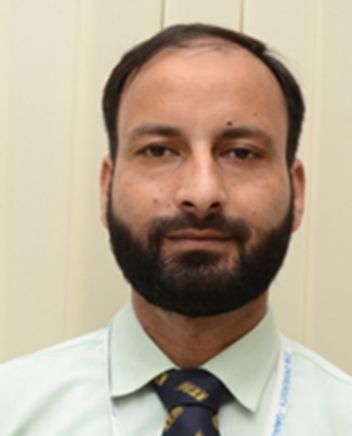
Dr. Shahid Amin
Alas, the world of teaching today looks very different. Teachers’ Day is celebrated every year with speeches, greetings, photographs, social media posts and messages of gratitude. For one day, society remembers the importance of teachers. But perhaps the more important question is: What happens to the teacher for the remaining 364 days? The reality is complicated—and, at times, deeply uncomfortable. The role of a teacher has evolved enormously. Technology has transformed classrooms. Students, parents and institutions have changed, and so have expectations. Yet somewhere in this transformation, the dignity and trust traditionally associated with the teaching profession seem to have weakened. There are, of course, wonderful students, supportive institutions and deeply respected teachers. There are exceptions everywhere. But the larger picture cannot be ignored. Today’s teacher is expected to be almost everything except simply a teacher. And after doing all this, the teacher is still expected to walk into the classroom with the same energy and enthusiasm as though none of the additional responsibilities existed. The irony is striking.
The profession that should ideally provide time for reading, reflection, research, preparation and intellectual development has increasingly become a profession of continuous reporting and multitasking. What is a teacher without teaching? This question deserves serious reflection. Teaching requires preparation. It requires reading, thinking and continuous learning. It requires understanding changing industries, technologies, economies, societies and generations. A teacher who wants to remain intellectually alive must have time to read a book, examine a research paper, update a lesson, develop a case study or simply reflect on what happened in the classroom. Yet, in many institutions today, a teacher who sits quietly and reads can sometimes appear to be doing nothing. The teacher who is constantly visible, attending meetings and producing evidence may be perceived as more productive than the teacher who is quietly preparing to teach better. Some teachers have even begun to feel guilty about simply sitting with a book.
There is an invisible feeling that someone is watching: Why are you sitting? What are you reading? What have you produced? Why are you not attending something? This culture is dangerous because intellectual work is not always visible work. A teacher may spend hours preparing a single class, reading material, designing an activity or understanding a difficult concept. None of this may appear in a report. Yet it may have a greater impact on students than several visible activities. We must therefore be careful not to confuse activity with productivity. At the same time, we frequently hear about Gen Z and Gen Alpha. These generations have grown up with smartphones, short-form videos, artificial intelligence, instant information and constant digital stimulation. Naturally, their expectations from learning are different.
There is nothing wrong with recognising this change. Teachers must evolve with the times. But there is a difference between making learning engaging and turning education into entertainment. A classroom can be interactive, experiential, technology-enabled and enjoyable. But learning cannot always be reduced to amusement. Education also demands patience, concentration, discipline, reading, failure and repetition. It requires the uncomfortable experience of struggling with a difficult idea until it finally becomes clear. Perhaps one of the greatest challenges before education today is the growing expectation of instant gratification. If a concept takes time to understand, it may be considered boring. If a teacher is strict, the teacher may be considered unfriendly. If an assignment requires genuine effort, it may be considered excessive. If attendance is enforced, the teacher may be labelled unreasonable. This raises a fundamental question: Are we preparing students for the realities of life, or are we preparing life to suit the expectations of students?
“Education is a space for intellectual and personal growth, not a customer-service transaction. Meaningful learning often requires uncomfortable truths, constructive challenges, and critical introspection from teachers, students, parents, and society alike.”
Another major change is the arrival of social media as an informal court of public opinion. Today, almost anyone can form an opinion about a teacher. A short video can go viral. A complaint can become a public debate. A classroom incident can be presented without context. Within hours, judgments can be passed about who is right and who is wrong. The teacher may not even get an opportunity to explain. Social media has democratised expression, but it has not necessarily democratised wisdom. Not every viral story contains the complete truth. Not every accusation is proof. Not every criticism is fair. And not every teacher is wrong. Another serious concern is the changing institutional hierarchy within educational organisations. In some institutions, teachers increasingly find themselves being directed or even ordered by non-teaching staff on matters that directly affect their professional responsibilities. When administrative support begins to cross into academic authority, it can create frustration, dissatisfaction and a sense that the professional identity of the teacher is being undermined.
Administrative staff have an important and valuable role in an institution, but academic and administrative responsibilities must operate with mutual respect and clearly understood boundaries. Institutions must never forget the contributions of senior teachers simply because they have become senior.Their experience has been accumulated through years of working through both good times and difficult times. They have seen institutional changes, challenges, successes and failures. They have contributed when circumstances were favourable and when they were not. There is nothing wrong with creating opportunities for the younger generation. In fact, institutions must encourage young faculty to lead, innovate and grow. But leadership should not become a replacement for experience. The best institutions are those where the energy of the young works alongside the wisdom of the experienced.
Another concern is that a teacher may teach hundreds of students and positively influence dozens of lives, but that impact may not fit neatly into a spreadsheet. Similarly, a teacher may organise numerous activities and produce excellent documentation without necessarily becoming a better teacher. Teachers must earn respect through competence, fairness, integrity and empathy. But students must also understand that teachers are human beings. They can make mistakes. They can have difficult days. They can disagree. They can say “no.” They can expect discipline. They can demand effort. And they deserve to be treated with dignity. The relationship between teacher and student should not become a transaction in which the student is always the customer and the teacher is always the service provider.
Education is not a customer-service industry. A school, college or university is not merely a place where students purchase grades, certificates and experiences. It is a place where young people are expected to grow intellectually and personally. Growth is not always comfortable. Sometimes a teacher has to challenge a student. Sometimes a teacher has to correct a student. Sometimes a teacher has to say, “This is not good enough.” That uncomfortable sentence may sometimes be one of the most valuable lessons a student receives. The situation is not hopeless, but honesty is necessary. Teachers must introspect. Institutions must introspect. Students must introspect. Parents must introspect. And society must introspect. Happy Teachers’ Day—to every teacher who continues to teach, learn, struggle, adapt and inspire.
(The author is Associate Professor at the Department of Management, President Institution’s Innovation Council, ITM Gwalior and an IIMA (FDP) Alumnus. He is also certified Business Consultant of AIMA. The views, opinions and conclusions expressed in this article are those of the author and aren’t necessarily in accord with the views of “Kashmir Horizon”)







