“The 100-day initiative has sought to create a wider public conversation around drug abuse by taking the message directly to people. The decision to organise anti-drug rallies across all 20 districts is particularly significant in a UT where geographical, social and economic conditions can vary substantially between urban centres and remote rural and mountainous areas….”
Mohammad Irfan
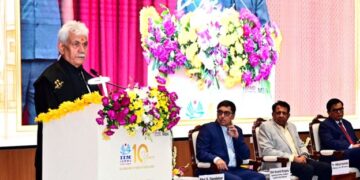
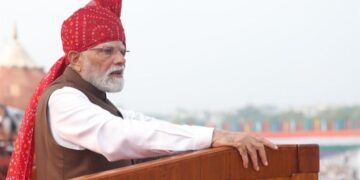
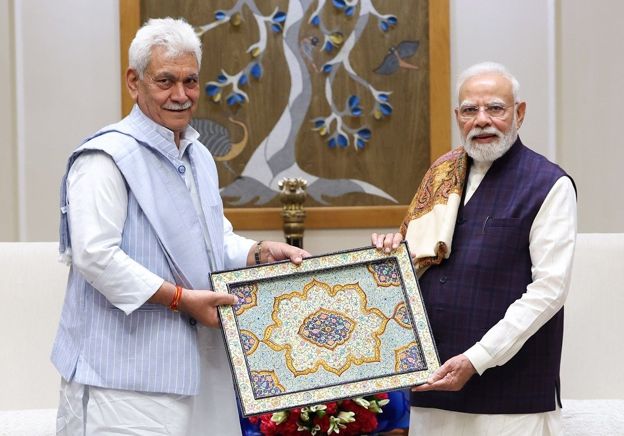
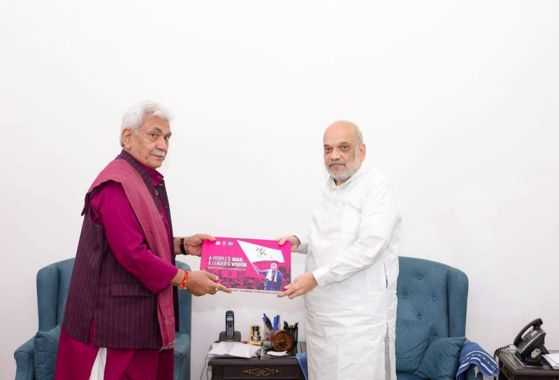 Jammu and Kashmir’s campaign against drug abuse is increasingly being projected not merely as an enforcement exercise, but as a wider social mobilisation effort aimed at influencing how communities, institutions and young people respond to the challenge of addiction. The presentation of the NashaMukt Jammu Kashmir Abhiyan – 100 Days Campaign coffee table book by Lieutenant Governor Manoj Sinha to Prime Minister Narendra Modi in New Delhi on Saturday, followed by his meeting with Home Minister Amit Shah, has brought the Union Territory’s anti-drug campaign into sharper focus at the national level. The publication, designed, curated and published by the Department of Information and Public Relations (DIPR), Jammu and Kashmir, documents initiatives undertaken during the 100-day campaign and the participation generated across the Union Territory. More than a record of government programmes, however, the campaign reflects an attempt to take the issue of drug abuse beyond government offices and enforcement agencies and into communities, educational institutions and public spaces. Sinha’s decision to personally lead anti-drug rallies across all 20 districts gave the campaign a visible grassroots character and conveyed the message that the issue requires sustained public attention. The meetings in New Delhi have also placed the campaign within the broader governance framework of Jammu and Kashmir. During his interaction with Prime Minister Modi, the Lieutenant Governor briefed him on key administrative, security and developmental matters concerning the Union Territory, while his subsequent meeting with Home Minister Amit Shah included a detailed presentation on the overall situation in J&K. The anti-drug campaign, therefore, forms part of a larger policy conversation in which security, development and social wellbeing increasingly intersect.
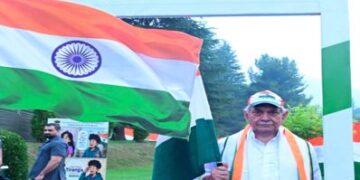
From A Campaign To A Community Movement: The 100-day initiative has sought to create a wider public conversation around drug abuse by taking the message directly to people. The decision to organise anti-drug rallies across all 20 districts is particularly significant in a Union Territory where geographical, social and economic conditions can vary substantially between urban centres and remote rural and mountainous areas. A campaign that remains concentrated in major cities can have limited reach. By taking the initiative across districts, the administration has attempted to establish a common message while creating space for local participation. District administrations, educational institutions, police, health authorities, civil society groups, community representatives and young people can all become part of such a framework. This public character also matters because addiction frequently remains a hidden problem. Families may hesitate to acknowledge substance abuse, while young people may avoid seeking assistance because of social stigma. Public awareness campaigns can help change that environment by encouraging conversations about prevention, early intervention and recovery. The presence of senior political and administrative leadership in these activities further reinforces the message that drug abuse is being treated as a major social concern rather than an issue to be addressed only after it becomes a law-and-order problem.
Why Prevention Has To Begin Early: Any long-term strategy against addiction has to place young people at its centre. Prevention is most effective when awareness begins before harmful patterns become established, making schools, colleges and youth institutions important components of the campaign. Educational institutions provide an organised environment in which young people can be exposed to information about the risks associated with drugs and the importance of seeking help. Teachers and counsellors can play an important role in recognisingbehavioural changes and guiding students towards appropriate support. But prevention is not limited to classrooms. Young people also need constructive spaces in which they can develop interests, build friendships and pursue aspirations. Sports, cultural activities, skill development, entrepreneurship and other forms of youth engagement can contribute to a wider environment in which young people have alternatives and opportunities. This is where the anti-drug campaign connects with the broader youth-development agenda. A young person who has access to education, sports, skills and meaningful opportunities is exposed to a wider set of positive pathways.
The Security Dimension Of A Social Challenge: The campaign also carries an important security dimension in Jammu and Kashmir. Drug trafficking involves organised networks, making enforcement against the supply chain an essential part of the government’s response. Police and other law enforcing agencies have a central role in identifying trafficking networks, disrupting the movement of illegal substances and taking action against those involved in the trade. Strong enforcement can help reduce the availability of drugs and prevent trafficking networks from expanding. At the same time, supply-side action has to be complemented by prevention and rehabilitation. Reducing the availability of narcotics and reducing the vulnerability of individuals to substance abuse are connected but distinct objectives. This makes coordination between security agencies, health institutions, educational authorities and community organisations especially important. Enforcement can address the supply chain, while awareness can address vulnerability and rehabilitation can help affected individuals return to productive lives. The broader significance of the J&K campaign lies in its effort to bring these different dimensions into a common public framework.
Sports, Youth And The Fight Against Addiction: The growing emphasis on sports in Jammu and Kashmir provides another important avenue for youth engagement. Sport offers discipline, routine, teamwork and a structured environment in which young people can develop confidence and social connections. This does not mean sport alone can eliminate addiction. But wider access to sporting opportunities can contribute to a healthier youth environment. The development of playgrounds, competitions, coaching and recreational activities can provide young people with additional avenues to spend their time and pursue personal goals. The Prime Minister’s recent emphasis on making sports part of everyday life also fits into this broader approach. If sports become more deeply integrated into schools and communities, their contribution can extend beyond medals and competitions to fitness, social interaction and youth development. For Jammu and Kashmir, where youth engagement is closely linked with the region’s future development, such initiatives can have a wider social significance.
Rehabilitation: From Stigma To Recovery: Prevention and enforcement cannot by themselves complete the anti-drug response. Individuals already struggling with addiction need access to treatment, counselling, rehabilitation and social support. This is also where the issue of stigma becomes critical. Families may fear social consequences if a member seeks help, potentially delaying treatment. Public campaigns can help change perceptions by encouraging people to view addiction as a serious problem requiring professional intervention rather than simply a source of shame. Recovery is rarely an overnight process. Individuals may require medical assistance, counselling, family support and help in returning to education or employment. Rehabilitation must therefore be seen as a long-term investment in people and communities. A successful Nasha Mukt J&K strategy would consequently involve both firmness against those involved in trafficking and compassion and support for people seeking to overcome addiction.
The Coffee Table Book | A Record Of Public Action: The coffee table book presented by Lieutenant Governor Sinha to Prime Minister Modi and Home Minister Shah gives the 100-day campaign an institutional record. Designed, curated and published by DIPR J&K, the publication documents the activities and initiatives undertaken during the campaign. Such documentation has value beyond its ceremonial purpose. It preserves the record of public participation, creates a reference for future programs and provides examples of initiatives that can be expanded or replicated. The book also carries a communication value. By placing the campaign’s activities in a single publication, the administration can present the scale and geographical reach of the initiative to policymakers and wider audiences. The presentation of the publication to the Prime Minister and Home Minister further highlights the importance being attached to the campaign at the highest levels of government.
“LG’s meetings in New Delhi also provide a broader context for understanding the campaign. His discussions with PM Modi and HM Shah covered administrative, security and developmental matters in Jammu and Kashmir, placing the anti-drug initiative alongside the Union Territory’s wider governance priorities..”
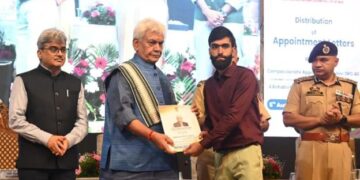
Linking Social Wellbeing With Development: The Lieutenant Governor’s meetings in New Delhi also provide a broader context for understanding the campaign. His discussions with Prime Minister Modi and Home Minister Shah covered administrative, security and developmental matters in Jammu and Kashmir, placing the anti-drug initiative alongside the Union Territory’s wider governance priorities. Development is not only about roads, infrastructure, tourism or investment. It also depends on the health, education and wellbeing of the population. For Jammu and Kashmir, the youth constitute a particularly important part of that equation. Expanding educational opportunities, employment, entrepreneurship, sports and skills can help create a broader environment in which young people can participate productively in society. The fight against addiction therefore becomes connected to the larger development objective. A healthier and more engaged population is better positioned to benefit from economic and social opportunities.
From 100 Days To Sustained Action: The most important phase of the campaign may now be the period after the 100 days. Public campaigns can create visibility and generate momentum, but lasting impact requires continuity. Awareness programmes need to continue in schools and colleges. Counselling and rehabilitation services need sustained attention. Communities need mechanisms through which families can seek assistance. Enforcement agencies need to continue disrupting trafficking networks. The campaign has already created a foundation through its district-wide outreach and political leadership. The next step is to institutionalise that effort so that anti-drug awareness becomes a continuing component of youth and community policy. This is where local participation becomes especially important. Government agencies can provide leadership and coordination, but sustained social change requires families, teachers, healthcare professionals, police personnel, sports coaches, community leaders and young people themselves to remain engaged. The objective should ultimately be to create an environment in which prevention becomes routine rather than reactive.
Kashmir Horizon View: The presentation of the Nasha Mukt Jammu Kashmir Abhiyan – 100 Days Campaign book to the Prime Minister and Home Minister gives the campaign greater national visibility. But its real significance lies in what happens on the ground across Jammu and Kashmir. The initiative has brought anti-drug messaging to all 20 districts, placed political leadership behind the campaign and created a platform for wider public participation. It has also opened the possibility of linking the fight against addiction with sports, education, healthcare, youth engagement and development. The strongest response to addiction is ultimately one that combines enforcement with prevention, awareness with rehabilitation and government action with community participation. Such an approach recognises that a drug-free society cannot be created through policing alone. It has to be built through healthier families, informed communities, engaged young people and institutions capable of providing support. For Jammu and Kashmir, this approach offers an opportunity to turn a 100-day campaign into a longer-term social mission. The coffee table book records what has been achieved during the campaign; the larger task is to carry its message into everyday life. The true measure of success will be whether young people receive the awareness and opportunities needed to make healthier choices, whether families feel confident seeking assistance, whether individuals affected by addiction can access pathways to recovery, and whether communities increasingly see prevention as a shared responsibility. If the momentum generated across the Union Territory can be sustained, the NashaMukt Jammu Kashmir Abhiyan can become more than a campaign documented in photographs and pages. It can evolve into a continuing public movement centred on prevention, recovery and the wellbeing of Jammu and Kashmir’s next generation. In that sense, the presentation of the book in New Delhi is not merely a record of the past 100 days. It is also a reminder of the larger task ahead: building a healthier, more resilient and more hopeful future for the young people of Jammu and Kashmir.
(“Team Kashmir Horizon” is committed to continuous improvement and invites feedback and suggestions from readers and its followers on social media sites. Reader insights are considered vital for enhancing content quality and empowering the community. The team encourages open communication and values the thoughts and ideas of its audience, believing that such input will enable them to serve the public more effectively. The initiative aims to ensure that readers have the best possible experience with “Kashmir Horizon”. Interested individuals can reach out to us via email at [email protected].)