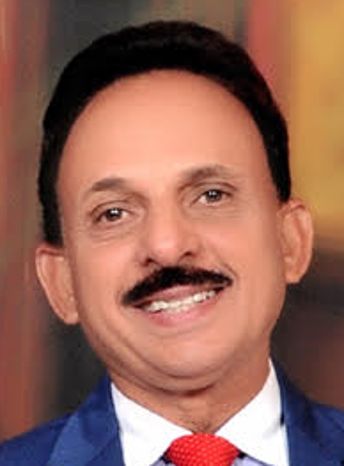
Prof R.K. Uppal
The National Education Policy (NEP) 2020 was introduced with an ambitious vision: to transform India’s education system from one dominated by rote learning, rigid academic structures and examination-centred education into a flexible, multidisciplinary, skill-oriented and innovation-driven system. Six years later, the policy remains one of the most significant education reform initiatives in independent India. Yet the central question is no longer whether NEP 2020 has an inspiring vision. The real question is whether that vision is reaching classrooms, colleges, universities and students at the required speed.
The title “NEP at 6: Big Vision, Slow Transformation” captures this tension. The policy has undoubtedly created momentum and encouraged institutions to rethink conventional approaches. But transformation in education is not achieved merely through policy documents, new terminology or structural announcements. It requires sustained implementation, adequate funding, institutional capacity, trained teachers, academic autonomy, technological support and, above all, measurable outcomes.
One of the strongest contributions of NEP 2020 has been its emphasis on flexibility. The traditional boundaries between disciplines have been challenged, while multidisciplinary education, multiple entry and exit options, skill development, vocational education and experiential learning have received greater attention. This represents an important departure from an education model in which students were often forced into narrow disciplinary pathways at a very young age.
However, flexibility alone cannot transform education. A student may have greater freedom to choose courses, but that freedom has limited value if institutions do not offer meaningful choices. Similarly, multidisciplinary education cannot succeed simply by combining departments on paper. Universities need qualified faculty, appropriate curricula, academic collaboration and infrastructure capable of supporting genuinely interdisciplinary learning.
The same concern applies to skill development. India does not merely need more degrees; it needs graduates who can think critically, communicate effectively, solve problems, use technology and adapt to changing employment requirements. NEP 2020 rightly places employability and vocational exposure higher on the agenda. But the distance between curriculum reform and workplace readiness remains considerable in many institutions.
Another major challenge is implementation at the institutional level. India has thousands of colleges and universities with enormous differences in infrastructure, faculty strength, financial resources and administrative capacity. A centrally articulated vision cannot automatically produce uniform transformation across such a diverse system. Elite institutions may adopt new programs and technologies relatively quickly, while rural and resource-constrained institutions may struggle even to maintain existing academic standards.
This creates a serious risk: NEP could become a two-speed reform. Institutions with resources may move rapidly towards multidisciplinary, technology-enabled and innovation-oriented education, while weaker institutions remain trapped in traditional teaching and examination practices.
Faculty development is therefore critical. Teachers cannot be expected to implement a new educational philosophy without appropriate training and institutional support. NEP requires teachers to move beyond conventional lecture-based instruction towards experiential learning, project-based education, critical thinking and technology-supported teaching. This is a substantial professional transformation. Faculty members need time, training, resources and academic freedom to experiment with new methods.
“NEP 2020 began with a big vision. Six years later, India has moved forward, but the transformation remains incomplete. The challenge now is to convert policy ambition into institutional reality. The next six years should not simply be another period of implementation. They should be a period of measurable educational transformation. India does not need more promises alone. It needs better learning, stronger institutions, innovative research, skilled graduates and visible outcomes. NEP at 6 is therefore not the end of the journey. It is the moment to ask whether India is moving fast enough.”
Higher education also requires stronger research and innovation. India cannot become a knowledge economy merely by increasing enrolment or modifying degree structures. Universities must become centers of original research, entrepreneurship, patents, technological development and solutions to real social and economic problems. The success of NEP should therefore be measured not only by the number of new programmes introduced but also by the quality and impact of research emerging from Indian institutions.
Another concern is the continuing disconnect between education and employment. India faces a paradox: millions of young people seek employment while employers frequently report difficulty finding candidates with appropriate skills. This suggests that the problem is not simply the number of graduates but the relevance and quality of education. NEP must therefore be judged by whether it improves learning outcomes, employability, entrepreneurship and productive participation in the economy.
The policy also places considerable emphasis on technology and digital learning. Technology can democratize access to knowledge, but digital transformation cannot substitute for good teachers or quality institutions. Digital inequality remains a serious challenge, particularly for students from economically weaker and rural backgrounds. A technology-driven education system must therefore be inclusive rather than creating another layer of educational inequality.
Perhaps the biggest test of NEP is whether it can move from compliance to transformation. Institutions should not implement NEP merely because regulations require them to change their curricula or administrative structures. The spirit of the policy demands experimentation, innovation and institutional responsibility. Universities and colleges need the autonomy to develop models suited to their students and local economies while maintaining academic standards.
Six years is long enough to assess direction but perhaps not long enough to expect the complete transformation of a system as large as India’s. Educational reform is inherently gradual. Nevertheless, six years provide sufficient evidence to identify implementation gaps and accelerate corrective action.
The next phase of NEP must therefore focus less on announcing reforms and more on delivering results. India needs stronger faculty development, better infrastructure, greater institutional autonomy, meaningful industry-academia partnerships, improved research funding, stronger vocational education and systematic measurement of learning outcomes.
Most importantly, students must remain at the center of the reform. NEP should ultimately be judged by a simple set of questions: Are students learning better? Are they becoming more creative and employable? Are universities producing meaningful research? Are graduates prepared for an AI-driven economy? Are rural and disadvantaged students receiving comparable opportunities? And are Indian institutions becoming more innovative and globally.
(The author is Principal, Guru Gobind Singh College of Management and Technology, Gidderbaha, Punjab. The views, opinions and conclusions expressed in this article are those of the author and aren’t necessarily in accord with the views of “Kashmir Horizon”)
[email protected]