“LG Sinha assured them that the Jammu and Kashmir administration would remain firmly by their side in the years ahead. He said every possible effort would be made to ensure the welfare and dignity of the martyr’s family..”
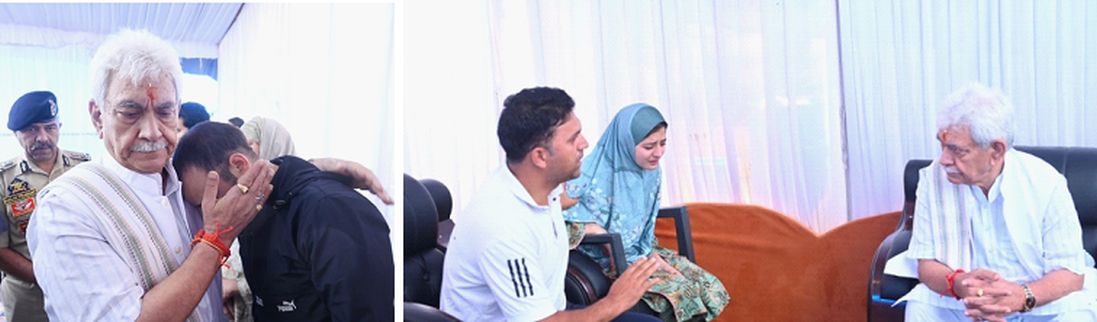
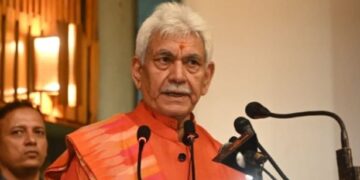
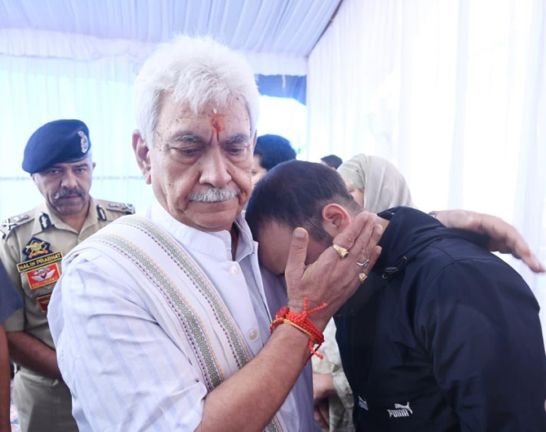
This week in the quiet village of Lalpora in central Kashmir’s Beerwah area of Budgam district, grief hung heavily in the air as Lieutenant Governor Manoj Sinha arrived to meet the family of martyred Jammu and Kashmir Police Head Constable Ashiq Hussain Qureshi. The visit was not merely an expression of official condolences; it was a moment that underscored the human cost of terrorism, the sacrifices made by security personnel, and the administration’s commitment to supporting families left behind. Ashiq Hussain Qureshi laid down his life while performing his duty during a terror attack in Anantnag earlier this week. His death has once again highlighted the dangers faced by police personnel in Jammu and Kashmir, where local officers continue to stand on the frontlines of counter-terrorism operations. As Lieutenant Governor Sinha entered the modest family home, he was greeted by relatives, neighbours, and villagers mourning the loss of a man remembered not only as a dedicated policeman but also as a caring son, husband, father, and neighbour. Offering prayers for the departed soul, the Lieutenant Governor paid floral tributes and spent time with the bereaved family, listening to their concerns and sharing in their grief. Calling Ashiq Hussain Qureshi a symbol of courage and unwavering commitment, Sinha said the nation would forever remain indebted to brave personnel who make the ultimate sacrifice in protecting innocent lives and safeguarding the country’s sovereignty. “The entire nation is proud of braveheart Ashiq Hussain Qureshi. His courage, sacrifice, and devotion to duty will remain etched in our collective memory,” the Lieutenant Governor said while interacting with the family. For the family, the visit brought reassurance that their sacrifice had not gone unnoticed. Losing a loved one to terrorism leaves an emotional void that cannot be filled, but official recognition and continued support often provide families with a sense of dignity and belonging.
Standing With The Family: During his interaction with the bereaved family, the Lieutenant Governor assured them that the Jammu and Kashmir administration would remain firmly by their side in the years ahead. He said every possible effort would be made to ensure the welfare and dignity of the martyr’s family. One of the most significant assurances came in the form of support for Ashiq Hussain Qureshi’s young son. Sinha announced that the administration would extend all necessary assistance until the child completed his education and became eligible for a compassionate government appointment. The assurance reflects the administration’s policy of supporting families of personnel who lose their lives while serving the nation. Beyond financial assistance, such commitments are aimed at providing long-term stability to dependents who suddenly find themselves without their primary breadwinner. Officials accompanying the Lieutenant Governor also reviewed the family’s immediate requirements and assured them that all entitled benefits would be extended without delay.
The Human Face Of Policing: The death of Head Constable Ashiq Hussain Qureshi is another reminder that the burden of combating terrorism in Jammu and Kashmir is often borne by local police personnel. Unlike many other security forces, J&K Police officers serve within their own communities, balancing professional responsibilities with personal ties to the regions where they operate. Over the past three decades, hundreds of Jammu and Kashmir Police personnel have lost their lives while confronting militants, protecting civilians, and maintaining public order. Their role has steadily evolved from conventional policing to becoming a crucial component of the Union Territory’s counter-insurgency framework. Security experts often describe the Jammu and Kashmir Police as the backbone of intelligence gathering in the region. Their familiarity with local terrain, language, and social dynamics enables them to play a critical role in preventing attacks and tracking militant movements. However, this proximity also exposes them and their families to greater risks. Terror groups have frequently targeted local policemen in attempts to spread fear and discourage recruitment into the force.
Remembering The Spirit Of Sacrifice : Addressing those gathered during the visit, the Lieutenant Governor said the martyr’s ideals of dedication, patriotism, and commitment to public service would continue to inspire generations. “The martyr’s ideals of love for duty and honour for the motherland will continue to inspire generations in building a peaceful and prosperous Union Territory,” he said. His remarks echoed the broader message that the sacrifices made by security personnel are foundational to maintaining peace and democratic institutions in Jammu and Kashmir. Throughout the history of the region’s conflict, countless security personnel have displayed exceptional bravery, often placing themselves between civilians and danger. Their stories form an integral part of Jammu and Kashmir’s journey towards normalcy.
Renewed Resolve Against Terrorism: The Lieutenant Governor also used the occasion to reiterate the administration’s determination to completely eradicate terrorism from Jammu and Kashmir. He said that under the leadership of Prime Minister Narendra Modi, significant progress had been made in dismantling the terror ecosystem that had long fuelled violence in the region. According to Sinha, sustained intelligence-based operations, enhanced coordination among security agencies, improved technological surveillance, and targeted actions against terror financing have collectively weakened militant networks over the past several years. While acknowledging that isolated attacks continue to occur, he maintained that the administration remains committed to ensuring that those responsible are brought to justice and that terrorism finds no space in Jammu and Kashmir. His statement reflected the government’s consistent position that security operations will continue alongside developmental initiatives aimed at strengthening peace and stability.
A Message To Youth: Perhaps the most important part of the Lieutenant Governor’s address was directed towards the youth of Jammu and Kashmir. He urged young people to take inspiration from the courage and sacrifice of martyrs like Ashiq Hussain Qureshi rather than being misled by extremist ideologies. Sinha called upon society to remain united against terrorism, emphasising that peace and development can flourish only when violence is rejected collectively. He appealed to the younger generation to contribute positively towards nation-building through education, innovation, entrepreneurship, and public service. In recent years, the administration has increasingly focused on engaging youth through employment initiatives, sports infrastructure, skill development programmes, and educational opportunities, arguing that such efforts create alternatives to radicalisation.
The Cost Of Terrorism: Behind every statistic related to terrorism lies a family permanently altered by loss. For Ashiq Hussain Qureshi’s family, the sacrifice is deeply personal. A father will no longer return home after duty. A child will grow up carrying memories shaped more by stories than lived experiences. Parents have lost a son whose commitment to duty ultimately demanded the highest price. The Lieutenant Governor’s visit highlighted this human dimension, reminding people that every martyr represents dreams interrupted, responsibilities left unfinished, and families forced to rebuild their lives. Communities across Jammu and Kashmir have repeatedly witnessed such sacrifices over the decades. Each tragedy reinforces the urgent need for lasting peace that ensures future generations are spared similar suffering.
Building A Peaceful Future: The Government has consistently maintained that development and security must move together. Infrastructure projects, investments in education, improved healthcare, tourism promotion, and industrial growth are viewed as essential components of long-term peace. Officials believe that sustained development reduces the space available for extremist narratives while creating opportunities for youth. However, such progress remains dependent upon a secure environment where civilians, businesses, students, and institutions can function without fear. The sacrifices of security personnel like Ashiq Hussain Qureshi, therefore, are often described as protecting not only lives but also the conditions necessary for economic and social development.
“The stories of officers who sacrifice their lives while protecting others continue to inspire serving personnel facing similar risks every day.”
Honouring Those Who Serve: Across Jammu and Kashmir, memorial ceremonies for fallen police personnel serve as reminders that peace often comes at a significant cost. The stories of officers who sacrifice their lives while protecting others continue to inspire serving personnel facing similar risks every day. Recognition through honours, welfare measures, educational support for children, and compassionate appointments represents society’s acknowledgment of those sacrifices. For families, these measures cannot replace the loved ones they have lost, but they provide assurance that the nation remembers their contribution.
A Legacy That Endures : As the Lieutenant Governor concluded his visit to Lalpora, the emotional scenes reflected both sorrow and resilience. Family members thanked him for personally visiting their home, while neighbours gathered to pay their respects to the fallen policeman. Ashiq Hussain Qureshi’s legacy now extends beyond his years of service. His story has become part of the larger narrative of Jammu and Kashmir’s continuing struggle against terrorism and its aspiration for lasting peace. His courage, remembered by colleagues, honoured by the administration, and respected by the community, stands as a reminder of the extraordinary sacrifices made by ordinary individuals in the service of the nation. The Lieutenant Governor’s assurance that the administration would stand with the family in the years ahead carried a message extending beyond one household. It reflected the state’s commitment to honouring those who protect society, supporting those they leave behind, and continuing efforts to build a Jammu and Kashmir where such sacrifices become a part of history rather than a recurring reality. As Jammu and Kashmir moves forward on its journey towards stability and development, the memory of martyrs like Head Constable Ashiq Hussain Qureshi will remain a powerful symbol of courage, duty, and unwavering devotion to the nation. Their sacrifices continue to remind society that peace is not merely achieved through policy or infrastructure, but also through the dedication of men and women willing to place the safety of others above their own lives.
Kashmir Horizon View: The sacrifice of Head Constable Ashiq Hussain Qureshi serves as a solemn reminder that the fight against terrorism in Jammu and Kashmir is far from over. While security forces continue to neutralise threats, lasting peace cannot be achieved through military action alone. It requires a comprehensive strategy that combines robust security measures with social, economic, and community-led initiatives. First, the welfare of families of martyred security personnel must remain a top priority. Timely financial assistance, compassionate appointments, quality education for children, healthcare, and psychological support should be institutionalised so that families are not left to struggle after the loss of their loved ones. The assurance extended by Lieutenant Governor Manoj Sinha to support the martyr’s son until he completes his education should serve as a model for sustained state support. Second, efforts to dismantle the terror ecosystem must continue with equal emphasis on preventing radicalisation. Schools, colleges, religious institutions, civil society organisations, and local communities have a critical role in promoting values of peace, constitutional rights, and social harmony. Young people should be provided with opportunities in education, entrepreneurship, sports, and skill development so that they are empowered to build their futures instead of falling prey to extremist propaganda. Third, stronger community policing and public participation are essential. The Jammu and Kashmir Police, being deeply rooted in local communities, can further strengthen trust through regular engagement with citizens. Encouraging the timely sharing of information and fostering cooperation between residents and security agencies can significantly improve efforts to prevent terror incidents before they occur. At the same time, development must continue to reach every corner of the Union Territory. Better infrastructure, improved healthcare, quality education, tourism, and employment opportunities will reinforce public confidence and reduce the conditions that militant groups seek to exploit. Economic progress and security should complement each other rather than function as separate objectives. Finally, the stories of martyrs like Ashiq Hussain Qureshi must be preserved and shared with future generations. Their courage and dedication should become part of public memory through educational initiatives, memorials, and community programmes that inspire patriotism and a commitment to public service.
(“Team Kashmir Horizon” is committed to continuous improvement and invites feedback and suggestions from readers and its followers on social media sites. Reader insights are considered vital for enhancing content quality and empowering the community. The team encourages open communication and values the thoughts and ideas of its audience, believing that such input will enable them to serve the public more effectively. The initiative aims to ensure that readers have the best possible experience with “Kashmir Horizon”. Interested individuals can reach out to us via email at [email protected].)