Asad calls for Mission-Mode Convergence to Transform Rural Women’s Livelihoods
Says “2.40 Lakh SHG Women Achieve Lakhpati Didi Status, 3.64 Lakh Target Set for J&K by 2029”
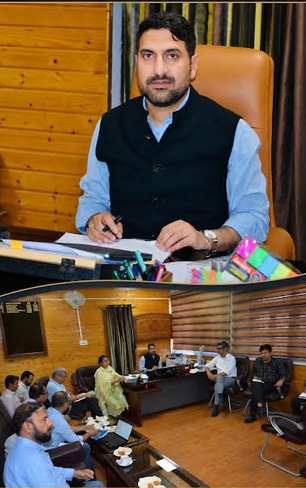
Srinagar| July, 15: Secretary, Rural Development Department (RDD) and Panchayati Raj, Mohammad Aijaz Asad, today chaired the meeting of the Union Territory Level Steering Committee on the Lakhpati Didi Initiative under the Jammu & Kashmir Rural Livelihoods Mission (JKRLM-UMEED), directing all stakeholder departments to adopt a mission-mode approach for transforming women Self-Help Group (SHG) members into sustainable entrepreneurs through effective convergence, skill development and financial inclusion.
The meeting was attended by Mission Director, JKRLM, Dr. Shubhra Sharma; Director, Agriculture & Farmers Welfare, J&K; Directors, Animal Husbandry, Jammu and Kashmir; Directors, Social Welfare, Jammu and Kashmir; Chief Operating Officer, Himayat (DDU-GKY), J&K; Additional Secretary RDD, Waseem Raja, Deputy Director, Fisheries, Kashmir; and other senior officers.
Addressing the meeting the Secretary announced a renewed commitment to the Lakhpati Didi Initiative, aimed at empowering rural women in Jammu & Kashmir to create sustainable micro-enterprises and achieve annual household incomes exceeding ₹1 lakh. Currently, 2.40 lakh women have attained Lakhpati Didi status, with a target of reaching 3.64 lakh by 2029. This requires focused efforts to support an additional 1.24 lakh beneficiaries through various means, including convergence of existing schemes, enterprise development, access to credit, and skill enhancement. Convergence is emphasized as a critical element of the initiative, with a directive for all stakeholder departments to align their flagship programs with the Jammu & Kashmir Rural Livelihoods Mission (JKRLM) and prioritize eligible Self-Help Group (SHG) households. The Secretary highlighted the necessity of developing household-level enterprise plans, ensuring timely access to institutional credit, and providing ongoing support and market linkages for women entrepreneurs. Departments are tasked with creating a comprehensive convergence blueprint to identify beneficiary support in sectors such as agriculture, livestock, and fisheries, ensuring coordinated implementation at the village level. Quality skill development is also a priority, with a call for partnerships with national institutions and training organizations to adopt best practices. The Secretary proposed exposure visits to successful livelihood models and encouraged engagement with private apparel brands to explore outsourcing opportunities for women-led enterprises, which could enhance household incomes. He stressed the importance of practical, market-oriented skills in capacity building, directing departments to provide hands-on training in high-value agricultural activities. The initiative aims to expand convergence into emerging sectors like digital services and food processing, promoting a diversified livelihood portfolio for greater economic resilience. The Digital Aajeevika Register (DAR) and the Enterprise Planning Digital Tool (EPDT) are being utilized for beneficiary tracking and customized enterprise planning, enhancing evidence-based monitoring. Financial inclusion measures were reviewed, revealing a target of ₹1,200 crore in institutional credit under the SHG Bank Linkage Programme for potential Lakhpati Didis, alongside support for 4,200 women through the Lal Ded Stree Shakti Scheme. Banking outreach initiatives are also in place, with Bank Mitras and Banking Correspondents providing services in rural areas, complemented by financial literacy camps to bolster the financial security of SHG members. In conclusion, the Secretary reiterated that the Lakhpati Didi Initiative is a transformative movement focused on empowering rural women through entrepreneurship and sustainable livelihoods. He urged all departments to collaborate closely with JKRLM, adopt a results-oriented approach, and ensure the timely achievement of targets through measurable outcomes and strong institutional convergence.