“J&K progressing well towards landmark labour reforms”
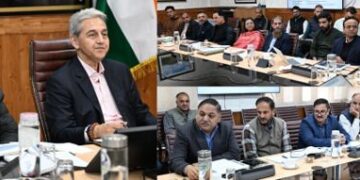
Srinagar: Chief Secretary, Atal Dulloo Wednesday chaired a review meeting to assess the preparedness of the Labour & Employment Department for implementation of the Four Labour Codes enacted by the Government of India. The meeting besides Secretary, Labour & Employment was attended by the Commissioner Secretary, Law; DG, Codes; Labour Commissioner; and other senior officers.
During the meeting, the Department made a comprehensive presentation highlighting the status of rule-making, institutional preparedness, digital integration, awareness initiatives and the roadmap for operationalising the new labour law regime across the Union Territory.
Addressing the meeting Chief Secretary emphasized the transformative potential of the Labour Codes in enhancing labour welfare, social security, industrial harmony, and the ease of doing business in Jammu & Kashmir. He expressed confidence that their effective implementation would foster inclusive economic growth, formalize employment, improve working conditions, and ensure transparent labour governance. The Chief Secretary commended the Labour & Employment Department for its progress and urged the completion of remaining procedural formalities promptly. Secretary of Labour & Employment, Kumar Rajeev Ranjan, highlighted that the Labour Codes represent a significant reform in India’s labour landscape, consolidating 29 Central Labour Laws into four comprehensive Codes: the Code on Wages, 2019; Industrial Relations Code, 2020; Code on Social Security, 2020; and Occupational Safety, Health and Working Conditions Code, 2020. These reforms aim to create a simplified, transparent, and worker-centric governance framework while improving the business environment. The Labour Commissioner, Charandeep Singh, reported that rules under all four Labour Codes have been developed, with the Industrial Relations Code already notified. The Occupational Safety Code is nearing final notification, while the Wages and Social Security Codes are in the consultation phase. The Department has conducted extensive outreach, organizing 617 Information, Education and Communication camps and 283 capacity-building programs, reaching nearly five lakh stakeholders. Key reforms introduced under the Labour Codes include universal minimum wage protection, a National Floor Wage, and a unified definition of wages to enhance social security benefits. The implementation will necessitate the establishment of four statutory bodies to oversee various welfare measures. The Labour & Employment Department has proposed a comprehensive strategy for implementation, including a dedicated Project Management Unit and enhanced IT infrastructure, with a funding proposal of Rs. 10.44 crore submitted to the Finance Department for effective execution across the Union Territory.