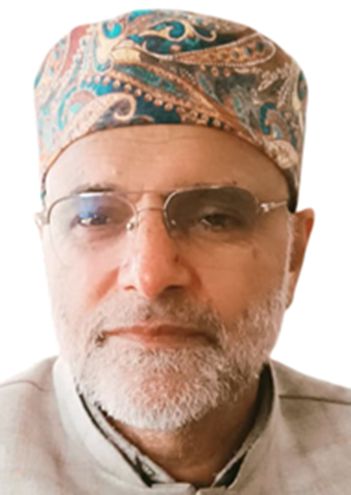
Introduction: The history of the Tablighi Jamaat in Kashmir represents one of the most significant chapters in the religious revival of twentieth-century Muslim society in the Valley. While Kashmir has long been celebrated for its rich spiritual heritage, shaped by eminent saints, scholars, and the indigenous Rishi tradition, the arrival of the Tablighi Jamaat introduced a systematic movement of Islamic revival centred on personal reform, mosque-based education, moral purification, and peaceful da’wah (invitation to Islam). Rather than engaging in political activism, the movement sought to revive faith through strengthening individual character, regular worship, and adherence to the Sunnah of the Prophet Muhammad (SAW). The success of the Tablighi Jamaat in Kashmir owes much to the sacrifices of dedicated scholars and lay workers who devoted their lives to this mission. Among these indigenous pioneers, Ameer Ahmad Khan Sahib, formerly known as Parvez Ahmad Khan, occupies a distinguished position. For more than six decades, he has remained one of the foremost leaders of the movement in Jammu and Kashmir. His life exemplifies sincerity (ikhlāṣ), humility (tawāḍuʿ), sacrifice (qurbānī), patience (ṣabr), and unwavering commitment to the service of Islam. His contribution not only strengthened the organisational structure of the Tablighi Jamaat in Kashmir but also inspired thousands to adopt a life centred upon faith, worship, and moral discipline.
The Emergence Of The Tablighi Jamaat In Kashmir: The Tablighi Jamaat was founded in the early twentieth century by Maulana Muhammad Ilyas Kandhlawi, whose famous call, “O Muslims, become true Muslims,” reflected his conviction that the revival of the Muslim community could only begin with the reform of individuals. His movement emphasised the strengthening of faith (īmān), regular observance of prayer, remembrance of Allah, acquisition of religious knowledge, respect for fellow Muslims, sincerity of intention, and sacrifice in the path of Allah. The movement reached Kashmir through Maulana Qazi Abdullah, one of the trusted deputies of Maulana Ilyas. During his visits to the Valley, he established contacts with local scholars and encouraged mosque-centred missionary work. His efforts received valuable support from scholars such as Maulana Sayyid Abdul Wali Shah, whose cooperation helped the movement gain acceptance among the people of Kashmir. The first major Tablighi gathering near Baramulla marked a turning point in the history of the movement. Thousands attended the congregation, and local leadership gradually emerged alongside the missionaries arriving from the Markaz at Nizamuddin in Delhi. It was within this atmosphere of religious awakening that a young Parvez Ahmad Khan first encountered the movement that would shape the rest of his life.
Family Background, Early Life: Ameer Ahmad Khan Sahib belongs to a respected family whose ancestors originally migrated from Afghanistan before residing in Rawalpindi and eventually settling in Baramulla, then one of Kashmir’s principal commercial centres. His father, Nizam-ur-Rahman, served as a senior officer in the Revenue Department and was widely respected for his honesty, integrity, and religious commitment. His mother was equally recognised for her piety and exemplary moral character. Growing up in an educated household, Ameer Ahmad Khan developed a deep love for learning. His family possessed an impressive collection of Islamic books, enabling him to cultivate extensive reading habits from an early age. Those who knew him recall that he generously shared valuable books with younger students, encouraging them to develop sound religious understanding. He completed his graduation at a time when higher education was relatively uncommon in Kashmir. Because of his academic qualifications and family background, he possessed excellent prospects for a distinguished government career. During his youth, he was also an accomplished sportsman and actively participated in various athletic activities. Despite these opportunities, his deepest inclination remained towards religious service and spiritual development rather than worldly advancement.
Dedication To Da’wah: The decisive turning point in his life came when he met Maulana Qazi Abdullah during one of the latter’s visits to Baramulla. Deeply impressed by the message of spiritual reform and personal sacrifice, the young Parvez Ahmad Khan immediately associated himself with the Tablighi Jamaat. His sincerity, discipline, hospitality, and organisational abilities quickly distinguished him among the early workers. One of the most remarkable episodes of his life was his decision to abandon a promising government career. Historical accounts indicate that he had been selected for appointment as Naib Tehsildar, a prestigious administrative position that could eventually have led to senior civil service appointments. Instead of joining government service, however, he voluntarily renounced this opportunity and dedicated his entire life to the work of da’wah and tabligh. This decision reflected the central philosophy of the Tablighi Jamaat: that service to religion demands practical sacrifice rather than mere verbal commitment. His choice became a source of inspiration for generations of workers who viewed his example as a living demonstration of complete devotion to Allah.
“Ameer Ahmad Khan Sahib stands as a pillar of Kashmir’s religious history, shifting from a prestigious government career to decades of selfless leadership in the Tablighi movement. Renouncing worldly power for a lifelong commitment to da’wah (missionary work), his legacy of moral integrity and steadfast faith remains a blueprint for peaceful Islamic revival and a lasting inspiration for generations.”
Organisational Leadership: As the movement expanded throughout Kashmir, Ameer Ahmad Khan gradually assumed increasing responsibilities. He became one of the principal organisers of missionary tours, annual congregations (ijtimās), local consultation meetings (mashwarah), and mosque-based educational programmes. His leadership style remained characterised by consultation, humility, and quiet efficiency rather than personal prominence.
Unlike many organisational leaders, he never sought publicity or recognition. His concern was always the strengthening of local institutions and the spiritual development of workers. He devoted himself to training younger generations, encouraging them to cultivate sincerity, discipline, and good character before assuming positions of responsibility. His organisational skills played an essential role in consolidating the Tablighi Jamaat throughout the Valley, transforming it from a small missionary effort into one of the largest religious movements in Kashmir.
Leadership During Difficult Times: The outbreak of armed conflict in Kashmir around 1990 created unprecedented challenges for religious movements. External missionary groups found it extremely difficult to enter the Valley, and many normal religious activities were severely disrupted. Under these circumstances, the responsibility for sustaining the movement fell largely upon local workers. Ameer Ahmad Khan emerged as one of the principal figures who ensured continuity during this difficult period. He continued travelling throughout Kashmir, encouraging local jama’ats to remain active despite adverse conditions. Mosques continued to function as centres of religious learning and spiritual reform, and missionary work was sustained primarily through the dedication of indigenous workers. His calm leadership during these turbulent years demonstrated remarkable resilience and unwavering faith. Rather than allowing social instability to halt religious work, he strengthened local organisation and inspired confidence among volunteers.
Personal Character, Spiritual Influence: The personality of Ameer Ahmad Khan has earned admiration across different sections of Kashmiri society. He is consistently described as exceptionally humble, disciplined, hospitable, patient, and spiritually devoted. Despite occupying the highest position in the Tablighi Jamaat in Jammu and Kashmir, he has always regarded himself as a servant of Islam rather than a public leader. His humility is reflected in simple but meaningful gestures. He is known to greet young students first, rise to honour ordinary visitors, and treat every individual with dignity and affection. His speeches are marked by simplicity rather than rhetoric, while his personal conduct serves as his most effective form of preaching. His influence extends well beyond the Tablighi Jamaat. Scholars belonging to different schools of Islamic thought hold him in high esteem, and numerous madrasas throughout Kashmir seek his guidance and advice. Throughout his life, he consciously avoided political controversies and preferred cooperation, reconciliation, and mutual respect among various religious organisations. In recognition of his spiritual maturity, he also received authorisation from his spiritual guide to accept disciples through bay’ah. Nevertheless, he remained detached from personal fame and consistently emphasised that all efforts should be directed towards the pleasure of Allah rather than individual recognition.
Legacy, Contribution: The remarkable expansion of the Tablighi Jamaat throughout Kashmir owes much to the sacrifices of pioneers like Ameer Ahmad Khan Sahib. Thousands now participate in missionary tours, educational circles, mosque activities, and annual gatherings across the Valley. Much of this institutional strength rests upon foundations laid by leaders who quietly devoted their entire lives to the service of religion. Ameer Ahmad Khan represents a bridge between the pioneering missionaries from the Markaz at Nizamuddin and the later indigenous leadership that firmly established the movement in Kashmir. His decision to renounce worldly ambitions, his decades of tireless travel, his organisational abilities, and his steadfast commitment to peaceful religious reform have made him one of the most respected figures in contemporary Kashmiri Islamic history. Even in advanced age, he continues to participate actively in missionary work, refusing exemption from long journeys despite repeated suggestions by colleagues. His lifelong example demonstrates that genuine leadership is rooted not in authority or public acclaim but in humility, sacrifice, perseverance, and unwavering faith.
Conclusion : The history of the Tablighi Jamaat in Kashmir is fundamentally a history of peaceful religious renewal. By concentrating on individual moral reform, regular worship, and spiritual education rather than political activism, the movement has profoundly influenced the religious life of the Valley. Its success has depended upon the dedication of selfless workers who devoted their lives to serving Islam with sincerity and humility. Among these pioneers, Ameer Ahmad Khan Sahib occupies an exceptional place. His early association with Maulana Qazi Abdullah, his voluntary renunciation of a prestigious government career, his decades of organisational leadership, and his unwavering commitment to da’wah have made him one of the principal architects of the Tablighi movement in Kashmir. His life continues to inspire scholars, students, and ordinary Muslims alike, demonstrating that enduring influence is achieved not through worldly power but through steadfast faith, moral integrity, and selfless service to the cause of Allah. His contribution constitutes an enduring chapter in the religious history of modern Kashmir and remains a model of peaceful Islamic revival for future generations.
(The author a veteran academician is a former Professor and Head Department of Islamic Studies, Kashmir University. The views, opinions and conclusions expressed in this article are those of the author and aren’t necessarily in accord with the views of “Kashmir Horizon”)
[email protected]