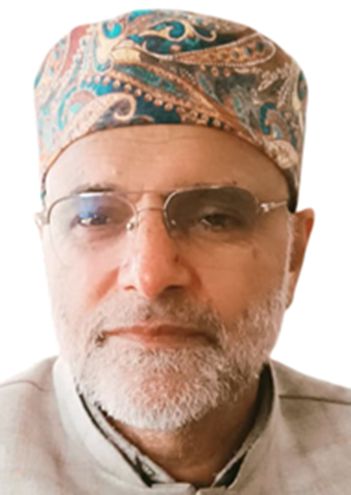
Prof. Hamid Naseem Rafiabadi
The tragedy of Karbala represents one of the most significant events in early Islamic history, unfolding within a complex environment of political transformation, administrative centralization, and moral disagreement over leadership. The event took place in 61 AH (680 CE) and involved Imam Husayn ibn Ali, the grandson of the Prophet Muhammad ﷺ, and the governing authority of the Umayyad state under Yazid ibn Mu‘awiya. To understand the actual situation of Karbala, it is necessary to examine the broader historical conditions, the political dynamics of the time, and the sequence of developments that led to the final confrontation. Expansion of the Islamic State and Formation of New Urban Centers Following the early expansion of Islam beyond the Arabian Peninsula, new administrative and military centers were established in different regions. Among the most important of these were Kufa and Basra in Iraq. These cities were created as organized settlements to support governance, military deployment, and social administration in newly conquered territories.
Kufa, in particular, was developed with a structured urban plan, including wide roads, designated market areas, and a central mosque. It became a significant center of political activity and intellectual engagement. However, it was also characterized by shifting political sentiments and internal divisions. Basra, while also important, developed under different environmental and social conditions, influencing the character of its inhabitants. These cities reflected the transition from a simpler Arabian social structure to a more complex imperial system that required new administrative mechanisms and governance styles.
Early Centers of Authority| Mecca, Medina: Mecca and Medina remained central to Islamic religious and historical identity. Mecca, originally a major religious and commercial center in Arabia, was transformed through the advent of Islam into a symbol of monotheism and unity. Medina became the first base of the Islamic community, serving as the center of governance during the Prophet’s lifetime. After the passing of the Prophet, leadership continued from these regions, but the rapid expansion of the Islamic state led to the emergence of new political centers and administrative capitals. This shift contributed to changes in governance structures and introduced varying interpretations of leadership responsibilities.
The Rise of Damascus As A Political Center: Damascus emerged as a major administrative capital during the Umayyad period. It was an ancient and well-established city with a developed economic and cultural environment. Under Umayyad rule, it became the center of political authority. The governance style associated with Damascus reflected imperial characteristics, including centralized decision-making, structured bureaucracy, and courtly administration. This environment differed significantly from earlier forms of leadership in Arabia, which had been more closely associated with simplicity and direct communal consultation. These changes contributed to differences in political outlook between various groups within the Islamic world, especially regarding the nature and legitimacy of authority.
Consolidation Of Umayyad Authority: With the establishment of Umayyad rule, political authority became increasingly centralized. Provincial governors were appointed to manage different regions, and administrative control was strengthened across the expanding empire. This system provided stability and organization but also led to concerns among some groups regarding the direction of governance. A key development in this period was the succession of Yazid ibn Mu‘awiya as ruler. His accession marked a shift toward hereditary leadership rather than selection through consultation. This transition became a point of disagreement for several individuals and groups within the broader Muslim community.
Imam Husayn Ibn Ali, His Position: Imam Husayn ibn Ali held a prominent position due to his close relationship with the Prophet Muhammad ﷺ and his reputation for integrity and moral standing. Following the establishment of Yazid’s rule, Husayn did not offer immediate allegiance. His position was based on a refusal to recognize authority that he considered inconsistent with earlier principles of leadership. Husayn’s stance was not initially framed as a pursuit of political power but as a moral response to the prevailing conditions of governance. His position attracted attention from various groups who were dissatisfied with the political situation.
Political Developments In Kufa : Kufa became a focal point of political activity and opposition sentiment. Many individuals in the city expressed dissatisfaction with the ruling authority and extended invitations to Imam Husayn, encouraging him to come and assume leadership. These invitations created the expectation that Husayn would receive support upon arrival. However, the political situation in Kufa was unstable. Leadership changes, shifting allegiances, and external pressure from the central authority significantly altered the situation before Husayn reached the region. A key turning point was the elimination of Husayn’s envoy, Muslim ibn Aqil, who had been sent to assess the situation in Kufa. This development indicated that the earlier assurances of support had collapsed.
“The tragedy of Karbala was the culmination of complex political, social, and administrative shifts in early Islamic history. It began when Imam Husayn traveled from Mecca to Kufa at the invitation of supporters, only to be intercepted after that support collapsed. The ensuing confrontation at Karbala resulted in the death of Husayn and his companions, and the imprisonment of his surviving family, marking a definitive turning point concerning issues of governance, authority, and loyalty.”
Departure from Mecca, Journey Towards Iraq: Imam Husayn departed from Mecca accompanied by members of his family and a small group of supporters. The group included men, women, and children, indicating that the movement was not organized as a military campaign. During the journey, the group received increasingly serious reports about the situation in Kufa, including the breakdown of support and the strengthening of opposing forces under the local governor. Despite warnings from some individuals who met them along the way, the group continued its movement toward Iraq. The decision to proceed was influenced by earlier invitations and a sense of responsibility toward those who had expressed support.
Interception And Arrival At Karbala: Upon reaching the region of Karbala, the group was intercepted by forces representing the Umayyad administration under the command of Umar ibn Sa‘d. The group was prevented from continuing their journey or returning to their previous location.
Negotiations took place between the two sides. Imam Husayn presented several options, including returning to Mecca, going to another frontier region, or meeting the central authority directly. However, these options were not accepted by the opposing forces, who insisted on submission. During this period, access to water from the Euphrates River was restricted, increasing the hardship faced by Husayn’s group.
The Siege Of Karbala: Over several days, the group led by Imam Husayn remained surrounded. The opposing forces were significantly larger in number. Communication between the two sides continued but did not result in agreement. The situation became increasingly difficult as pressure mounted on Husayn’s group. Despite these conditions, the group remained united and did not disperse. The restriction of water access further intensified the hardship faced by the families and companions present. The final days were marked by growing tension, uncertainty, and the absence of any resolution between the two sides.
The Day Of Ashura: The confrontation reached its climax on the 10th of Muharram, known as Ashura. On this day, the opposing forces launched a final engagement against the small group accompanying Imam Husayn. Members of Husayn’s group engaged in combat one after another, and the imbalance in numbers was significant. Over the course of the day, the companions were killed, leaving Husayn and a few remaining members of his household. Imam Husayn himself was ultimately killed after sustaining multiple injuries. With his death, the fighting phase of the confrontation came to an end. Among the survivors was his son Ali ibn Husayn, who had been unable to participate due to illness.
Aftermath And Treatment Of Survivors: Following the end of the confrontation, the remaining members of Husayn’s family, particularly the women and children, were taken into custody. They were first taken to Kufa and later transported to Damascus. Among the surviving members was Zaynab bint Ali, who played a significant role in the events following the battle by representing the family in subsequent interactions with authorities. The survivors were moved under guard, marking the conclusion of the immediate physical conflict at Karbala.
Historical, Political Significance: The events at Karbala are situated within a broader context of political transition in the early Islamic state. The establishment of centralized authority, the development of new administrative centers, and the shift toward hereditary leadership created conditions in which disagreements over governance emerged. Karbala represents a moment where political authority, regional instability, and moral disagreement converged. The event highlights the tension between different interpretations of leadership and legitimacy within the expanding Islamic polity.
Conclusion: The situation of Karbala unfolded as a result of overlapping political, administrative, and social developments. It involved the movement of Imam Husayn from Mecca toward Kufa in response to invitations, the collapse of political support in Kufa, and the eventual interception of his group at Karbala. The final confrontation resulted in the death of Husayn and many of his companions, followed by the detention of surviving family members.
This event stands as a significant moment in early Islamic history, reflecting the complexities of governance, authority, and loyalty during a period of major transformation.
(The author a veteran academician is a former Professor and Head Department of Islamic Studies, Kashmir University. The views, opinions and conclusions expressed in this article are those of the author and aren’t necessarily in accord with the views of “Kashmir Horizon”)
[email protected]