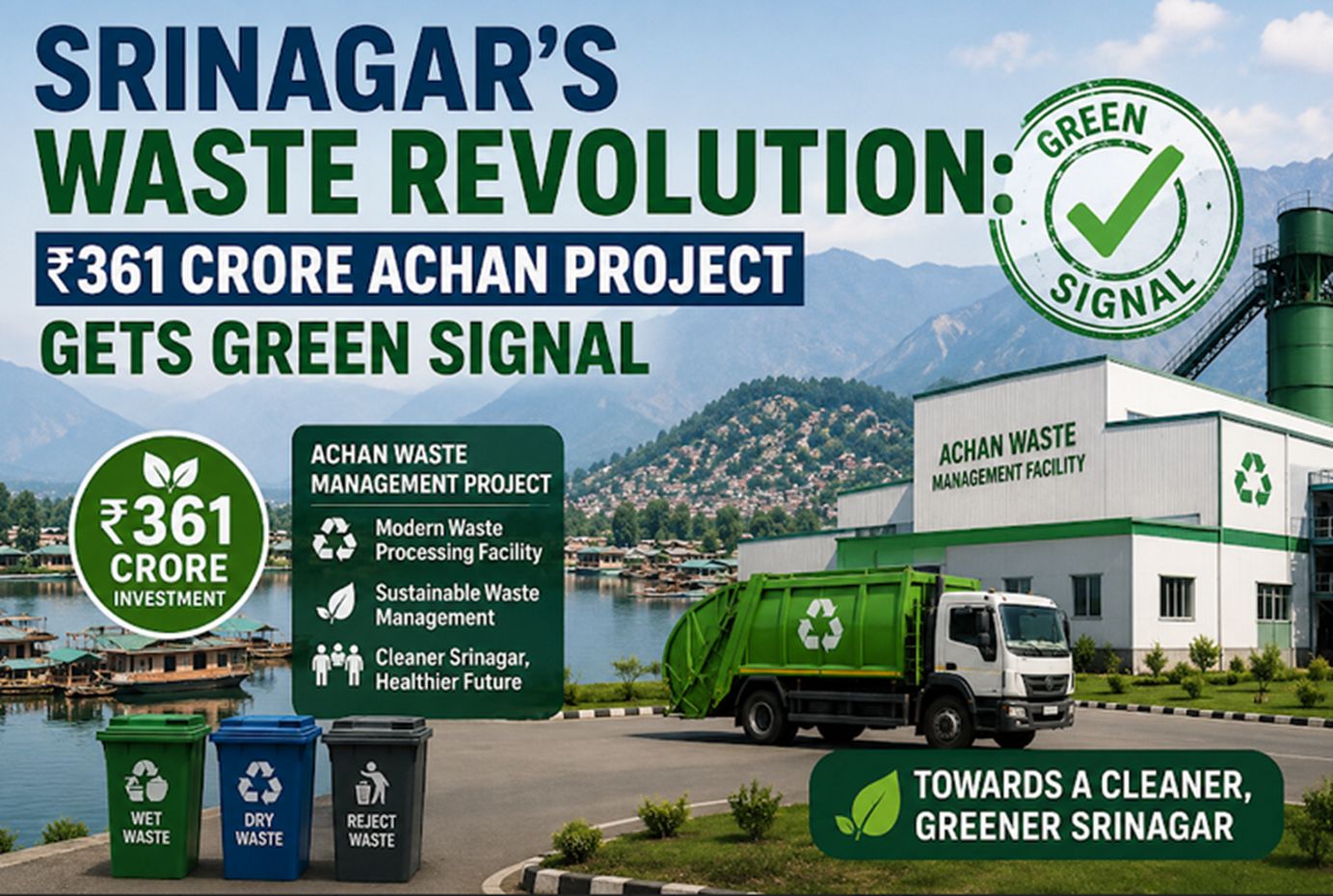
- Project Deigned For Smart Processing, Zero Dumping
Mohammad Irfan
Srinagar: In a major step toward improving urban infrastructure and environmental sustainability in Kashmir, the Council of Ministers headed by Omar Abdullah has approved the establishment of an 800 Tonnes Per Day (TPD) Integrated Solid Waste Management (ISWM) Project at Achan in Srinagar at an estimated cost of ₹361 crore. The decision was taken during the sixth meeting of the Council of Ministers and is being seen as a significant initiative aimed at modernising Srinagar’s waste management infrastructure while addressing long-standing sanitation and environmental concerns in the city.
Modern Waste Processing System To Replace Traditional Dumping Practices: The proposed project is expected to transform the way municipal solid waste is collected, processed and disposed of in Srinagar. Officials said the Integrated Solid Waste Management facility will introduce modern and scientific systems for waste collection, segregation, treatment and disposal, helping the city manage its growing waste burden more efficiently and in an environmentally responsible manner. The initiative is also expected to improve sanitation standards across Srinagar while reducing pollution caused by unscientific dumping and unmanaged waste accumulation.
Rapid Urban Growth Puts Pressure On Existing Waste Infra: Srinagar has witnessed rapid urban expansion and population growth over the years, leading to a sharp increase in daily waste generation. With commercial activity, tourism and residential development expanding continuously, existing waste management systems have struggled to cope with the rising pressure. The Achan landfill site has remained central to the city’s waste disposal system for years, but growing waste volumes and increasing environmental concerns highlighted the urgent need for a more advanced and sustainable waste processing facility.
Enhanced Capacity, Cleaner Urban Environment As Key Outcomes: Officials believe the new 800 TPD project will help bridge this gap by significantly enhancing the city’s waste processing capacity. The project is expected to reduce dependence on traditional dumping methods and promote more scientific waste handling practices. Authorities also expect the facility to contribute toward cleaner surroundings, improved public health conditions and better urban sanitation management across the city.
Environmental Protection, Ecosystem Preservation At The Core : The environmental significance of the project is also being widely highlighted. Srinagar’s fragile ecosystem, including its wetlands, water bodies and residential areas, has increasingly come under pressure due to pollution and unregulated waste disposal. Environmental experts have repeatedly warned that poor waste management could have long-term consequences for groundwater quality, air quality and overall ecological balance in the region. By introducing scientific treatment and disposal systems, the project is expected to reduce environmental degradation and support sustainable urban development.
Strengthening Srinagar’s Tourism Economy, Public Spaces: Apart from improving cleanliness and sanitation, the initiative is also likely to support Srinagar’s tourism sector, which remains one of the most important pillars of Kashmir’s economy. Civic infrastructure and urban cleanliness are increasingly seen as essential for maintaining the city’s image as a major tourist destination. Officials believe better waste management systems will improve the overall urban environment and contribute to healthier and cleaner public spaces.
Long-Term Urban Planning, Sustainable Development Goals: The Integrated Solid Waste Management Project is also expected to strengthen long-term urban planning efforts in Srinagar. Urban experts say that rapidly growing cities require modern civic infrastructure capable of handling future population and developmental pressures. Efficient waste management systems are considered essential for sustainable city planning, especially in environmentally sensitive regions like Kashmir.
Governance Shift Towards Scientific, Infra Driven Solutions: The project reflects a broader shift toward environmentally conscious governance and infrastructure-driven development in Jammu and Kashmir. Over the past few years, issues such as sanitation, pollution control and sustainable urban management have gained increasing policy importance. The approval of the ₹361 crore project signals the administration’s intent to invest in long-term solutions rather than temporary measures to address civic challenges.
Implementation Challenges, Need for Public Participation: While the approval has been welcomed as a positive development, experts believe effective implementation will be crucial for the project’s success. Large-scale waste management projects often require strong coordination between civic agencies, technical experts and local authorities. Public participation will also remain important, particularly in promoting waste segregation and responsible disposal practices at the household level.
A Step Towards a Cleaner, More Sustainable Srinagar: If implemented successfully, the Achan Integrated Solid Waste Management Project could become one of Srinagar’s most important urban infrastructure initiatives in recent years. Beyond improving waste disposal systems, the project has the potential to strengthen environmental sustainability, improve public health standards and support cleaner urban growth in Kashmir’s summer capital. As Srinagar continues to expand, the demand for modern, scientific and sustainable civic infrastructure is expected to grow further. The newly approved waste management project is therefore being viewed not only as a sanitation initiative but also as a major step toward building a cleaner, healthier and environmentally resilient city for the future.