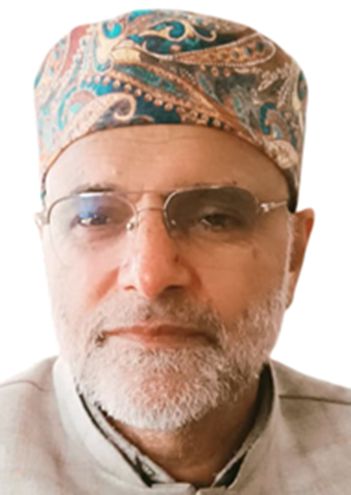
Prof. Hamid Naseem Rafiabadi
Among the intellectual giants of the modern Muslim world, few figures stand as prominently as Wahiduddin Khan and Abul Hasan Ali Nadwi. They may rightly be described as two “luminous minarets” of the Muslim Ummah—sources of guidance whose light emerges from the same divine fountain of Islam, yet reflects in distinct shades and perspectives. Their intellectual legacies are not contradictory but complementary, representing two vital modes of Islamic thought: one grounded in reflective patience and peaceful da‘wah (invitation to Islam), and the other infused with historical consciousness, moral urgency, and civilizational revival. A comparative exploration of their lives and contributions reveals not only their individual brilliance but also the breadth and dynamism of modern Islamic scholarship.
To understand their intellectual contributions, it is important to situate both scholars within the broader socio-political and intellectual history of the Indian subcontinent. The twentieth century was a period of immense upheaval for Muslims in South Asia, marked by colonial domination, the trauma of partition, identity crises, and the challenge of modernity. It was in this turbulent environment that both scholars emerged, offering distinct yet deeply rooted responses to the dilemmas of their time.
Wahiduddin Khan (1925–2021) was born in Azamgarh, India, and became one of the most influential Islamic thinkers advocating peace, spirituality, and non-violent da‘wah. His intellectual journey was initially shaped by his association with Jamaat-e-Islami, although he later developed an independent intellectual framework centered on reconciliation between Islam and modernity. His major works—such as Islam and Peace, The Prophet of Peace, and The True Jihad—consistently emphasize patience (sabr), wisdom (hikmah), and peaceful engagement with the world.
In contrast, Abul Hasan Ali Nadwi (1914–1999), widely known as Ali Miyan, belonged to a distinguished family of scholars and was deeply rooted in the classical Islamic scholarly tradition. A leading figure of Nadwat al-Ulama in Lucknow and a prominent voice in global Islamic discourse, he combined traditional scholarship with a deep awareness of contemporary challenges. His seminal work, What the World Lost Due to the Decline of Muslims, remains a powerful critique of the moral and spiritual vacuum created by the decline (zawal) of Muslim civilization, while also calling for a revival grounded in faith (iman) and ethical integrity (akhlaq).
At the heart of Wahiduddin Khan’s thought lies a distinctive understanding of Islam as a peaceful da‘wah movement. He viewed history not as a battlefield of competing powers but as a field of opportunities for conveying the divine message. According to him, every crisis contains within it a hidden da‘wah potential. This perspective led him to reinterpret key Islamic concepts—especially jihad—in primarily intellectual, moral, and spiritual terms. For him, the real struggle is not against external enemies but within the realm of ideas, hearts, and minds.
His approach is marked by simplicity and rational clarity. He sought to address the doubts and questions of the modern individual, presenting Islam in a language that resonates with contemporary reason (‘aql). He emphasized coexistence, avoidance of confrontation, and constructive engagement with non-Muslim societies. In his view, political conflict often distracts from the higher purpose (maqsad) of Islam, which is to guide humanity toward truth through peaceful persuasion. Thus, he advocated a form of Islamic activism that is inwardly transformative and outwardly non-confrontational.
On the other hand, Abul Hasan Ali Nadwi represents a tradition of thought deeply conscious of history, identity, and the collective destiny of the Muslim Ummah. His writings echo with a profound sense of loss over the decline of Muslim civilization, coupled with an intense yearning for renewal. Unlike Wahiduddin Khan, who focuses primarily on individual da‘wah, Nadwi situates Islam within a broader civilizational framework. For him, Islam is not merely a personal faith but a dynamic force that shapes societies, cultures, and history (tarikh).
Nadwi’s analysis of Muslim decline goes beyond political or economic causes (asbab). He identifies the crisis as fundamentally spiritual—a result (natijah) of weakened faith, moral decay, and loss (faqdan) of Islamic consciousness. Consequently, his prescription for revival is not merely strategic but deeply spiritual: a return to authentic faith (iman), a rekindling of religious zeal (hamiyyah), and a renewal (tajdid) of commitment to Islamic values. His da‘wah is thus both inward and outward, addressing the individual soul as well as the collective body of the Ummah.
“The harmonious integration of Wahiduddin Khan’s wisdom and Ali Miyan Nadwi’s passion demonstrates that internal diversity (ikhtilaf) strengthens the Ummah, providing a balanced roadmap for navigating the modern world.”
Stylistically, the contrast between the two scholars is equally striking. Wahiduddin Khan writes with calm deliberation, appealing to reason and introspection. His tone is measured and contemplative, inviting the reader to reflect and reconsider. Abul Hasan Ali Nadwi, in contrast, writes with passion and eloquence. His prose is infused with historical references, Qur’anic imagery, and emotional force (quwwah), stirring the reader’s heart (qalb) and awakening a sense of responsibility and purpose.
Their differing approaches to jihad further illustrate their intellectual divergence. Wahiduddin Khan interprets jihad primarily as a peaceful struggle for conveying the message of Islam, emphasizing dialogue, patience, and moral excellence. He views violent conflict as largely irrelevant in the modern context, often leading to unnecessary confrontation and harm (nuqsan). Nadwi, while equally emphasizing spiritual and moral jihad, retains a broader understanding that includes the legitimacy of defense (difa‘) and resistance when necessary. For him, the concept of jihad cannot be divorced from the historical and collective (ijtima‘i) realities of the Ummah.
Yet, to frame their differences as opposition would be misleading. In reality, their perspectives represent two complementary dimensions of Islamic thought. Wahiduddin Khan’s emphasis on wisdom and peaceful da‘wah provides a strategy for survival and engagement in a pluralistic world. Nadwi’s focus on revival and identity offers a vision of dignity, purpose, and historical continuity. One seeks to navigate within existing conditions, minimizing conflict and maximizing opportunities for da‘wah; the other seeks to transform those conditions, inspiring a resurgence of Islamic consciousness and agency.
Their contributions also extend beyond theoretical discourse into practical impact. Wahiduddin Khan established initiatives aimed at promoting peace, spirituality, and interfaith dialogue, earning recognition as a global ambassador of peaceful Islamic thought. Abul Hasan Ali Nadwi played a significant role in educational and organizational spheres, influencing institutions such as Nadwat al-Ulama and contributing to global Islamic movements, thereby shaping intellectual and spiritual discourse at multiple levels.
In terms of legacy, both scholars have left a lasting imprint on contemporary Islamic thought. Wahiduddin Khan’s works continue to inspire those seeking a peaceful and rational articulation of Islam in the modern age. Nadwi’s writings remain a source of inspiration for those committed to the revival of Islamic civilization and the restoration of its moral and spiritual foundations. Their intellectual light continues to guide new generations navigating the complexities of modern life.
Ultimately, the true significance of these two scholars lies not in their differences but in their convergence. Islam, as a comprehensive way of life (din), encompasses both dimensions they represent: the quiet perseverance of da‘wah and the passionate striving for revival; the wisdom of patience and the courage of action; the subtlety of persuasion and the strength of conviction.
It may be said, metaphorically, that Wahiduddin Khan is like a silent river, flowing steadily through obstacles, maintaining its course with patience and persistence, while Abul Hasan Ali Nadwi is like a powerful wave (mawj), shaking the shore (sahil) and reshaping its contours with energy and determination. One ensures continuity, the other drives transformation. Together, they embody the balance that is essential for the vitality and well-being of the Muslim Ummah.
In conclusion, the comparative study of these two towering figures reveals the richness and diversity of modern Islamic thought. Their lives and works demonstrate that difference (ikhtilaf) within a shared framework of faith is not a weakness but a source of strength. By embracing both their insights—the wisdom (hikmah) of Wahiduddin Khan and the passion (hamiyyah) of Ali Miyan Nadwi—the Muslim Ummah can navigate the challenges of the modern world with clarity, balance, and confidence.
(The author a veteran academician is a former Professor and Head Department of Islamic Studies, Kashmir University. The views, opinions and conclusions expressed in this article are those of the author and aren’t necessarily in accord with the views of “Kashmir Horizon”)