A Convergence of Minds in a Historic Setting On 28 March, the intellectually charged halls of the Sher-i-Kashmir International Conference Centre became the site of a remarkable educational conclave that brought together vice chancellors, policy thinkers, school leaders, and scholars from across India and the Kashmir Valley. The gathering was not merely ceremonial; it reflected a deep collective anxiety as well as a shared aspiration—to rethink education in light of a rapidly transforming world. Under the theme “Reimagining Learning for the Future: Viksit Bharat,” the conclave captured both urgency and vision, situating education at the heart of national and civilizational progress.
Leadership, Intellectual Anchoring: The first session was presided over by Shakil Ahmad Romshoo,the Vice Chancellor IUST Kashmir , whose academic insight and administrative experience set a thoughtful tone for the deliberations. The panels featured distinguished voices including Baba Nazrul Islam, Dr G N Itoo,the former Director School education Kashmir Mushtaq Ahmad Margoob, Prof Farooq Wasil ,Mr Mehmoodur Rashid and Hamid Naseem Rafiabadi, among others. Their presence ensured that the discussions were not confined to policy abstractions but were enriched by lived experience, philosophical depth, and practical engagement.
Education At A Crossroads: A recurring theme throughout the conclave was the recognition that contemporary education stands at a crucial juncture. Rapid technological advancements, shifting socio-economic realities, and evolving learner expectations have disrupted traditional educational paradigms. The discussions moved beyond surface-level concerns to interrogate the very foundations of how knowledge is constructed, transmitted, and internalized. Participants emphasized that education can no longer remain a static system designed for predictable futures. Instead, it must become adaptive, reflective, and transformative—capable of preparing learners for uncertainty rather than mere stability.
The Global Vision|A New Social Contract: An important intellectual framework informing the deliberations was the vision articulated by UNESCO in its call for a “new social contract for education.” This perspective urges a shift from viewing education as a tool for economic productivity alone to recognizing it as a means of holistic human development. In this framework, education must cultivate critical thinking, creativity, empathy, and ethical responsibility. It must prepare learners not just to adapt to the world, but to reshape it. Particularly in an era marked by climate crises, digital transformations, and social fragmentation, such a vision acquires profound relevance.
Indian Policy Landscape|Promise and Potential: Within the Indian context, the National Education Policy 2020 emerged as a central reference point. The policy represents a paradigm shift—from rote memorization to competency-based learning, from rigid disciplinary boundaries to multidisciplinary exploration, and from teacher-centric instruction to learner-centered engagement. Complementing this, the National Curriculum Framework for Early Childhood Care and Education emphasizes the foundational importance of early childhood learning. Initiatives like NIPUN Bharat Mission and the introduction of preparatory stages such as Balvatika signal a systemic attempt to rebuild education from its roots. Yet, while these frameworks are visionary, their success depends on meaningful implementation—a challenge that was candidly acknowledged throughout the conclave.
The Persistent Gap|Policy vs Practice: One of the most nuanced discussions revolved around the disconnect between policy intent and classroom reality. Despite progressive frameworks, the dominance of examination-oriented systems continues to perpetuate rote learning. Students are often trained to reproduce information rather than engage with it critically, limiting both intellectual growth and creativity. This gap is not merely administrative; it reflects deeper structural and cultural issues within the education system. Without transforming assessment methods and classroom practices, even the most well-designed policies risk remaining aspirational documents.
Teachers At The Heart Of Transformation: No educational reform can succeed without empowering teachers. The shift toward experiential and competency-based learning requires educators to adopt new pedagogical approaches—facilitating inquiry, encouraging collaboration, and nurturing creativity. However, many teachers lack access to sustained professional development. This challenge is particularly acute in early childhood education, where the success of new curricular frameworks depends heavily on the sensitivity and preparedness of educators. The conclave underscored the urgent need for continuous teacher training that goes beyond technical skills to include philosophical orientation and emotional intelligence.
Inequality, Infrastructure, and the Digital Divide: The discussions also highlighted the structural constraints that shape educational realities, especially in regions like Jammu and Kashmir. Many institutions continue to grapple with inadequate infrastructure, limited teaching resources, and uneven access to technology. The digital divide, starkly exposed during the pandemic, remains a significant barrier. While technology holds transformative potential—through blended learning and AI-driven personalization—its benefits are unevenly distributed. Without equitable access, technological advancement risks deepening existing inequalities rather than bridging them.
Societal Expectations, Educational Tensions: An equally complex challenge lies in the tension between progressive pedagogical ideals and societal expectations. Despite policy emphasis on holistic and play-based learning, many parents continue to equate education with early academic achievement. This often results in pressure on institutions to prioritize testing and formal instruction at the cost of creativity and exploration. Bridging this gap requires not only institutional reform but also societal reorientation—an acknowledgment that meaningful learning cannot be reduced to early mastery of reading and writing alone.
Possibilities For Renewal, Reform: Amidst these challenges, the conclave also illuminated pathways for transformation. The renewed focus on early childhood education offers a critical opportunity to build strong cognitive and emotional foundations. The integration of vocational training and skill-based learning can bridge the long-standing divide between education and employability. Moreover, when thoughtfully adapted, technology can enhance learning experiences, making education more interactive, inclusive, and personalized. The key lies not in adopting technology for its own sake, but in aligning it with pedagogical goals and local realities.
“To achieve NEP goals, schools must shift from isolation to integrated, stakeholder-driven synergy. This systemic alignment is essential to create a future-ready, competency-based system that fosters academic excellence, social responsibility, and global competence.”
The Core Idea|Empowering The Learner: In my own intervention, I emphasized that the ultimate success of any educational reform depends on one fundamental principle: the empowerment of the learner. Policies, technologies, and institutional structures are important, but they must converge at the level of the student. This empowerment is multidimensional. It involves cultivating critical thinking, nurturing emotional resilience, encouraging creativity, and instilling ethical values. It requires giving students agency—allowing them to question, explore, and participate actively in their own learning journey. An empowered learner is not merely a recipient of knowledge but a co-creator of meaning.
Leadership As A Catalyst For Change: The discussions on leadership, enriched by insights from figures like Altaf Hussain Gado, Dr Faruq Wasil Dr G N Itoo and others highlighted the importance of visionary institutional leadership. School leaders must transcend administrative roles to become facilitators of innovation and inclusion. They must create environments where teachers feel supported, students feel valued, and learning becomes a dynamic, evolving process. Leadership, in this sense, is not about control but about enabling transformation.
Education As Moral, Civilizational Project: The contributions of scholars such as Hamid Naseem Rafiabadi added a deeper philosophical dimension to the discourse. Education, it was argued, must remain rooted in cultural identity and ethical values even as it engages with modernity. Similarly, the insights of Mushtaq Ahmad Margoob underscored the importance of psychological well-being as an integral component of education—particularly in contexts marked by social and emotional stress.
Conclusion|The Classroom As The Crucible Of Change: As the conclave concluded, one realization stood out with clarity: the future of education will not be determined solely by policies or technologies, but by what happens within the classroom. It is there that curiosity is nurtured, confidence is built, and creativity is awakened. If we are to meet the challenges of a changing world and realize the vision of a just and enlightened society, we must begin by empowering our students. For in the final analysis, an empowered learner is not only the goal of education—but its most powerful promise. In light of the deliberations, several important proposals and recommendations emerge as both timely and necessary for strengthening the educational ecosystem and ensuring a seamless continuum from foundational to advanced learning. A foremost concern is the need to establish a coherent and structured progression in education—one that meaningfully connects school education with college, and college with university.
At present, a visible disconnect persists between these levels, often resulting in students facing academic, cognitive, and even emotional challenges as they transition from one stage to another. This gap must be bridged through deliberate institutional alignment, curricular coherence, and shared academic expectations. Education should not be experienced as fragmented phases, but rather as an integrated journey of intellectual and personal growth. In this regard, the inclusion of school associations in the committees and decision-making bodies of colleges and universities is of critical importance. Such representation would ensure that the voices, realities, and pedagogical contexts of school education are adequately reflected in higher education planning. It would also facilitate a better understanding of the preparedness of students entering colleges and universities, enabling higher institutions to calibrate their curricula and teaching methodologies accordingly. This collaborative engagement would foster a shared sense of responsibility across all levels of education and help align outcomes with expectations. Equally significant is the proposal to establish a permanent advisory committee comprising eminent educational leaders—Vice Chancellors, Directors of Education, Deans, senior Professors, and institutional heads. This body should remain actively engaged with the school education sector, providing continuous guidance, policy direction, and intellectual leadership.
In an age defined by rapid technological change, evolving skill demands, and global interconnectedness, such a committee would play a crucial role in ensuring that school education remains responsive, forward-looking, and aligned with contemporary and future needs. This advisory mechanism would also serve as a bridge between policy and practice. While policies such as the National Education Policy envision transformative changes, their effective implementation requires sustained mentorship, monitoring, and feedback from experienced academic leaders. By remaining at the helm of school education, this advisory body can help translate vision into actionable strategies, ensuring that reforms are not merely aspirational but practically realized. Furthermore, the school education sector must consciously orient itself toward preparing students for higher education and beyond. This does not imply a narrow focus on examination success, but rather a broader commitment to nurturing critical thinking, creativity, problem-solving abilities, ethical awareness, and adaptability—competencies that are essential for success in the twenty-first century.
Schools should function as foundational spaces where intellectual curiosity is cultivated, interdisciplinary learning is encouraged, and students are equipped with the skills necessary to thrive in complex and dynamic environments. By fostering closer collaboration between schools, colleges, and universities, a more holistic educational environment can be created—one that supports continuity, coherence, and cumulative learning. Such an environment would not only reduce transitional gaps but also enhance the overall quality and relevance of education. It would enable students to move confidently across educational stages, building upon prior knowledge and skills in a meaningful and structured manner. Ultimately, aligning school education with the broader goals envisioned in the National Education Policy requires a systemic and collaborative approach. The emphasis must shift from isolated institutional functioning to an integrated educational framework where all stakeholders work in synergy. Only then can the vision of a learner-centric, competency-based, and future-ready education system be truly realized. These recommendations, if thoughtfully implemented, hold the potential to transform the educational landscape—making it more connected, responsive, and capable of nurturing individuals who are not only academically proficient but also socially responsible and globally competent.
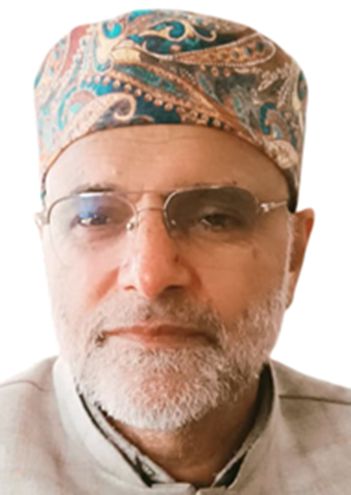
(The author a veteran academician is a former Professor and Head Department of Islamic Studies, Kashmir University. The views, opinions and conclusions expressed in this article are those of the author and aren’t necessarily in accord with the views of “Kashmir Horizon”)