Islamophobia has become one of the most widely discussed social and political phenomena of the contemporary world. In many public discussions it is often attributed almost entirely to Western governments, political institutions, and the media. Undoubtedly, geopolitical interests, ideological conflicts, and certain sections of Western media have contributed to the negative portrayal of Islam, particularly in the aftermath of dramatic global events such as the September 11 attacks. The climate of fear and suspicion that followed those attacks significantly shaped public perceptions of Muslims and Islam in many Western societies. However, while external political agendas and media narratives have undoubtedly played a role in fostering Islamophobia, it would be intellectually incomplete and morally unproductive for Muslims to assume that the problem lies solely outside the Muslim world. A more honest and constructive approach requires sincere self-reflection and internal critique within the Muslim community itself.
Islamophobia, broadly defined, refers to prejudice, hostility, or discrimination against Islam and Muslims. It manifests in various forms, including hate crimes, discriminatory policies, cultural stereotyping, and negative media portrayals. In many Western countries, Muslims have faced suspicion and marginalization, particularly after terrorist incidents carried out by individuals who claim to act in the name of Islam. Governments have sometimes introduced security policies that disproportionately target Muslim communities, and political rhetoric has occasionally framed Islam as a civilizational threat. Certain media outlets have also contributed to reinforcing stereotypes by repeatedly associating Islam with violence, extremism, or backwardness. These factors have undoubtedly contributed to the rise of Islamophobia in many parts of the world.
Nevertheless, the Muslim response to Islamophobia should not be limited to blaming external forces. While it is necessary to challenge injustice, misrepresentation, and discrimination wherever they occur, it is equally necessary to examine internal weaknesses that may have contributed to the negative perception of Muslims. The Qur’ān consistently encourages believers to practice self-accountability and moral introspection. Islamic ethics emphasize that social reform begins with personal and collective self-correction. Without such introspection, criticism of external forces becomes incomplete and may even prevent genuine reform.
One of the most visible internal challenges within the Muslim world is the persistent problem of disunity. Instead of presenting the universal and ethical message of the Qur’ān and the Sunnah through collective strength and moral integrity, the Muslim world often appears fragmented and divided. Sectarian divisions, ideological rivalries, ethnic conflicts, and regional disputes have weakened the sense of unity within the global Muslim community. In many societies, Muslims identify themselves more strongly with sectarian labels than with the broader ethical and spiritual mission of Islam. These divisions not only weaken the internal cohesion of the Muslim world but also project an image of fragmentation to the outside world.
The Qur’ān repeatedly warns believers against division and internal conflict. In one of its most powerful reminders, it commands Muslims to remain united and not to fall into discord: “And hold firmly to the rope of Allah all together and do not become divided.” This Qur’ānic guidance emphasizes that unity is not merely a political necessity but a spiritual obligation. When Muslims become divided into hostile factions, they weaken their collective moral authority and undermine the universal message of Islam.
Another internal challenge that contributes to the negative perception of Islam is the rise of sectarianism and factionalism. In many Muslim societies, religious identity has become entangled with sectarian loyalty and ideological exclusivism. Instead of recognizing the diversity of legitimate interpretations within Islamic scholarship, some groups insist on narrow and rigid understandings of the religion. Those who disagree with them are sometimes dismissed, condemned, or marginalized. Such attitudes create an atmosphere of hostility within the Muslim community itself.
Historically, however, Islamic civilization was characterized by a rich tradition of intellectual pluralism. Classical Muslim scholars recognized the legitimacy of scholarly disagreement (ikhtilāf) in matters of jurisprudence, theology, and interpretation. The great jurists of Islam developed different schools of thought, yet they maintained mutual respect and acknowledged the sincerity of each other’s reasoning. Differences of opinion were seen as a sign of intellectual vitality rather than a cause for division. Scholars debated vigorously, but they also demonstrated humility and civility in their disagreements.
In contrast, many contemporary debates within the Muslim community have become increasingly polarized. Social media, political activism, and ideological movements sometimes amplify intolerance and hostility toward alternative perspectives. Instead of engaging in thoughtful dialogue, individuals may resort to accusations, denunciations, or attempts to silence dissenting voices. This restrictive intellectual climate undermines the spirit of inquiry that once defined Islamic scholarship.
The consequences of such internal intolerance are far-reaching. When Muslims themselves appear divided and intolerant, critics find it easier to portray Islam as inherently rigid or conflict-prone. Extremist groups also exploit sectarian narratives to justify violence and radicalization. These developments further reinforce negative stereotypes about Islam and Muslims in global discourse.
Another factor that contributes to Islamophobia is the gap between Islamic ideals and the behavior of some Muslims. Islam places enormous emphasis on ethical conduct, justice, compassion, and integrity. The character of the Prophet Muhammad (SAW) represents the highest model of moral excellence. His life demonstrated patience, mercy, humility, and forgiveness even toward those who opposed him. The Qur’ān describes him as possessing “an عظیم character” and presents him as the best example for humanity.
Yet in many parts of the world, Muslims struggle to embody these ethical ideals consistently in public life. Corruption, political instability, authoritarian governance, and social injustice are widespread in several Muslim-majority societies. While these problems are not unique to Muslims, they nevertheless affect the global perception of Islam. When observers see Muslim societies grappling with internal conflict, economic challenges, and governance failures, they may incorrectly assume that these problems reflect the teachings of Islam itself.
“By embodying the Qur’anic values and the character of the Prophet (SAW)—specifically justice, humility, and compassion—Muslims can dismantle Islamophobia through action rather than argument. A community defined by moral excellence and intellectual openness naturally restores its spiritual vitality and serves as its own most credible defense against prejudice.”
The challenge, therefore, is not only to defend Islam intellectually but also to demonstrate its ethical principles through lived example. The most effective response to Islamophobia cannot rely solely on political arguments or media campaigns. Rather, it must be grounded in the moral transformation of individuals and communities. When Muslims embody the ethical teachings of the Qur’ān—justice, honesty, compassion, and respect for human dignity—they provide the most powerful testimony to the beauty of Islam.
Education also plays a crucial role in addressing both Islamophobia and internal challenges within the Muslim community. Many misunderstandings about Islam arise from ignorance and lack of knowledge. At the same time, educational institutions in some Muslim societies have not always encouraged critical thinking, intellectual openness, or engagement with contemporary challenges. Revitalizing Islamic education requires integrating classical scholarship with modern intellectual inquiry. Scholars and educators must cultivate a culture of dialogue, research, and ethical reflection that reflects the spirit of the early Islamic intellectual tradition.
Moreover, Muslims living in diverse societies must learn to engage constructively with people of different faiths and cultures. Islam has a long history of coexistence and dialogue with other religious communities. Throughout history, Muslim civilizations interacted with Christians, Jews, Hindus, Buddhists, and others in various social and intellectual contexts. Reviving this tradition of respectful engagement is essential in a globalized world where societies are increasingly interconnected.
At the same time, Muslims must also confront extremist interpretations that distort the message of Islam. Violent extremist groups have caused immense harm not only to global security but also to the image of Islam itself. Their actions have provided ammunition to those who seek to portray Islam as inherently violent. Scholars and community leaders therefore have a responsibility to challenge such distortions and reaffirm the ethical foundations of Islamic teachings.
While acknowledging these internal challenges, it is equally important not to ignore the external forces that contribute to Islamophobia. Political conflicts, geopolitical rivalries, and ideological agendas sometimes shape narratives about Islam in global media and policy discourse. Certain political movements have exploited fear of Muslims to mobilize support or justify restrictive policies. Addressing Islamophobia therefore requires both internal reform and external advocacy for justice and fairness.
Muslim intellectuals, scholars, and community leaders must actively participate in shaping public discourse about Islam. By engaging with academic institutions, media platforms, and interfaith initiatives, they can help present a more accurate understanding of Islamic teachings. Such engagement should emphasize the universal values of justice, compassion, and human dignity that lie at the heart of the Qur’ānic message.
The Qur’ān itself emphasizes the importance of self-accountability and moral responsibility. One powerful reminder appears in the verse describing the Day of Judgment when Satan will declare to those who followed him: “So do not blame me, but blame yourselves” (Qur’ān 14:22). This verse underscores the principle that individuals and communities must accept responsibility for their own choices and actions. Blaming external forces without acknowledging internal shortcomings prevents genuine transformation.
In this light, the Muslim response to Islamophobia must involve a balanced approach. On the one hand, Muslims must challenge discrimination, prejudice, and misrepresentation wherever they occur. They must defend their rights, protect their communities, and advocate for justice. On the other hand, they must also undertake sincere internal reform by addressing divisions, promoting intellectual openness, and embodying the ethical teachings of Islam.
The history of Islam provides many examples of moral and intellectual renewal. At various moments in history, Muslim scholars and reformers responded to internal crises by calling for a return to the fundamental values of the Qur’ān and the Sunnah. Their efforts revitalized Islamic thought and strengthened the moral foundations of Muslim societies. Contemporary Muslims can draw inspiration from this legacy as they seek to address the challenges of the modern world.
Ultimately, the most effective response to Islamophobia lies not merely in defending Islam through words but in demonstrating its principles through action. When Muslims cultivate knowledge, practice justice, uphold compassion, and engage respectfully with others, they embody the true spirit of their faith. Such moral integrity has the power to challenge stereotypes and transform perceptions more effectively than any political rhetoric.
If Muslims sincerely return to the ethical teachings of the Qur’ān and the exemplary character of the Prophet Muhammad (SAW)—demonstrating humility, knowledge, justice, and compassion—the response to Islamophobia will emerge naturally from their conduct. A community that lives according to the highest moral standards becomes its own strongest argument. Through unity, ethical excellence, and intellectual openness, Muslims can not only counter negative perceptions but also revive the moral credibility and spiritual vitality that once distinguished the Islamic civilization.
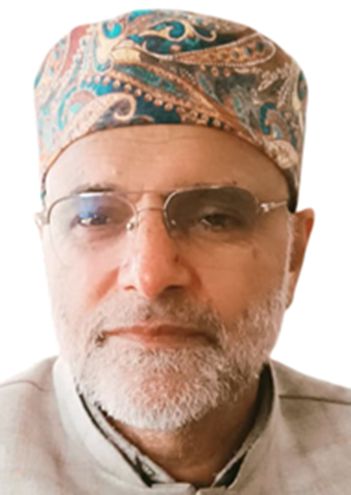
(The author a veteran academician is a former Professor and Head Department of Islamic Studies, Kashmir University. The views, opinions and conclusions expressed in this article are those of the author and aren’t necessarily in accord with the views of “Kashmir Horizon”)
[email protected]