India Prepares for First App-Based Census Exercise
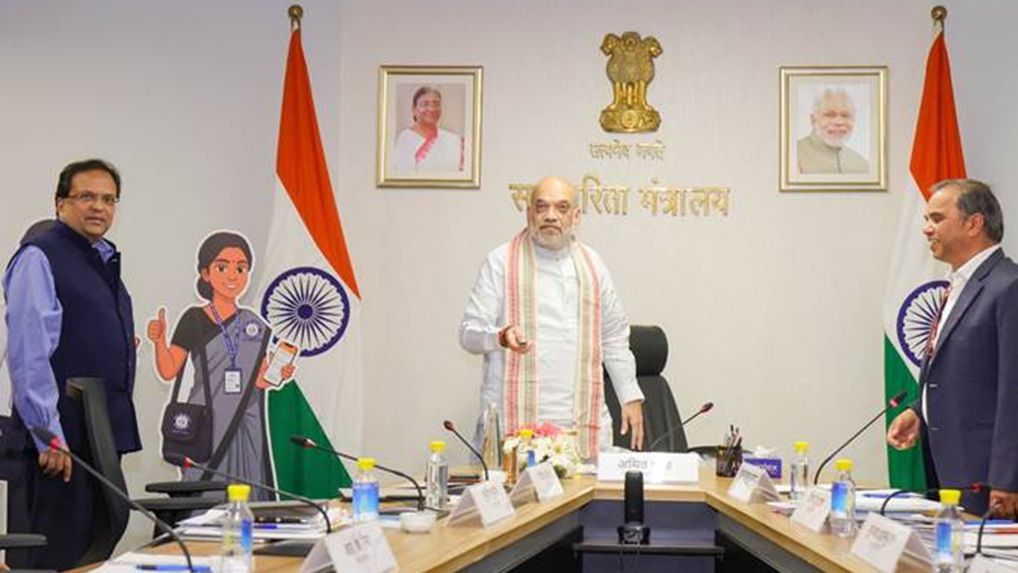
Srinagar: India is preparing for a major transformation in how it counts and understands its population. With the soft launch of four advanced digital platforms and the unveiling of mascots for the upcoming Census 2027, the government has signalled a shift toward a modern, technology-driven approach to demographic data collection. Union Home Minister Amit Shah introduced the new tools and mascots, marking the beginning of what is expected to be the country’s first fully digital census exercise. The move represents a significant change in a process that has traditionally relied on large-scale manual enumeration. By integrating satellite imagery, mobile applications, and digital dashboards, the government aims to streamline the complex task of counting more than a billion people across diverse regions. The initiative reflects the broader push toward digital governance and data-driven policymaking in India, where accurate and timely demographic information is increasingly seen as essential for planning development strategies.
A Historic Transition To A Digital Census: The upcoming census is expected to be the most technologically advanced population survey ever conducted in India. Since the country’s first census in 1872, enumeration has largely been conducted through paper-based forms filled out by field enumerators. Although the methodology evolved over the decades, the fundamental process remained largely manual. Census 2027, however, marks a turning point. For the first time, digital tools will play a central role in collecting, monitoring, and verifying data. The use of mobile apps and online portals will allow information to be captured more quickly and accurately while also reducing the administrative burden associated with traditional census operations. Officials say the transformation is part of a larger strategy to modernize governance and improve the quality of public data. Reliable demographic information helps policymakers plan infrastructure, allocate resources, design welfare schemes, and monitor economic trends.
Four Digital Platforms To Transform Enumeration: At the heart of the new census framework are four digital platforms developed by the Centre for Development of Advanced Computing (C-DAC). These tools are designed to make enumeration more efficient and transparent while enabling real-time monitoring of progress across the country. The Houselisting Block Creator (HLBC) Web Application will allow officials to create standardized houselisting blocks using satellite imagery. Traditionally, enumerators relied on physical maps and manual sketches to define their survey areas. The new digital mapping system ensures more precise geographic boundaries and reduces duplication or omission of households. Another major component is the HLO Mobile Application, which will be used by enumerators during the house-listing phase. The application works offline and supports 16 regional languages, allowing enumerators to collect information even in areas with limited internet connectivity. Data collected on the app can later be uploaded securely to the central system. Perhaps the most innovative element of the new system is the Self-Enumeration Portal. For the first time in Indian census history, households will be able to submit their own demographic details online before enumerators visit them. Once submitted, the system generates a unique Self-Enumeration (SE) ID that enumerators can use to verify the information. The fourth platform, the Census Management and Monitoring System (CMMS), functions as a centralized dashboard that allows authorities to track census operations in real time. Officials at the district, state, and national levels will be able to monitor progress, identify delays, and address operational challenges quickly.
Mascots “Pragati”, “Vikas” Symbolize Inclusive Development: Alongside the digital platforms, the government also unveiled two mascots for Census 2027 — Pragati and Vikas. The mascots represent a female and male enumerator respectively, symbolizing equal participation in the nation-building process. Officials say the mascots are designed to make the census campaign more relatable and accessible to the public. By using visual characters and storytelling, authorities hope to increase awareness and encourage greater participation from citizens across different age groups and social backgrounds. The choice of names also reflects a broader vision. “Pragati,” meaning progress, and “Vikas,” meaning development, represent India’s long-term goal of becoming a developed nation by 2047, the centenary year of its independence.
Jammu & Kashmir Preparing For First Phase: While the digital platforms have been introduced at the national level, preparations are already underway in several regions for the first phase of the census exercise. In Jammu and Kashmir, authorities are gearing up to begin the House Listing Operations (HLO), which will take place from June 1 to June 30, 2026. This phase involves collecting basic information about households, including the number of dwellings, building conditions, and access to amenities. It forms the foundation for the population enumeration that follows later. Officials in the Union Territory say the preparations are in their final stages. District administrations have already begun mobilizing personnel and resources to ensure that the exercise is conducted smoothly across urban and rural areas. However, a key preparatory meeting involving senior officials had to be postponed recently due to the prevailing Middle East situation, which affected the scheduling of some administrative activities.
Administrative Coordination, Planning: According to the Director of Census Operations and Director of Citizen Registration for Jammu and Kashmir, the meeting will be rescheduled soon and will include senior officials from various districts. Deputy Commissioners across the Union Territory have already been designated as Principal Census Officers, placing them in charge of coordinating the exercise at the district level. Their role will be critical in ensuring that enumeration teams are properly trained and that logistical arrangements are in place. Officials say the meeting will focus on finalizing operational plans, including training schedules, technology deployment, and coordination between different administrative units. Despite the delay, authorities maintain that preparations remain on track and that the census operations will proceed as planned.
The Importance Of Updated Demographic Data: The upcoming census carries special significance because the last nationwide census in India was conducted in 2011. According to that census, the population of the erstwhile Jammu and Kashmir state was about 1.25 crore (12.5 million). Since then, the region like the rest of the country — has experienced significant demographic, administrative, and economic changes. A new census will therefore provide updated data that can guide future development planning. Information about population growth, migration patterns, housing conditions, and socio-economic indicators will help governments design policies tailored to the needs of different communities.
Reaching Remote, Diverse Regions: Conducting a census in a country as vast and diverse as India is an enormous logistical undertaking. Enumerators must reach households in densely populated cities, remote mountain villages, desert regions, and coastal communities. In Jammu and Kashmir, this challenge is particularly pronounced due to the region’s complex geography. Many areas are located in mountainous terrain where access can be difficult. The use of digital tools, geo-tagging, and satellite imagery is expected to make the process more efficient and reduce the likelihood of missing households. District administrations are already working to ensure that enumeration teams can reach even the most remote settlements.
Toward A Data-Driven Future: Census 2027 is widely seen as a milestone in India’s journey toward digital governance. By integrating advanced technologies into the census process, the government aims to build a more accurate and comprehensive database of the country’s population. Such data will be crucial for planning infrastructure, healthcare services, education systems, and welfare programs in the coming decades. For regions like Jammu and Kashmir, which have undergone significant administrative changes in recent years, the census will also provide an updated demographic snapshot that can guide future development strategies.