The Muslim world today stands at a critical moment in history. Wars, sanctions, occupation, poverty, and political turmoil affect millions of Muslims across the globe. In such a time, the greatest tragedy is not only the suffering inflicted by external forces but also the internal divisions that weaken the collective strength of the Muslim ummah. Among these divisions, the Shia–Sunni divide continues to cast a long shadow over Muslim societies. While theological differences between the two traditions have existed for centuries, the present era demands that Muslims rise above sectarian rivalries and rediscover the Qur’anic spirit of unity, justice, and solidarity.\ The Qur’an consistently calls Muslims to unity. Allah commands: “And hold firmly to the rope of Allah all together and do not become divided” (Qur’an 3:103). This verse is not merely a moral recommendation but a fundamental principle for the survival and dignity of the Muslim community. The rope of Allah refers to the shared commitment to the Qur’an, the Prophet Muhammad, and the ethical values that Islam teaches—justice, mercy, compassion, and solidarity with the oppressed.
In the modern geopolitical landscape, sectarian tensions are often intensified by political agendas and external manipulation. Conflicts in parts of the Middle East have sometimes been framed as Shia versus Sunni struggles, even though the underlying causes are often political or strategic rather than purely theological. When Muslims accept such narratives, they risk losing sight of their shared responsibilities and common struggles. The situation surrounding Iran illustrates this challenge vividly. Iran, as a major Shia-majority state, often becomes a focal point of political and sectarian debates across the Muslim world. Some discussions about Iran unfortunately become entangled with sectarian rhetoric, portraying political disagreements as religious conflicts between Shia and Sunni Muslims. This framing is dangerous because it transforms geopolitical issues into sectarian hostility, thereby deepening divisions within the ummah.
Yet there are also important examples that demonstrate the possibility of unity. Iranian leaders and scholars have repeatedly emphasized the importance of cooperation between Shia and Sunni communities. The Islamic Republic has often described Shia–Sunni unity as a strategic necessity for the Muslim world rather than a temporary political tactic. Ebrahim Raisi once stated that unity between Sunni and Shia Muslims is essential for resisting extremist movements and strengthening the Islamic world. Similarly, gatherings of Shia and Sunni scholars in Iran and beyond have called for solidarity among Muslims, particularly in the face of external aggression and injustice.
Conferences and declarations involving clerics from both traditions emphasize that the challenges facing the Muslim world—from Palestine to regional conflicts—require collective action that transcends sectarian identity. One of the most symbolic efforts to promote unity is the concept of Islamic Unity Week, initiated by Ruhollah Khomeini. This period, observed between the Sunni and Shia dates of the Prophet Muhammad’s birth, was designed to highlight common reverence for the Prophet and encourage dialogue between the two traditions. Such initiatives remind Muslims that differences in historical interpretation should not overshadow the shared love for the Prophet and commitment to his message.
The need for unity becomes even more urgent when Muslims witness the suffering of oppressed communities across the world. Whether in Palestine,Yemen, Syria, or other regions, Muslims face violence, displacement, and injustice. In these circumstances, sectarian arguments appear painfully trivial. The Qur’an reminds believers: “And what is wrong with you that you do not fight in the cause of Allah and for the oppressed among men, women, and children?” (Qur’an 4:75). The Qur’anic call is not restricted to one sect; it addresses the entire community of believers. The Prophet Muhammad described the believers as being like a single body: when one limb suffers, the whole body feels pain. If Muslims truly internalize this teaching, the suffering of any Muslim community—whether Shia or Sunni—should evoke compassion and support from all. Sectarian hostility contradicts the prophetic vision of solidarity. It is also important to remember that Sunni and Shia Muslims share far more than they differ. Both believe in the oneness of Allah, the prophethood of Muhammad, the authority of the Qur’an, and the fundamental pillars of Islam—prayer, fasting, charity, and pilgrimage.
“The survival and strength of the Muslim ummah depend on abandoning sectarian disputes to reclaim a unified identity. By centering on shared faith and the Qur’anic vision of justice, the community can effectively resist oppression and serve as a global force for compassion.”
Both traditions revere the family of the Prophet and his companions, though they interpret historical events differently. These shared foundations form the core of Islamic faith and identity. History also offers examples of coexistence and intellectual exchange between Sunni and Shia scholars. For centuries, Islamic civilization flourished through the contributions of scholars from diverse schools of thought. Jurists, theologians, philosophers, and scientists from different traditions worked within the same intellectual environment, often engaging in respectful debates that enriched Islamic scholarship. This heritage demonstrates that diversity within Islam need not lead to hostility. However, the persistence of sectarian propaganda in some media platforms and political rhetoric continues to fuel mistrust. At times, inflammatory statements or offensive actions can provoke anger among communities. Yet responsible leadership requires responding to such incidents with wisdom rather than retaliation. For example, when a controversial broadcast in Iran allegedly insulted the first Sunni caliph, authorities publicly condemned the act and took disciplinary measures against those responsible, recognizing that such rhetoric threatens Muslim unity.
These actions underline an important principle: protecting unity requires vigilance against voices that spread hatred, regardless of whether they emerge from Shia or Sunni circles. Sectarian incitement benefits only those who wish to see the Muslim world fragmented and weak. The challenge, therefore, is not to erase theological differences but to place them within a framework of mutual respect. Sunni and Shia scholars can continue to discuss historical and doctrinal issues in academic settings, but such discussions should not be weaponized to create hostility among ordinary believers. Islam’s rich intellectual tradition has always accommodated debate, yet it also insists on preserving fraternity among Muslims.
A renewed commitment to unity must begin with education. Mosques, seminaries, and universities should emphasize the shared ethical and spiritual foundations of Islam rather than focusing exclusively on sectarian distinctions. Students should learn about the diversity of Islamic scholarship with an appreciation for its complexity and richness. Community initiatives can also play a powerful role in bridging the divide. Joint humanitarian projects, inter-sect dialogue forums, and collaborative religious events can help build trust between communities. When Muslims work together to address poverty, disaster relief, or educational development, they rediscover the deeper purpose of their faith: service to humanity.
For ordinary Muslims, unity begins with simple acts of empathy and respect. A Sunni Muslim should feel the pain of Shia communities facing persecution, just as a Shia Muslim should stand firmly against injustice toward Sunnis. When solidarity becomes a lived reality rather than a political slogan, sectarian hostility loses its power. The Muslim world today faces immense challenges, but it also possesses enormous spiritual and moral resources. The Qur’an, the teachings of the Prophet, and the shared heritage of Islamic civilization all point toward unity as the path forward. Political differences, national interests, and historical grievances must not obscure the deeper bonds of faith that unite Muslims.
In our time, therefore, the call for Shia–Sunni unity is not merely an idealistic dream—it is an urgent necessity. The survival of the Muslim ummah as a moral and spiritual force depends on overcoming sectarian divisions and standing together in the face of injustice. Let Muslims remember that their enemies benefit when they are divided. But when they rediscover their shared identity as believers in one God and followers of one Prophet, they regain the strength to defend justice, uplift the oppressed, and contribute positively to the world. The path forward lies not in repeating old disputes but in renewing the Qur’anic vision of unity: a community bound by faith, guided by justice, and united in compassion for all who suffer.
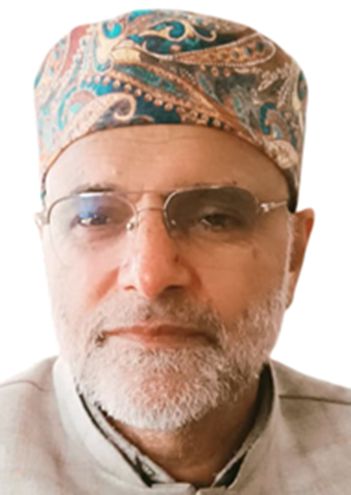
(The author a veteran academician is a former Professor and Head Department of Islamic Studies, Kashmir University. The views, opinions and conclusions expressed in this article are those of the author and aren’t necessarily in accord with the views of “Kashmir Horizon”)
[email protected]