In contemporary international politics, few words are invoked as frequently—and as strategically—as the word peace. It appears in summit declarations, diplomatic communiqués, award ceremonies, and newly formed global initiatives. It is attached to accords, boards, frameworks, and partnerships. Yet for millions living under occupation, blockade, sanctions, or war, the lived reality often stands in stark contrast to the celebratory language of statecraft. This widening gap between rhetoric and reality has generated deep skepticism across large sections of the Global South, particularly in Muslim societies, where many perceive that “peace diplomacy” increasingly functions less as a moral commitment and more as a geopolitical instrument.
The 2020 signing of the Abraham Accords marked one of the most publicized diplomatic developments in recent Middle Eastern history. Brokered under the administration of Donald Trump, the agreements normalized relations between Israel and several Arab states, including the United Arab Emirates and Bahrain, later joined by Morocco and Sudan. The accords were hailed by their architects as a historic breakthrough that would reshape the Middle East through economic integration, technological cooperation, tourism, and security collaboration. Supporters described them as a pragmatic shift away from decades of stagnation in Arab-Israeli relations.
However, from the moment of their announcement, the Accords faced substantive criticism. The central concern was not opposition to dialogue between states—diplomatic recognition in itself is not inherently objectionable—but rather the structural omission at the heart of the agreements: the Palestinian question. For decades, Arab diplomatic consensus, at least formally, linked normalization with Israel to the realization of Palestinian statehood based on internationally recognized frameworks. The Abraham Accords disrupted that linkage. They proceeded without securing concrete concessions regarding settlements, occupation, borders, or sovereignty. In doing so, critics argue, they transformed what had long been framed as a justice-centered conflict into a strategic alignment arrangement driven by regional security calculations and economic incentives.
The consequences of that recalibration became even more visible in light of subsequent escalations in Gaza. The scale of destruction, civilian casualties, displacement, and humanitarian crisis triggered widespread global protests and intense debates within international institutions. Accusations of collective punishment and disproportionate force were raised by human rights organizations, while calls for ceasefire and accountability reverberated across continents. Yet, despite the magnitude of the crisis, diplomatic realignments forged under the banner of peace remained intact. This paradox—deepening conflict alongside expanding normalization—has reinforced the perception that certain diplomatic frameworks function independently of justice considerations.
The central tension, therefore, lies not in whether states should pursue relations with one another, but in whether such relations can meaningfully contribute to conflict resolution when foundational grievances remain unaddressed. Historically, durable peace agreements have involved reciprocal concessions and direct engagement with core disputes. The Egypt-Israel peace treaty of 1979 and the Jordan-Israel treaty of 1994 emerged from negotiations that acknowledged territorial and political realities. By contrast, the Abraham Accords largely circumvented the Israeli-Palestinian negotiation track. The result has been a regional diplomatic architecture that appears stable at the interstate level but fragile at the societal and moral level.
In recent months, new diplomatic initiatives—such as the establishment of a U.S.-backed “Board of Peace” concerning Gaza—have generated further controversy. Presented as mechanisms to coordinate reconstruction and stabilization, such platforms are framed as pragmatic responses to humanitarian devastation. Yet skepticism persists regarding representation, transparency, and accountability. If affected populations perceive that reconstruction is being planned without their political agency, or that governance models are externally imposed, then even well-intentioned initiatives risk appearing as extensions of power politics rather than embodiments of inclusive peacebuilding.
At the center of these dynamics is the enduring role of the United States as the primary external actor in Middle Eastern geopolitics. American policy has long combined diplomatic mediation with substantial military, financial, and political support for Israel. This alignment, rooted in strategic partnership and domestic political considerations, has been consistent across administrations, whether Republican or Democrat. Under Donald Trump, the recognition of Jerusalem as Israel’s capital and the unveiling of the “Peace to Prosperity” plan marked significant departures from prior diplomatic balancing efforts. Subsequent administrations have modified tone but maintained core strategic commitments.
For many observers in the Muslim world and beyond, this continuity reinforces the perception of asymmetry. International law, United Nations resolutions, and human rights conventions are frequently cited as universal standards; yet enforcement appears selective. Settlement expansion in occupied territories continues despite widespread international opposition. Calls for ceasefire often face geopolitical vetoes. Accountability mechanisms advance unevenly. This pattern fosters the belief that global governance structures operate within hierarchies of power rather than neutral legal principles.
Within this broader geopolitical context, the stance of leaders in Muslim-majority countries becomes a subject of intense domestic scrutiny. When leaders publicly praise Western counterparts for their “unique diplomacy” or credit them for regional stability, critics interpret such gestures through the lens of dependency and strategic vulnerability. For instance, statements by Shehbaz Sharif acknowledging American diplomatic initiatives have drawn both support and criticism within Pakistan. Supporters argue that pragmatic diplomacy with global powers is essential for economic survival, security cooperation, and international financial stability. Critics contend that excessive deference undermines moral credibility, particularly when Muslim populations elsewhere face acute crises.
“Peace requires a shift from diplomatic performance to ethical consistency. While the Abraham Accords achieved strategic and economic milestones, they underscored the deep divide between political normalization and the pursuit of justice. Ultimately, global credibility is earned through tangible, lived realities rather than the mere frequency of declarations.”
This divergence reflects a deeper structural dilemma faced by many states in the Global South: how to balance ethical posturing with geopolitical necessity. Countries reliant on international financial institutions, trade access, defense partnerships, or strategic alliances often operate within constrained policy space. The calculus of survival, growth, and domestic stability can lead to foreign policy decisions that appear inconsistent with rhetorical commitments to transnational solidarity. The result is not always simple hypocrisy; it is frequently the manifestation of structural dependency within an unequal global order.
Yet public frustration cannot be dismissed merely as emotional reaction. Across South Asia, the Middle East, Africa, and diaspora communities in Europe and North America, mass mobilizations in solidarity with Palestinians demonstrate that foreign policy is no longer confined to elite diplomatic circles. Social media, global civil society networks, and independent journalism have democratized geopolitical discourse. Ordinary citizens now scrutinize treaties, arms deals, and diplomatic statements with unprecedented immediacy. When political elites appear disconnected from popular moral sentiment, legitimacy gaps widen.
The rhetoric of “expansion” and “restoration of greatness” emerging from certain Western political speeches further intensifies anxiety. When influential policymakers speak nostalgically of pre–World War II global orders or emphasize the need to reassert dominance, such language resonates differently in formerly colonized societies. Historical memory in these regions includes partition, resource extraction, imposed borders, and external intervention. Consequently, contemporary strategic assertiveness can evoke echoes of imperial precedent, even when framed in modern diplomatic vocabulary.
The crisis of credibility surrounding peace initiatives thus stems from cumulative patterns rather than isolated events. It reflects decades of unresolved conflict, selective enforcement of international norms, and economic hierarchies embedded within global governance systems. The challenge is not merely to sign new accords but to reconstruct trust in the very concept of international justice.
What, then, would a more consistent and credible peace paradigm require? First, genuine inclusion of affected populations in negotiation processes. Peace frameworks imposed externally, without participatory legitimacy, are unlikely to endure. Second, adherence to international humanitarian law irrespective of political alignment. Consistency in accountability—whether violations are committed by allies or adversaries—is essential to restoring moral authority. Third, decoupling humanitarian relief from geopolitical bargaining. Reconstruction should prioritize human security rather than strategic leverage. Finally, transparency in diplomatic initiatives, ensuring that economic projects do not obscure unresolved political grievances.
None of these steps are simple. They demand political courage not only from Western powers but also from leaders within Muslim-majority countries. Domestic reform, institutional strengthening, and independent foreign policy capacity are crucial to reducing vulnerability to external pressure. Moral agency is strengthened when economic and political systems are resilient. In that sense, the path toward dignified international engagement begins at home.
The language of resistance frequently emerges in response to perceived injustice. However, sustainable resistance in a globalized world must move beyond rhetoric. It can take the form of scholarly critique, legal advocacy, ethical journalism, civic mobilization, and democratic participation. It may involve pushing governments toward principled diplomacy while simultaneously addressing domestic governance failures. Anger, while understandable, must be channeled into strategic clarity.
Peace, if it is to retain meaning, must be more than a performance staged for diplomatic theaters. It must reconcile power with principle. The Abraham Accords, whatever their economic or strategic outcomes, have illuminated the tension between normalization and justice. Whether future initiatives—boards, summits, or reconstruction plans—will bridge that tension remains uncertain. What is clear is that credibility in global politics now depends not on the frequency of peace declarations, but on their consistency with lived realities.
In an interconnected world, narratives travel quickly. The image of a handshake in Washington is instantly juxtaposed with images of devastation in Gaza. A speech celebrating diplomatic triumph is measured against reports from humanitarian agencies on the ground. Leaders can no longer assume that symbolic gestures suffice. The demand for coherence between words and actions has never been stronger.
If international diplomacy is to regain trust, it must confront uncomfortable truths: that stability without justice is fragile, that economic integration without political resolution is incomplete, and that alliances devoid of ethical grounding ultimately undermine long-term legitimacy. Only by addressing these structural imbalances can peace transcend slogan and become substance.
The choice before global leadership is therefore stark. Continue to produce frameworks that manage conflict without resolving it, or undertake the harder work of aligning strategic interests with universal principles. History suggests that the latter path is arduous, but it is also the only path capable of producing durable reconciliation. Without it, the cycle of accords and crises will persist, and the word “peace” will continue to lose the very moral weight that gives it power.
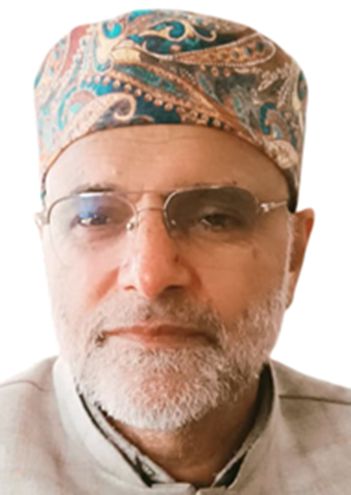
(The author a veteran academician is a former Professor and Head Department of Islamic Studies, Kashmir University. The views, opinions and conclusions expressed in this article are those of the author and aren’t necessarily in accord with the views of “Kashmir Horizon”)