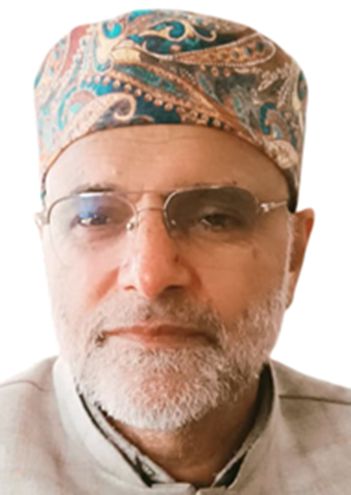
On 7th February 2026, I had the opportunity to undertake an educational and academic visit to Deeniyat Muallima College (DMC), Howrah, a community-based institution dedicated to the empowerment and education of Muslim women in West Bengal. This visit formed part of the college’s Outreach Programme, which seeks to extend learning beyond conventional classrooms and to expose students to meaningful intellectual engagement, scholarly dialogue, and real-life academic interactions. The visit was marked by a lengthy, thoughtful, and deeply engaging interaction with the students, teachers, and administrators of the college. From the outset, the atmosphere reflected sincerity, intellectual curiosity, and a shared commitment to the cause of education—particularly women’s education grounded in faith, ethics, and social responsibility. As someone engaged in Islamic theology, philosophy, and contemporary educational discourse, I found the visit both intellectually stimulating and personally fulfilling.
Context, Significance Of The Visit: Deeniyat Muallima College, established in 2016, has emerged as an important educational initiative responding to a critical social concern: the high dropout rate among Muslim women in the region. The institution aims not merely to provide formal education, but to nurture confident, informed, and socially responsible Muslim women who can contribute positively to their families, communities, and wider society. The Outreach Programme of DMC plays a vital role in this mission by connecting students with scholars, educators, and practitioners from diverse academic backgrounds.
My visit was organized under this broader educational vision. It was intended not as a one-directional lecture, but as an interactive academic engagement, allowing students to question, reflect, and critically engage with ideas related to Islam, education, gender, and society.
Interaction With Faculty, Administration: Before the lecture session, I had the opportunity to interact with the faculty members and administrators of the college. These discussions focused on the challenges and opportunities faced by women’s educational institutions in contemporary India, particularly those operating within a faith-based framework. I was deeply impressed by the dedication of the teaching staff, who work under often challenging circumstances to ensure continuity, quality, and relevance in education. The administration shared insights into the college’s journey, curriculum design, outreach initiatives, and future aspirations. Their emphasis on integrating religious knowledge with practical skills and social awareness resonated strongly with my own academic concerns regarding holistic education in Muslim societies.
Theme Of The Lecture| Women’s Education, Islam : The central theme of my lecture was “Women’s Education in Islam: Foundations, Historical Precedents, and Contemporary Necessities.” I deliberately chose this theme because of its direct relevance to the students of Deeniyat Muallima College, who represent the very embodiment of this ideal. I began the lecture by emphasizing that seeking knowledge is a religious obligation in Islam, and that this obligation is gender-neutral. Drawing upon Qur’anic principles and Prophetic traditions, I highlighted that Islam emerged in a society where women were largely denied education and dignity, and yet it fundamentally transformed this condition by placing knowledge, moral agency, and accountability at the centre of human life.
ʿĀʾishah (RA) As A Model Of Female Scholarship: A significant portion of the lecture was devoted to the scholarly personality of ʿĀʾishah bint Abī Bakr (ra). I presented her not merely as the wife of the Prophet Muhammad ﷺ, but as one of the greatest intellectual authorities of early Islam. Her role as a narrator of Hadith, an expert in Islamic jurisprudence (fiqh), Qur’anic interpretation, medicine, and poetry was discussed in detail. I reminded the students that many senior companions of the Prophet ﷺ used to consult ʿĀʾishah (ra) on complex legal and theological matters. This historical reality challenges modern stereotypes that attempt to marginalize women’s intellectual roles in Islam. Through her example, I emphasized that women’s participation in knowledge production is not a modern concession but an Islamic legacy.
“The educational outreach visit on February 7, 2026, highlighted the transformative impact of Islamic-based women’s education. Observing the dedication of the Deeniyat Muallima College community reinforced the vital link between empowering Muslim women and achieving broader intellectual and moral societal progress.”
Shifāʾ bint ʿAbdullāh (RA) | Literacy, Public Responsibility: Another important figure discussed during the lecture was Shifāʾ bint ʿAbdullāh (ra), one of the earliest literate women in Madinah. I explained her role as a teacher of literacy and her appointment during the caliphate of ʿUmar ibn al-Khaṭṭāb (ra) to supervise market affairs—an administrative responsibility that required intelligence, integrity, and public trust. Her example was used to demonstrate that Islam does not confine educated women to private spaces alone, but recognizes their capacity to contribute to public administration, social regulation, and ethical governance. For the students, this served as a powerful reminder that education equips women not only for personal growth but also for societal leadership.
Status Of Women In Islam| Beyond Misconceptions: Throughout the lecture, I addressed common misconceptions regarding the status of women in Islam, many of which arise either from cultural practices or from selective and decontextualized readings of religious texts. I emphasized that Islam views women as morally autonomous individuals, accountable before God, entitled to education, property, consent, and participation in social life. I stressed that denying women access to education is not only a social injustice but also a religious failure, as it contradicts the very ethos of Islam. Education enables women to understand their faith correctly, raise morally grounded families, and engage critically with the challenges of modern life.
Contemporary Relevance, Necessity of Women’s Education: The lecture also explored the contemporary necessity of women’s education, particularly in the context of globalization, technological change, and shifting social structures. I encouraged students to see education as a means of empowerment that allows them to preserve their religious identity while confidently navigating modern academic and professional spaces. Special attention was given to the role of educated women as teachers, mothers, scholars, social workers, and community leaders. I emphasized that sustainable social reform is impossible without educated women, as they play a central role in shaping future generations.
Student Engagement, Dialogue: One of the most enriching aspects of the visit was the active participation of students. They posed thoughtful questions about balancing religious commitment with modern education, career aspirations, social expectations, and family responsibilities. Their curiosity and confidence reflected the positive impact of the college’s educational environment. The discussion evolved into a genuine dialogue rather than a conventional lecture, allowing for mutual learning and reflection. I found the students’ questions intellectually mature and socially grounded, indicating that institutions like DMC are successfully nurturing critical thinking alongside religious consciousness.
Reflections On Deeniyat Muallima College: As the visit progressed, I became increasingly convinced that Deeniyat Muallima College represents a vital model of community-based women’s education. Its commitment to empowering Muslim women through structured learning, outreach programmes, and value-based education is both timely and necessary. Located at DMC Nagar, Garpa, beside Lakeland Country Club, Kona Expressway, Santragachi, Howrah, the college serves as a beacon of hope for many young women who might otherwise be deprived of educational opportunities. The dedication of its staff and the enthusiasm of its students reflect a shared vision rooted in faith, knowledge, and service.
Conclusion, Way Forward: The educational outreach visit on 7 February 2026 was not merely a formal academic engagement, but a deeply meaningful experience that reaffirmed my belief in the transformative power of education—especially women’s education grounded in Islamic values. The interaction with students, teachers, and administrators underscored the urgent need to support and expand such initiatives. I left Deeniyat Muallima College with a sense of optimism and responsibility, convinced that empowering Muslim women through education is one of the most effective ways to ensure intellectual revival, moral integrity, and social progress. I hope that this visit will serve as a foundation for continued academic collaboration, dialogue, and outreach in the future, in shāʾ Allāh
(The author a veteran academician is a former Professor and Head Department of Islamic Studies, Kashmir University. The views, opinions and conclusions expressed in this article are those of the author and aren’t necessarily in accord with the views of “Kashmir Horizon”)
[email protected]