

Human civilization has never advanced in isolation. The story of humanity is, at its core, a story of encounters—between peoples, cultures, languages, and worldviews. Wherever societies opened themselves to dialogue, learning, and mutual enrichment, they witnessed intellectual creativity, scientific progress, and cultural vitality. Conversely, periods marked by insularity, arrogance, and civilizational self-sufficiency often led to stagnation and decline. In today’s world—deeply interconnected yet increasingly polarized—the revival of civilizational dialogue is not merely desirable; it is an urgent moral, intellectual, and spiritual necessity. Islam, from its very inception, established dialogue as a foundational principle of human coexistence. The Qur’an affirms diversity not as an accident of history but as a deliberate act of divine wisdom. Allah declares:
“O mankind! Indeed, We created you from a male and a female and made you into nations and tribes so that you may know one another” (Qur’an 49:13). This verse places ta‘āruf—mutual recognition and understanding—at the heart of human plurality. Difference, according to the Qur’anic worldview, is not meant to generate conflict but to facilitate learning, cooperation, and ethical competition in goodness. The Qur’an further reminds humanity: “And if Allah had willed, He could have made you one community, but He intended to test you in what He has given you; so compete with one another in good deeds” (Qur’an 5:48). This ethical framework laid the foundation for Islam’s historical engagement with other civilizations, producing one of the most remarkable episodes of intellectual exchange in human history.
Knowledge As A Sacred Trust In Islam:The Islamic emphasis on dialogue is inseparable from its profound reverence for knowledge. The very first revelation—“Read in the name of your Lord who created” (Qur’an 96:1)—established learning as a sacred act. The Qur’an repeatedly elevates those endowed with knowledge:“Say: Are those who know equal to those who do not know?” (Qur’an 39:9).The Prophet Muhammad (SAW) reinforced this ethos by declaring:
“Seeking knowledge is an obligation upon every Muslim.” (Ibn Mājah)
Another well-known hadith states: “Wisdom is the lost property of the believer; wherever he finds it, he has more right to it” (Tirmidhī). This Prophetic principle legitimized the pursuit of knowledge across cultural and civilizational boundaries, regardless of its origin. Muslim scholars understood wisdom as universal, not monopolized by any single community.
The Muslim World As A Bridge Of Civilizations: Guided by this Qur’anic and Prophetic vision, the Muslim world emerged between the eighth and thirteenth centuries as a global center of intellectual exchange. It became a bridge connecting the intellectual legacies of ancient Greece and Egypt, Persian statecraft, Indian mathematics and astronomy, and later, European scholastic traditions.
This openness was institutionalized most famously in the Bayt al-Ḥikmah (House of Wisdom) in Baghdad. Founded in the early ninth century under the Abbasids, the Bayt al-Ḥikmah functioned as a vibrant hub of translation, research, and original scholarship. Scholars of diverse religious backgrounds—Muslims, Christians, Jews, and others—worked collaboratively to translate major works from Greek, Syriac, Persian, and Sanskrit into Arabic. Importantly, this translation movement was not a passive exercise. Muslim scholars critically examined inherited knowledge, refined methodologies, and made groundbreaking contributions. Al-Kindī, often called the “philosopher of the Arabs,” defended philosophy as a means to understand divine wisdom. Al-Fārābī synthesized Greek philosophy with Islamic metaphysics, while Ibn Sīnā (Avicenna) revolutionized medicine and philosophy. Al-Rāzī pioneered empirical methods in medicine, emphasizing observation and experimentation. Imam Al-Ghazālī, despite his critique of certain philosophical excesses, did not reject reason or science. Rather, he sought to discipline reason within an ethical and spiritual framework. He famously wrote: “The intellect is like the eye, and revelation is like the light. The eye cannot see without light.” This balanced approach preserved intellectual rigor while safeguarding moral and spiritual integrity.
Transmission To Europe And The Birth Of Modern Science: Through Andalusia (Muslim Spain) and Sicily, Islamic knowledge flowed into Europe. Libraries, universities, and translation centers in Toledo and Córdoba transmitted Arabic scientific and philosophical works into Latin. European thinkers such as Roger Bacon, Albertus Magnus, and Thomas Aquinas benefited immensely from Muslim scholarship. Historian George Sarton, often regarded as the father of the history of science, acknowledged: “The main, as well as the least obvious achievement of medieval Islam was the creation of the experimental spirit.”
This transmission played a decisive role in laying the intellectual foundations of the European Renaissance. It stands as a historical refutation of the myth that civilizations develop independently or in competition alone.
“Islamic history proves that open dialogue fosters scientific and cultural excellence. Today, reviving this spirit is a moral necessity. By approaching diversity with faith and humility, we can turn global differences into a collective strength, ensuring a future defined by peace and shared wisdom.”
Dialogue In South Asia| A Tradition Of Intellectual Respect: The spirit of civilizational dialogue also flourished in South Asia. One of its most luminous exemplars was Al-Bīrūnī, whose study of Indian sciences, religions, and customs remains unparalleled in its scholarly objectivity. He learned Sanskrit, studied Hindu philosophy, and documented Indian knowledge systems with remarkable fairness. His work reflects the Qur’anic ethic: “Do not let the hatred of a people prevent you from being just” (Qur’an 5:8). Later figures such as Mullā Muḥsin Fānī Kāshmīrī, Emperor Akbar, and Dārā Shikōh further institutionalized interfaith and intercultural dialogue. Akbar’s court hosted scholars from diverse traditions, while Dārā Shikōh’s translations of the Upanishads into Persian sought metaphysical convergence between Islam and Hinduism. Shah Waliullah of Delhi, while firmly rooted in Islamic orthodoxy, emphasized intellectual openness and balance. He observed: “Wisdom is scattered among the nations; the wise person gathers it wherever it appears.”
Dialogue As A Condition For Intellectual Flourishing: Islamic civilization’s golden ages coincided with openness, pluralism, and scholarly exchange. Decline set in when dogmatism, factionalism, and fear of the “other” replaced confidence and curiosity. Ibn Khaldūn, in his Muqaddimah, identified intellectual stagnation as a symptom of civilizational decay, noting that creativity thrives only in societies that value learning and debate. The Qur’an repeatedly invites humanity to reflection, reasoning, and observation: “Indeed, in the creation of the heavens and the earth and the alternation of night and day are signs for those of understanding” (Qur’an 3:190). This reflective spirit is incompatible with intellectual isolation. Dialogue sharpens reason, refines understanding, and prevents the absolutization of partial truths.
Contemporary Relevance In A Fragmented World: Today’s world faces unprecedented challenges—climate change, ethical dilemmas in technology, economic inequality, and cultural polarization. These problems transcend borders and demand collective wisdom. Yet, paradoxically, we witness a resurgence of civilizational anxieties, identity conflicts, and ideological rigidity. Reclaiming the legacy of civilizational dialogue offers a powerful antidote. Islam’s ethical universalism provides a framework for engagement grounded in dignity, justice, and compassion. The Qur’an instructs: “Invite to the way of your Lord with wisdom and good counsel, and argue with them in the best manner” (Qur’an 16:125). Dialogue, in this sense, is not a compromise of faith but an expression of moral confidence.
Institutions, Education, And The Way Forward: Modern educational institutions and research centers must revive the integrative spirit of the Bayt al-Ḥikmah. Universities should encourage interdisciplinary and cross-cultural scholarship, recognizing that knowledge flourishes at the intersections. Translation initiatives, collaborative research, and ethical engagement with diverse knowledge systems are essential. Contemporary scholars such as Ismail Raji al-Faruqi emphasized that Islamization of knowledge does not mean isolation from global thought but critical engagement rooted in Islamic values. Similarly, Said Nursi stressed reconciliation between reason and revelation, science and faith, warning that neglecting either would weaken the Muslim intellectual tradition.
Conclusion| Dialogue As A Civilizational Imperative: The Qur’an affirms that humanity is bound together by a shared origin and a shared destiny. The Prophet (SAW) embodied dialogue through treaties, diplomacy, and intellectual engagement, even with opponents. The ulama across centuries upheld knowledge as a trust that transcends borders. The historical experience of Islamic civilization demonstrates that openness to dialogue nurtures scientific creativity, moral depth, and cultural vitality. Revitalizing this spirit today is not merely an academic exercise—it is a civilizational obligation. By embracing dialogue grounded in faith, ethics, and humility, humanity can transform diversity from a source of division into a wellspring of collective wisdom. In a fractured world, civilizational dialogue remains our most reliable pathway toward intellectual advancement, peaceful coexistence, and a shared future worthy of the human vocation entrusted by God.
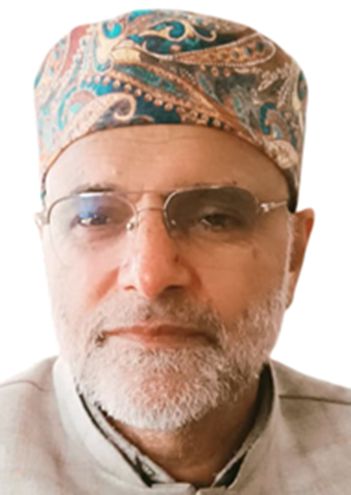
(The author a veteran academician is a former Professor and Head Department of Islamic Studies, Kashmir University. The views, opinions and conclusions expressed in this article are those of the author and aren’t necessarily in accord with the views of “Kashmir Horizon”)
[email protected]







