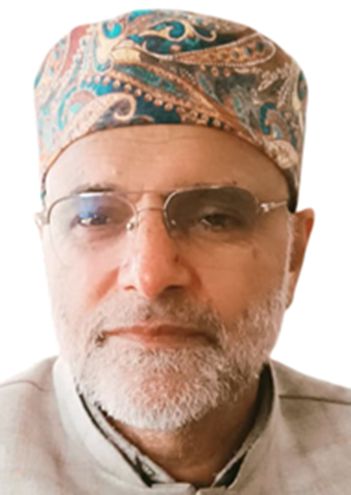
Prof. Hamid Naseem Rafiabadi
Universiti Malaya (UM) occupies a distinctive position in the modern higher-education landscape, particularly within Southeast Asia and the broader Muslim world. Known as Malaysia’s oldest and most comprehensive public university, UM has evolved over more than a century into a globally recognised institution that combines high-impact research, diverse academic programmes, and broad international engagement. Its accomplishments are measurable through independent global rankings, subject strengths, and its contributions to scholarship across disciplines, including Islamic Studies.
Global, Regional Academic Standing: In recent global assessments, Universiti Malaya has consistently been placed among the world’s leading universities. In the latest QS World University Rankings, UM achieved the 58th position out of over 8,000 evaluated institutions worldwide, marking its highest placement to date in this ranking series. This result reflects a significant upward trajectory over the past several years, with steady improvements year-on-year.
Within the broader Asian region, UM is also recognised for its academic strength. In the QS Asia University Rankings 2026, it was placed 15th across all Asian universities, securing its position as Malaysia’s top-ranked institution in the region.
Different global ranking systems also affirm UM’s performance in complementary ways. In the Times Higher Education (THE) World University Rankings, UM is placed within the top 201–300 universities globally, a standing that reflects strength in research, teaching environment, and international outlook. These multiple recognitions demonstrate that UM is not only competitive within Malaysia but has reached a level of global relevance that places it alongside many established research universities worldwide. In addition to overall rankings, specialised subject rankings further reveal UM’s academic breadth and quality. In the QS World University Rankings by Subject, UM recorded subjects in the global top 50, including theology and religious studies in prior editions, alongside strengths in fields such as engineering and social sciences. It is important to note that university rankings measure a combination of criteria—such as research output, reputation among academics and employers, citations, international partnerships, and student outcomes—and thus capture different aspects of institutional performance. While no ranking system is definitive in isolation, UM’s consistent appearance near the top of various lists signals broad recognition of its academic and research capacities.
Intellectual Environment, Scholarly Culture: UM’s institutional character is shaped by a commitment to both disciplinary depth and interdisciplinary exploration. The university houses faculties and centres spanning science, social sciences, medical sciences, humanities, and professional disciplines. Its academic culture is marked by active research publication, collaborative engagement with industry and international partners, and a strong record of graduate employability. Within this comprehensive university environment, the Academy of Islamic Studies has emerged as a leading centre for Islamic scholarship, teaching, and research. Its programmes address both classical Islamic sciences and contemporary applications of Islamic thought, law, and ethics. The academy’s curriculum spans Qur’anic sciences, Hadith studies, Islamic law (fiqh), Islamic philosophy and theology, comparative religion, and interdisciplinary subjects such as Islamic finance and ethics. By bridging traditional Islamic scholarship with modern academic frameworks, the Academy of Islamic Studies plays a dual role: it preserves and communicates the rich intellectual heritage of Islamic thought, and it engages with contemporary challenges from a grounded, scholarly perspective. This positioning enables graduates and researchers to contribute to academic discourse, public policy, community leadership, and global conversations in ethics, law, and spirituality. The academy’s environment emphasizes rigorous research methods, critical engagement with texts and historical context, and sustained dialogue with other academic disciplines and cultural perspectives. In this context, academic interaction is not just local but global, involving publications in peer-reviewed journals, participation in international conferences, and collaborative scholarship with institutions in different regions.
Strategic Collaboration with Qatar Institutions: A recent development that reflects both the university’s stature and the strategic direction of its Academy of Islamic Studies is its expanding engagement with institutions in the State of Qatar. This initiative is part of a broader effort to strengthen bilateral cooperation in higher education, Islamic finance, and community development. In an official engagement, representatives of the Academy of Islamic Studies met with the Qatar Ambassador to Malaysia to discuss opportunities for academic, cultural, and social collaboration. The discussions focused on coordinated initiatives involving Qatar University, the Ministry of Religious Endowments (Awqaf), and the Central Bank of Qatar, in areas that include Islamic finance education, joint research, and capacity building. The importance of these discussions lies in their emphasis on strategic, institutional cooperation rather than one-off interactions. The agenda includes:
Curriculum Development, Joint Programs: Exploring ways to align curricula, develop joint courses or degrees, and share expertise on subjects such as Islamic finance, governance, ethics, and legal theory in Islamic contexts.
Research Partnerships: Identifying collaborative research projects that address pressing global issues—such as financial ethics, economic development from Islamic perspectives, and the role of religion in public life—by leveraging the strengths of academic communities in both countries.
“Universiti Malaya’s high rankings and strategic partnerships highlight its commitment to academic excellence. By fostering intellectual engagement and cross-cultural dialogue, the university actively addresses global challenges through ethical scholarship and leadership in scholarly discourse.”
Academic, Cultural Exchanges: Organising faculty and student exchange programmes to broaden perspectives, enhance intercultural understanding, and build long-term scholarly networks that support mutual learning. Institutional Visits and Networking: Planning an official delegation visit from the Academy of Islamic Studies to various Qatari ministries, universities, and strategic institutions to explore areas of cooperation more deeply, establish memoranda of understanding, and build foundations for sustained engagement. Such collaboration is significant not only for academic programming but also for socio-economic development frameworks that connect education, financial ethics, and community well-being. It underscores how universities can function as bridges between nations, advancing shared priorities while fostering mutual respect and intellectual exchange. This initiative also reflects a larger trend of South–West Asian academic partnerships that harness the strengths of universities in Muslim-majority settings to advance research, policy discourse, and educational innovation. By participating actively in these networks, the Academy of Islamic Studies and Universiti Malaya reinforce their role as global contributors to Islamic scholarship and interdisciplinary inquiry.
Integrating Academic Reputation,Community Impact: The global ranking achievements of UM amplify the credibility and reach of its internal academic units, including the Academy of Islamic Studies. A high position in global rankings often correlates with a strong reputation among international peers, broader research collaboration, and enhanced opportunities for student and faculty mobility. For students and researchers in Islamic studies, this broader institutional reputation provides access to networks, funding opportunities, and platforms for publishing that might otherwise be restricted. At the same time, the intellectual environment at UM and within the academy emphasises not just metrics but meaningful contribution. Islamic studies, as pursued in the academy, addresses both foundational texts and contemporary contexts—linking textual literacy with real-world issues such as financial ethics, social justice, inter-religious engagement, and digital humanities. This reflects a commitment to scholarly work that is academically rigorous and socially relevant. Moreover, the academy’s orientation towards global engagement parallels UM’s broader institutional strategy, which prioritises international research networks and cross-disciplinary collaboration. These priorities are reflected in rankings such as the QS indicator for International Research Network, where UM ranks particularly strongly, signalling extensive collaborative research activity with institutions around the world.
Conclusion| A Broad, Enduring Contribution: Universiti Malaya’s rise in global academic standing is not accidental but the result of sustained efforts in teaching, research, and international engagement. As one of Southeast Asia’s highest-ranked institutions, UM serves as both an intellectual hub and a gateway for regional and global academic cooperation. The Academy of Islamic Studies, embedded within this broader environment, plays an important role in extending the university’s mission into areas of ethical scholarship, religious thought, and interdisciplinary exploration. Its ongoing and expanding collaboration with partners in Qatar underscores how academic institutions can leverage their strengths to build global linkages that enrich knowledge, broaden perspectives, and contribute to shared human development goals. In this broader context, Universiti Malaya’s achievements in rankings and partnerships represent a convergence of institutional excellence and meaningful intellectual engagement. They affirm the university’s role not just as a centre of learning but as a dynamic participant in shaping scholarly discourse, facilitating cross-cultural dialogue, and addressing complex contemporary challenges through informed and ethical scholarship.
(The author a veteran academician is a former Professor and Head Department of Islamic Studies, Kashmir University. The views, opinions and conclusions expressed in this article are those of the author and aren’t necessarily in accord with the views of “Kashmir Horizon”)
[email protected]