
Srinagar : Across Jammu & Kashmir, a subtle but meaningful change is underway in how young people think about work and the future. For decades, secure salaried jobs were seen as the only respectable path. Today, that mindset is slowly expanding. Aligned with the Hon’ble Prime Minister’s vision of Viksit Bharat 2047, the Union Territory is encouraging enterprise, self-reliance and risk-taking—and at the heart of this shift is Mission YUVA.
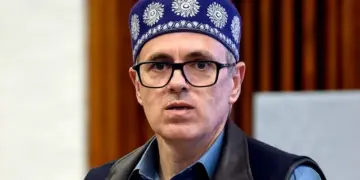
More than a government scheme, Mission YUVA represents an attempt to restore confidence, dignity and ambition among young people who want to build something of their own. When the Mission was formally launched at the Sher-i-Kashmir International Conference Centre (SKICC), Srinagar, on June 28, 2025, Chief Minister Omar Abdullah made it clear that youth empowerment was not just about income. It was about giving young people the tools and trust to shape the future of Jammu & Kashmir. His remarks reflected a broader political resolve: economic transformation cannot happen unless youth are placed at its centre.
Mission YUVA took shape after a frank assessment of the region’s employment ecosystem, carried out by the Government of Jammu & Kashmir in collaboration with IIM Jammu, NABARD, J&K Bank and other institutions. The findings were revealing. Unemployment was not simply about a lack of jobs or money. Many young people had ideas and intent, but felt overwhelmed by complicated procedures, lack of guidance and fear of failure.
Aspirations existed, access did not. On one side were youth settling for low-paying but predictable work because entrepreneurship seemed risky and unclear. On the other were fragmented support systems, complex banking processes and weak linkages between education and enterprise. Mission YUVA was designed to bridge this gap—not as a one-time financial scheme, but as a complete support ecosystem.
One of the Mission’s strengths lies in its data-driven approach. A massive baseline survey covering more than 24 lakh households and 1.1 crore individuals identified nearly 5.5 lakh potential entrepreneurs across the Union Territory. Based on this, the Mission targets people aged 18 to 59 years, with the aim of facilitating 1.37 lakh enterprises and generating around 4.25 lakh jobs over five years through nano enterprises, MSMEs, enterprise acceleration and innovation.
Strong monitoring has helped translate vision into action. While reviewing the Mission’s progress in Srinagar on December 3, 2025, Chief Minister Omar Abdullah stressed the need to remove procedural hurdles quickly, noting that once young people see success around them, confidence spreads organically.
On the ground, implementation happens close to the people. District Level Implementation Committees, chaired by Deputy Commissioners, oversee execution. Small Business Development Units and Business Help Desks provide hand-holding at every step—from awareness and business planning to bank linkage and post-sanction mentoring—so that enterprises don’t just start, but survive.
Mission YUVA rests on four pillars: Culture, Capital, Capacity and Connectivity.
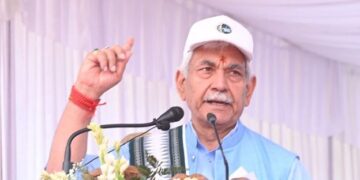
The cultural shift may be the most important. Thousands of YUVA Doots have been deployed across panchayats and urban wards to change perceptions—especially among first-generation entrepreneurs, women, and youth in remote and border areas. Entrepreneurship is being presented not as a gamble, but as a respectable and achievable livelihood. This thinking echoes the views expressed by Lieutenant Governor Manoj Sinha, who, while addressing the Viksit Bharat Yuva Connect Programme at the Islamic University of Science & Technology, Pulwama, on July 24, 2025, said that lasting peace and prosperity in Jammu & Kashmir are inseparable from the economic participation of its youth.
Access to capital has been simplified through the Nano Enterprise model, based on the insight that most aspiring entrepreneurs were comfortable with investments of around ₹5–6 lakh. By legitimising small, low-risk ventures and offering subsidies and interest support, Mission YUVA has reduced fear of debt and extended its reach to more than 95 percent of panchayats, correcting the urban bias of earlier schemes.
Capacity building combines digital modules with classroom training, covering entrepreneurship basics, financial literacy, digital tools and emerging technologies. During interactions with university leadership in 2025, Chief Minister Omar Abdullah underlined that initiatives like Mission YUVA are meant to connect education, skills and enterprise—preparing youth not just for jobs, but for leadership and long-term nation-building.
The fourth pillar, connectivity, ensures that enterprises are not left isolated. Through platforms like ONDC, incubation centres and innovation hubs, young entrepreneurs are linked to markets and ideas. Explaining the Mission during official briefings in September 2025, the Deputy Chief Minister and Minister for Labour & Employment described Mission YUVA as a rare ecosystem-driven intervention—focused on mentoring and institutional backing rather than one-time financial assistance.
Technology supports transparency. The Mission YUVA App and Portal bring applications, training, DPR preparation and progress tracking onto a single platform, building trust among applicants and stakeholders alike.
The results are already visible: over 1.59 lakh registrations, more than 44,000 approvals, bank sanctions crossing ₹750 crore and disbursements nearing ₹600 crore. Yet the real impact goes beyond numbers. Mission YUVA signals a shift in how youth are viewed—not as job seekers waiting in line, but as job creators shaping their own futures.
By grounding ambition in data, reducing risk and walking alongside young entrepreneurs at every step, Mission YUVA is quietly turning the idea of Atmanirbhar Bharat into a lived reality across Jammu & Kashmir.