Sinha Sends Gratitude Messages To PM Modi, Rural Dev Minister Chauhan
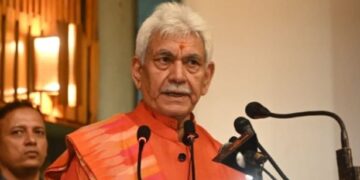
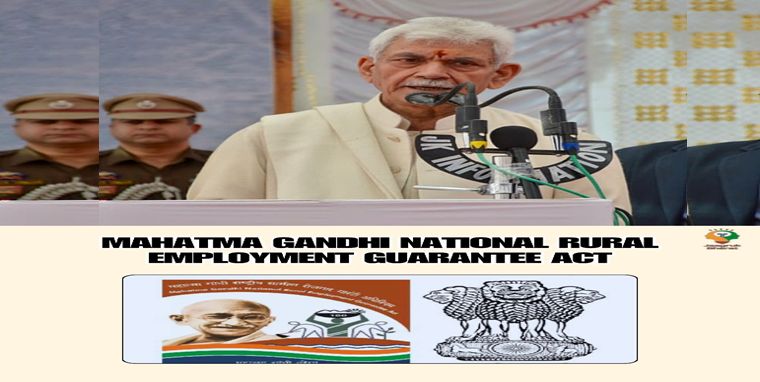
Srinagar: In a major relief measure for thousands of rural families battling the aftermath of natural calamities, the Government of India has approved an increase in the number of MGNREGA person-days for the Union Territory of Jammu & Kashmir from 100 to 150 for the financial year 2025–26. The decision, endorsed under Section 3(4) of the Mahatma Gandhi National Rural Employment Guarantee Act, follows months of severe flooding, cloudbursts, and landslides that disrupted livelihoods across 1,962 Panchayats declared “flood affected” in J&K. Lieutenant Governor Manoj Sinha expressed deep gratitude to Prime Minister Narendra Modi and Union Rural Development Minister Shivraj Singh Chouhan, terming the move a “critical intervention” at a time when thousands of rural households are struggling to stabilize income and rebuild lives. Posting on X, the LG said the enhanced employment support will relieve distressed families, secure livelihoods during recovery, and help create durable community assets that can withstand future climatic shocks.
A Rural Lifeline Amid Widespread Calamity: The UT’s rural belt has been hit by successive natural disasters over the past year, leaving agricultural land silted, water channels blocked, livestock lost, and traditional sources of income wiped out. With the agriculture-based economy already vulnerable, the collapse of rural employment systems pushed thousands into uncertainty. The LG noted that the calamities had an “adverse impact on livelihood,” prompting a formal request for special relief from the Centre. Responding to the UT’s plea, the Ministry of Agriculture and Farmers Welfare recommended an extended employment window under MGNREGA. The Rural Development Ministry accepted the recommendation, acknowledging the heightened demand for labour-intensive public works needed both to revive rural infrastructure and inject cash flow into distressed families. The additional 50 days of work per household will enable the reconstruction of irrigation channels, rural roads, water-harvesting systems, flood-resilient bunds, and community assets, while offering guaranteed wages to thousands in regions where private labour opportunities remain scarce.
A Step Towards Stability At A Time of Rising Climatic Uncertainty: Climate vulnerabilities in Jammu & Kashmir have worsened in recent years. Unpredictable rainfall, cloudburst-like incidents, and frequent landslides have disrupted traditional cropping cycles. In several districts, infrastructure damage has forced communities to rely entirely on government-backed public works for their survival. The LG’s acknowledgment of the Centre’s support reflects this reality. The enhanced MGNREGA allocation is expected to shield the most economically fragile households from the long-term consequences of disaster-induced income loss. It also allows the administration to push forward large-scale livelihood-oriented works—rural water supply restoration, Panchayat-level development, soil conservation, and employment-heavy reconstruction projects. By securing wage support for six months instead of the usual four, the measure offers rural families a safety cushion while local administrations rebuild agricultural and community infrastructure.
MGNREGA’s Expanded Scope: Relief, Reconstruction, Resilience : Officials familiar with the decision say the extended person-days will be channelled toward, rebuilding rural assets damaged by floods and landslides, expanding irrigation networks to mitigate future climatic stress, repairing approach roads essential for market connectivity, strengthening Panchayat infrastructure weakened during the calamity, supporting households whose land has become unproductive due to siltation and providing predictable wage income during the lean agricultural season. The UT Government anticipates a significant uptick in rural economic activity as Panchayats mobilize these additional labour days for priority works.
The Economic, Social Impact|What the Increase Means For Families : For thousands of families, particularly in mountainous belts of Jammu, Rajouri, Poonch, Kupwara, and Anantnag, the decision brings immediate financial relief. Wage support from MGNREGA often becomes the backbone of household income during crises. The additional 50 days is expected to Boost annual earnings of rural households by 40–50% depending on work availability, Reduce distress migration from hilly areas to cities, Provide income stability at a time when agricultural output remains unpredictable, Support women workers, who form a major portion of MGNREGA’s workforce in J&K, enhance community resilience, as public works improve local infrastructure and disaster preparedness. Officials also note that the additional labour component will help complete pending rural development projects delayed due to damaged terrain and prolonged monsoon spells.
A Broader National Push For Workers’ Rights, Social Protection : The Centre’s approval of expanded MGNREGA days in J&K coincides with the nationwide rollout of the four labour codes—described by Prime Minister Narendra Modi as the “most comprehensive and progressive labour reforms since Independence.” While separate from the MGNREGA decision, both reforms converge on one axis: strengthening the social security net for India’s workers, especially the vulnerable. The labour codes consolidate 29 fragmented laws into a unified framework ensuring:
- Universal social security
- Statutory minimum wages
- Timely wage payment
- Safety and welfare measures across sectors
- Recognition, protection for gig and unorganised workers
- Expanded employment rights for women
PM Modi described the codes as a “future-ready ecosystem” that will accelerate India’s march toward a developed, equitable economy. Home Minister Amit Shah echoed this, calling the nationwide implementation an “historic reform” committed to worker dignity and economic empowerment. In this policy landscape, the MGNREGA expansion for J&K positions rural labourers at the centre of the UT’s recovery strategy.
A Pro-People Decision At A Time Of Unprecedented Stress : The LG emphasized that the additional employment guarantee will have a multiplier effect—helping vulnerable families stabilize incomes, enabling better access to essentials, and giving communities a sense of economic security. With over 1,962 Panchayats officially listed as calamity-affected, the scale of reconstruction work required is immense. MGNREGA’s expansion allows the government to rebuild systematically while ensuring households remain financially protected. “Today’s decision will ensure stable income to vulnerable rural households, relieve families from economic distress, and create durable assets,” the LG said in his message. Administrators across J&K have welcomed the move, noting that the financial year 2025–26 will need a major push in labour-intensive works to counteract damage caused by floods and landslides. As Jammu and Kashmir continues its long-term efforts to strengthen rural infrastructure, diversify livelihoods, and build climate-resilient communities, the enhanced MGNREGA allocation is expected to serve as a cornerstone. The increase from 100 to 150 days is not just an administrative measure—it is a recognition of the pressing humanitarian and economic realities faced by rural communities. It expands the safety net for households coping with agricultural losses, creates opportunities for development at the Panchayat level, and ensures that vulnerable populations do not slip deeper into debt or displacement due to climatic shocks. Combined with broader national labour reforms aimed at creating an equitable and worker-centered economy, the expansion of the MGNREGA reinforces the government’s commitment to inclusive growth that reaches the last rural household. For the people of Jammu & Kashmir—recovering from calamity while battling structural development challenges—this decision marks a significant step toward restoring livelihoods, securing incomes, and strengthening resilience in the face of an uncertain climate future.