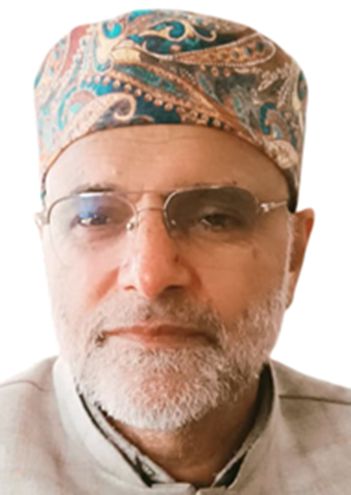
Prof. Hamid Naseem Rafiabadi
The colonial encounter between Europe and Asia remains one of the most consequential historical phenomena of the modern era. Wherever the British, French, or other European powers established dominion, they did not simply conquer territories—they reshaped societies, redefined cultural values, and reconstructed systems of knowledge. The colonial impact on education in South Asia, in particular, continues to shape the intellectual and social landscape of the region today.
Colonial Narratives, Historical Reinterpretation: When European powers expanded into Muslim and Asian lands, they did not only bring their armies and merchants but also their narratives. Colonial historians and administrators depicted precolonial Muslim empires as tyrannical, superstitious, and stagnant, thereby portraying Western domination as a moral and civilizational necessity. Indian scholar and author Dr. Purushottam Agrawal, in a BBC report aired on 23 March 2023, observed that these portrayals were not accidental but part of a deliberate project to undermine indigenous confidence. Before British rule, he noted, India had a diverse and inclusive education system where Muslims, Hindus, and Sikhs studied together in traditional schools known as madrasas and pathshalas. These institutions imparted both religious and worldly knowledge, often producing scholars proficient in theology, philosophy, mathematics, astronomy, and languages. According to Agrawal, the British educational system that replaced it was far narrower in scope, designed primarily to create a class of clerks and intermediaries who could serve the colonial administration. The claim that the Mughal rulers were cruel and uneducated, he said, was “a colonial fabrication” aimed at legitimizing British rule and erasing the legacy of Islamic and Indic scholarship.
The Educational Landscape Before British Rule: Historical records lend some support to this view. Surveys conducted in the early 19th century by British officials themselves revealed the surprising extent of indigenous education. William Adam, in his 1835 report on Bengal and Bihar, documented thousands of village schools that served students of all communities. Similarly, Thomas Munro in Madras and G.W. Leitner in Punjab reported the existence of a widespread system of community-funded schools. Before colonial interference, literacy in India may have been higher than often assumed. The RSS chief Mohan Bhagwat, citing historical data, claimed in 2023 that around 70% of Indians were literate before British rule, while literacy in England at the same period stood at just 17%. Though some historians debate the accuracy of these figures, they point to a vibrant educational tradition that was far from the “dark age” described by colonial writers.
The Macaulay Revolution,Its Consequences: The transformation of Indian education began decisively in 1835 with Lord Thomas Babington Macaulay’s “Minute on Indian Education.” Macaulay famously dismissed traditional learning, declaring that “a single shelf of a good European library was worth the whole native literature of India and Arabia.” His goal was to create “a class of persons, Indian in blood and colour, but English in taste, in opinions, in morals, and in intellect.” This policy marked the beginning of the colonial education system—one that emphasized English language, rote memorization, and administrative utility. The classical subjects of logic, philosophy, astronomy, and jurisprudence were sidelined in favor of Western curricula. As a result, a new elite emerged: Western-educated Indians who often found themselves alienated from their cultural and religious roots but dependent on colonial structures for advancement. The destruction of madrasas, pathshalas, and local academies also disrupted the transmission of traditional knowledge. For centuries, South Asian education had been characterized by the unity of the sacred and the secular. The madrasa system, for instance, did not separate theology from natural science or ethics from mathematics. After Macaulay’s reforms, this unity was replaced by a fragmented, secularized model that prioritized economic utility over intellectual and moral growth.
The Postcolonial Dilemma|Education After Independence: After independence in 1947, both India and Pakistan inherited this colonial legacy. Their respective education systems reflected the same inequalities, centralization, and linguistic hierarchies that the British had established. Yet their trajectories diverged in significant ways.
India’s Education Investment: India, with its vast population and diverse educational traditions, gradually developed one of the largest education systems in the world. According to the Union Budget 2024–25, the Indian government allocated ₹1.25 lakh crore (approximately USD 15 billion) to the Ministry of Education—an increase of nearly 7.6% from the previous year. This represents about 2.9% of India’s GDP, which is still below the 6% target recommended by the National Education Policy (NEP) 2020. The focus of India’s current education policy includes expanding digital learning, improving teacher training, integrating skill-based education, and bridging the gap between elite and rural institutions. However, critics point out that India still faces severe disparities in educational quality: elite private schools produce globally competitive graduates, while government schools in many states struggle with infrastructure, dropout rates, and teacher shortages.
“The intellectual legacy of colonialism continues to shape modern South Asia, hindering the region’s potential. To reclaim its historical leadership in learning, South Asian nations must prioritize knowledge for national revival. This requires elevating books, valuing teachers, and transforming classrooms into places of freedom. History shows that societies that excel in knowledge lead the world, implying that future global leadership will belong to those who invest in wisdom rather than military or economic power.”
The Broader Impact Of Colonial Educational Policy: The long-term effects of colonial education policies are visible even today. The English-speaking elite created under British rule remains dominant in both India and Pakistan. In India, English-medium private schools are symbols of social mobility, while in Pakistan, fluency in English is often seen as a marker of privilege and competence. This linguistic stratification has perpetuated class divisions and marginalized regional and vernacular languages. Moreover, the colonial emphasis on rote learning and exam-oriented teaching persists. South Asian education systems continue to prioritize memorization over critical thinking, producing graduates equipped for administrative or service-sector jobs but rarely for innovation or research. The colonial template of education as a tool for control, not liberation, has proven remarkably durable.
From The Age Of Books To The Age Of Screens: A more recent challenge to intellectual culture in South Asia—and indeed the world—has been the rise of mass media and digital entertainment. In many societies, reading habits have declined sharply, replaced by social media engagement, television, and short-form content. The result is what some sociologists call “digital intellectual dependency,” where people consume large amounts of information without developing the skills to critically analyze it. Today, motivational speakers, influencers, and online preachers often replace libraries and study circles as sources of “knowledge.” While digital platforms have democratized information, they have also blurred the distinction between scholarship and opinion. This trend, coupled with poor educational foundations, risks producing generations of citizens who are well-informed but poorly educated—aware of headlines but detached from history, fluent in slogans but weak in reasoning.
Knowledge , Civilizational Leadership : Throughout history, civilizations that have led the world have done so through intellectual excellence. The Greeks and Romans achieved dominance through philosophy, science, and law. The Muslim world, from the 8th to the 13th centuries, led through scholarship and discovery, producing giants like Ibn Sina, Al-Khwarizmi, and Al-Farabi. In the modern age, the mantle of leadership has passed to Western nations, whose investments in education, research, and innovation have propelled them to the forefront of global progress. According to UNESCO (2023), high-income nations spend an average of 6% of GDP on education and 2.5% on research and development (R&D). By comparison, South Asian countries spend less than 1% on R&D. The United States allocates $700 billion annually to education, while the European Union collectively invests over €1 trillion in education and research. The correlation between educational investment and global influence is unmistakable.
The Way Forward: Reimagining Education in Postcolonial Societies
For South Asia to regain its intellectual vibrancy, education must be re-envisioned as a means of empowerment rather than mere employment. This requires several key reforms:
Equitable Investment: Governments must prioritize education in national budgets. India’s NEP target of 6% of GDP and Pakistan’s longstanding pledge of 4% must move from aspiration to implementation.
Research , Innovation: South Asian universities must cultivate research ecosystems comparable to global standards, with emphasis on science, ethics, and social development.
Integration of Heritage, Modernity: Traditional wisdom—Islamic, Indic, or otherwise—should be harmonized with modern disciplines to foster intellectual independence.
Language Reform: Education in local languages should be strengthened to reduce elitism and improve comprehension without isolating global engagement.
Digital Literacy With Depth: Technology should be a tool for inquiry, not distraction. Promoting reading culture alongside digital education is vital.
Conclusion|Knowledge The True Measure of Freedom : The story of education in South Asia is a mirror reflecting both the glories of its past and the challenges of its present. Colonialism may have ended politically, but its intellectual legacy endures in the hierarchies, mindsets, and institutions that shape the modern South Asian mind. If the nations of this region wish to reclaim their historical role as centers of learning and leadership, they must place knowledge at the heart of national revival. Books must once again become symbols of prestige, teachers must be valued as nation-builders, and classrooms must become laboratories of freedom. History offers a simple rule: the people who excel in knowledge lead the world. The Greeks, the Muslims, and now the West—all have proved it. The next chapter of leadership will belong to those who invest not in weapons or wealth, but in wisdom.
(The author a veteran academician is a former Professor and Head Department of Islamic Studies, Kashmir University. The views, opinions and conclusions expressed in this article are those of the author and aren’t necessarily in accord with the views of “Kashmir Horizon”)
[email protected]