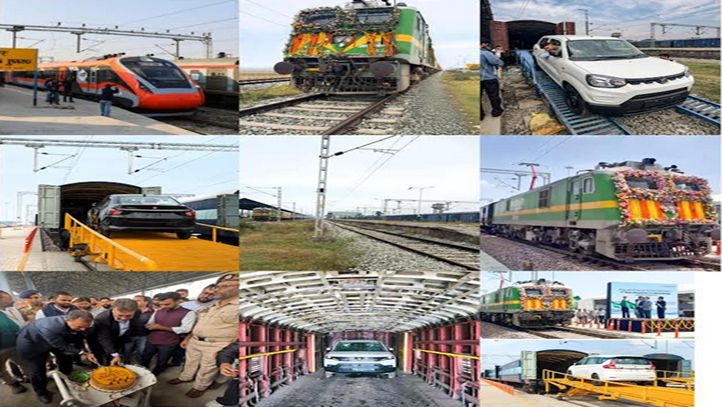
Cars on the Rails, A Game-Changer for Kashmir
Srinagar: Jammu and Kashmir has entered a new phase of economic connectivity as the Valley received its first dedicated automobile train on Friday, signalling a transformative shift in the region’s logistics and trade.
The train, carrying 116 vehicles manufactured at Maruti Suzuki India Limited’s Manesar plant in Haryana, arrived at the Anantnag Goods Shed, marking the first-ever direct rail delivery of passenger vehicles to Kashmir. For decades, transporting new cars to the Valley relied on the 300-km Jammu-Srinagar highway, a route vulnerable to frequent closures due to snow, landslides, and heavy rains. This often led to delays, increased vehicle wear, and logistical uncertainty for both dealers and customers. The new rail-based system promises to bypass these challenges, providing a safer, faster, and more predictable delivery method for automobiles.
A Boost To Regional Economy: While the initiative is significant for vehicle transportation, experts point to broader economic implications. Direct rail connectivity strengthens supply chains, encourages dealership expansion, and reduces costs for manufacturers. Maruti Suzuki, the first company to leverage this service, is expected to see improved operational efficiency and customer satisfaction. “The launch of this service is more than a logistics milestone. It reflects Kashmir’s growing integration with national markets,” said Uchit Singhal, Senior Divisional Commercial Manager, Jammu Division. “Other automobile companies are likely to follow suit, expanding market access and creating new business opportunities in the Valley.” By improving the flow of goods, the service is also likely to stimulate ancillary economic activity. Local workshops, service centres, and vehicle accessories businesses will benefit from a more stable supply of cars, while dealerships can maintain better inventory and meet customer demands more efficiently.
Engineering Marvels Enable Market Access: The success of the inaugural train is tied to the engineering triumphs of the Jammu-Srinagar rail line, including the world-famous Chenab Bridge. Union Minister for Railways Ashwini Vaishnaw called the project a “game-changer” for the region, noting that previous rail freight initiatives, like apple shipments, already proved the line’s economic potential. “Transporting vehicles by rail will bring unprecedented efficiency. What once took days and faced uncertainty will now be predictable and safe,” Vaishnaw said. Maruti Suzuki’s CEO, Hisashi Takeuchi, underlined that the initiative aligns with India’s PM GatiShakti National Master Plan, which prioritizes integrated transport and logistics. “Direct rail dispatches allow us to serve customers in Kashmir better, reduce transit time, and maintain the quality of our vehicles,” he said.
A Win for Dealers, Customers: Local dealers are optimistic about the impact. Irfan Ahmad Narwaroo, Managing Director of Jamkash Vehicles (Kashmir) Pvt Ltd, explained that previously cars arrived with 300 km already on the odometer. “Now, vehicles will arrive directly from the factory, untouched by the road. Delivery schedules will be faster, and customer satisfaction will improve,” he said. Dealers also foresee a reduction in transport-related damages and maintenance costs, while ensuring uninterrupted supply even during harsh winter months. The system is expected to stabilize market prices and enhance consumer confidence in purchasing new vehicles.
Rail Freight| Beyond Automobiles: This development is part of a larger strategy to leverage rail connectivity to boost Kashmir’s trade and commerce. Since the Udhampur-Srinagar-Baramulla link became operational, Indian Railways has transported commodities including apples, cement, steel, and plastic goods, improving regional trade efficiency. Singhal highlighted, “So far, 12,400 tons of apples, 48,387 tons of cement, and 1,341 tons of steel frames have been transported via rail. The addition of automobiles to rail freight opens the door for other high-value and time-sensitive goods to reach the Valley efficiently.” Officials say the first Maruti Suzuki rake is only the beginning. Other automobile manufacturers are expected to participate, creating a reliable network for vehicle delivery across the region. The initiative is also likely to attract further investment, supporting the growth of dealerships, service infrastructure, and aftermarket businesses. “This is a step toward building a sustainable commercial ecosystem in Jammu and Kashmir. Better logistics create better markets, which, in turn, create jobs and stimulate local economies,” Singhal said. The project also has social and strategic significance. By reducing dependency on road transport, it ensures uninterrupted access to vehicles even during natural calamities, while supporting safer and more environmentally friendly freight movement. The launch of direct rail automobile deliveries signals a broader shift for Jammu and Kashmir — from a region challenged by logistical constraints to one increasingly integrated with national economic networks. Beyond cars, this development sets a precedent for improved supply chains, increased investment, and enhanced consumer access in the Valley. For local dealers and customers, it translates into timely deliveries, reduced costs, and better service. For manufacturers, it promises operational efficiency and smoother market penetration. For the railways, it opens new avenues for revenue and freight growth. In essence, the initiative represents more than logistics; it is a catalyst for economic development, business confidence, and market modernization, signaling a transformative trajectory for Jammu and Kashmir in India’s larger growth story.