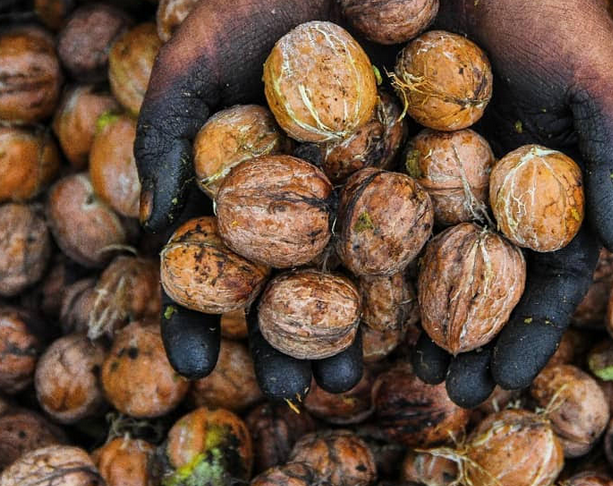
G’bal |Sept 22: As the crisp air of autumn settles over the Valley, Kashmir’s walnut orchards are abuzz with activity. The walnut harvesting season, which begins in late September and stretches through October, marks one of the most significant phases of the horticultural calendar, combining livelihood, tradition, and cultural identity for thousands of families.
A Season of Hard Work: From the orchards of Kupwara and Baramulla in the north to the plantations of Anantnag, Kulgam, and Shopian in the south, walnut trees now stand heavy with ripening fruit. Farmers, often joined by entire families, can be seen climbing tall trees or using long wooden poles (luchh) to shake the branches, sending ripe walnuts tumbling onto the ground. The process is labor-intensive. Once gathered, the nuts are stripped of their green outer husk before being thoroughly washed and laid out in the sun to dry. This traditional method ensures the nuts develop their characteristic flavor and long shelf life.
Economic Backbone of Rural Kashmir: Walnut cultivation is not just seasonal work but a vital economic lifeline. Kashmir remains the only region in India where walnuts grow abundantly without artificial cultivation, giving them a distinct taste and high oil content. According to horticulture experts, the Valley contributes a major share of India’s walnut production, with Kupwara, Kulgam, Shopian, Budgam, and Anantnag being the leading walnut-producing districts. For many farmers, the annual harvest directly determines their income for the year. A good yield can uplift entire communities, while poor output caused by adverse weather or pest attacks can bring hardship.
Deep Cultural Significance: Beyond economics, walnut trees hold a profound place in Kashmiri culture. The nut is a staple in local households, consumed raw, roasted, or as part of traditional dishes. During festivals and weddings, walnuts are exchanged as tokens of goodwill and prosperity. Equally valuable is walnut wood, famous worldwide for its durability and exquisite grain. Kashmiri artisans have, for centuries, used it to craft intricately carved furniture and decorative items, sustaining another vital industry tied to the walnut tree.
Challenges for Farmers: Despite its importance, walnut cultivation in Kashmir faces pressing challenges. Farmers highlight the lack of modern processing units, inadequate storage facilities, and unstable market prices as recurring issues. Climate change has further added uncertainty, with unpredictable rainfall and early frosts sometimes damaging crops. “Walnut is our heritage crop, but growers need better government support, scientific intervention, and assured markets to sustain this tradition,” says Abdul Hameed, an orchardist from Kulgam.
A Season of Hope, Heritage: Still, the walnut harvest remains a season of collective effort and optimism. Families work together in orchards, sharing meals under the trees and reviving customs that have endured for generations. The golden-brown nuts drying in courtyards are not just produce for markets but symbols of Kashmir’s deep-rooted bond with nature. As the Valley embraces the colors of Harud (autumn), the walnut harvest reminds Kashmiris of their enduring resilience where every nut cracked open carries within it the story of heritage, survival, and pride.