With Three Consecutive Terms, Modi Blends India’s Transformation With Strong National , Global Vision
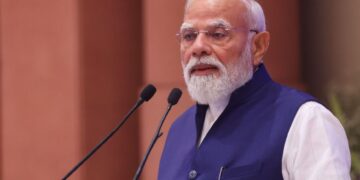
Srinagar: Prime Minister Narendra Modi on Friday achieved a historic milestone by overtaking Indira Gandhi to become the second longest-serving Prime Minister in consecutive terms. Having remained in office for 4,078 days, Modi surpassed Indira Gandhi’s unbroken 4,077-day stint between January 24, 1966, and March 24, 1977. This achievement places Modi behind only Jawaharlal Nehru, India’s first Prime Minister, who holds the record with an uninterrupted tenure of 16 years and 286 days from 1947 to 1964. PM’s rise to the second spot reflects not just the length of his tenure but also his transformative role in shaping Indian politics, governance, and India’s global standing.
Narendra Modi first took oath as Prime Minister on May 26, 2014, following a decisive victory for the Bharatiya Janata Party (BJP). His ascent marked the end of a decade-long Congress-led UPA rule and signaled the emergence of the BJP as India’s dominant political force. During his first term, Modi focused on both economic development and social welfare through initiatives that sought to reach India’s grassroots. Programs like the Pradhan Mantri Jan Dhan Yojana, which expanded financial inclusion by opening millions of bank accounts, and the Pradhan Mantri Ujjwala Yojana, which provided clean cooking fuel to over 15 crore households, were aimed at uplifting the poor and marginalized. Alongside these, the Swachh Bharat Abhiyan transformed sanitation infrastructure across the country, while Make in India and Digital India initiatives sought to modernize the economy and embrace technology in governance. Health-focused schemes like Ayushman Bharat further provided access to affordable healthcare for millions of Indian families.
In 2019, Modi’s leadership secured him a second term with an even larger mandate, winning 303 Lok Sabha seats. His second tenure was characterized by bold and transformative decisions, including the abrogation of Article 370, which redefined Jammu and Kashmir’s constitutional status. Welfare schemes were expanded to cover more citizens, with the PM-KISAN program providing direct income support to farmers, the Pradhan Mantri Awas Yojana facilitating affordable housing, and the Atal Mission for Rejuvenation and Urban Transformation (AMRUT) enhancing urban infrastructure. Initiatives such as Beti Bachao Beti Padhao focused on improving girls’ education and rights, while the establishment of One Stop Centres provided support for women facing violence, reflecting a governance model attentive to social justice.
By 2024, Modi had entered his third consecutive term, a unique achievement in India’s post-Independence political history. This tenure has emphasized India’s global presence, innovation, and sustainable development. Programs like the National Hydrogen Mission and the Gaganyaan human space mission showcase India’s ambitions in energy and space technology, while reforms in education under the National Education Policy aim to modernize learning for future generations. Women’s empowerment continues to be a central theme, building on earlier schemes to create opportunities and leadership roles for women across sectors. Through these integrated policies, Modi has combined social welfare, infrastructure development, and global diplomacy into a coherent governance model.
In The History Of India, three Prime Ministers stand out for their long tenures: Jawaharlal Nehru, Indira Gandhi, and Narendra Modi. Nehru, the first Prime Minister, served from August 15, 1947, to May 27, 1964, for over sixteen years, laying the foundation of India’s parliamentary democracy, non-aligned foreign policy, and public-sector-led economic model. Indira Gandhi, India’s first and only woman Prime Minister, held office for 15 years and 350 days across two stints, 1966–1977 and 1980–1984. Her leadership saw landmark policies like the Green Revolution and decisive foreign policy during the 1971 war, as well as controversial periods such as the Emergency. Modi now surpasses Indira Gandhi in consecutive days served, and if he completes his current term, he is poised to exceed her cumulative tenure as well, inching closer to Nehru’s record.
As of 2025, the top ten longest-serving Prime Ministers of India include leaders from both the Congress and BJP eras, with six from the Congress, two from the BJP, and two from Janata coalition governments. This list underscores the political shifts in India over the decades, with the BJP emerging as the dominant force in the 21st century, led by Modi’s strong and uninterrupted tenure. What makes Modi’s tenure distinctive is the scale, continuity, and integration of the initiatives launched under his leadership. Through schemes like the Pradhan Mantri Jan Dhan Yojana, he brought millions into the formal banking system, enabling financial inclusion and empowerment. The Pradhan Mantri Ujjwala Yojana improved living standards for women by providing clean cooking fuel, while the Swachh Bharat Abhiyan revolutionized sanitation infrastructure, directly impacting public health. Make in India and Digital India programs modernized industries, encouraged entrepreneurship, and expanded access to technology, while Ayushman Bharat offered affordable healthcare to millions. Rural farmers benefitted from PM-KISAN, and urban residents saw improved housing under Pradhan Mantri Awas Yojana, while the AMRUT program enhanced urban water supply and sanitation. For women, initiatives like Beti Bachao Beti Padhao and One Stop Centres provided education, protection, and empowerment, reflecting a governance vision attentive to equity and inclusion.
Comparing Modi With Indira Gandhi reveals similarities and differences in leadership style. Both centralized authority within their parties and maintained strong public engagement. Indira Gandhi guided India through wars and internal crises, implemented economic reforms, and made bold political moves, such as the declaration of the Emergency. Modi, on the other hand, has emphasized modernization, digital transformation, social welfare, and global diplomacy while maintaining electoral dominance, reflecting continuity and political stability. Unlike Indira, Modi’s tenure has been uninterrupted, marking a new chapter in India’s political landscape. On the global stage, Modi’s tenure places him among the longest-serving elected leaders in democratic systems. While leaders such as Germany’s Angela Merkel and Japan’s Shinzo Abe have also served long terms, Modi’s uninterrupted leadership in the world’s largest democracy is particularly notable. His three consecutive mandates highlight both his popularity and the electoral stability he has maintained in a highly diverse and populous country. Despite this record-breaking tenure, Modi faces ongoing challenges. Sustaining economic growth, generating employment for a young population, ensuring social cohesion in a diverse society, and managing India’s position in a complex geopolitical environment are key priorities. His ability to address these issues will ultimately define his lasting legacy, not merely the length of his time in office. With more than four years left in his current term, Modi is on track to surpass Indira Gandhi’s cumulative tenure and approach Nehru’s historic record. However, longevity alone will not secure historical prominence. If Nehru is remembered as the architect of India’s institutions and Indira as the leader who navigated crises, Modi may be remembered as the Prime Minister who combined inclusive development, technological modernization, women’s empowerment, and global outreach, redefining India’s political and policy landscape in the 21st century.
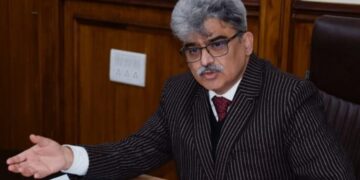
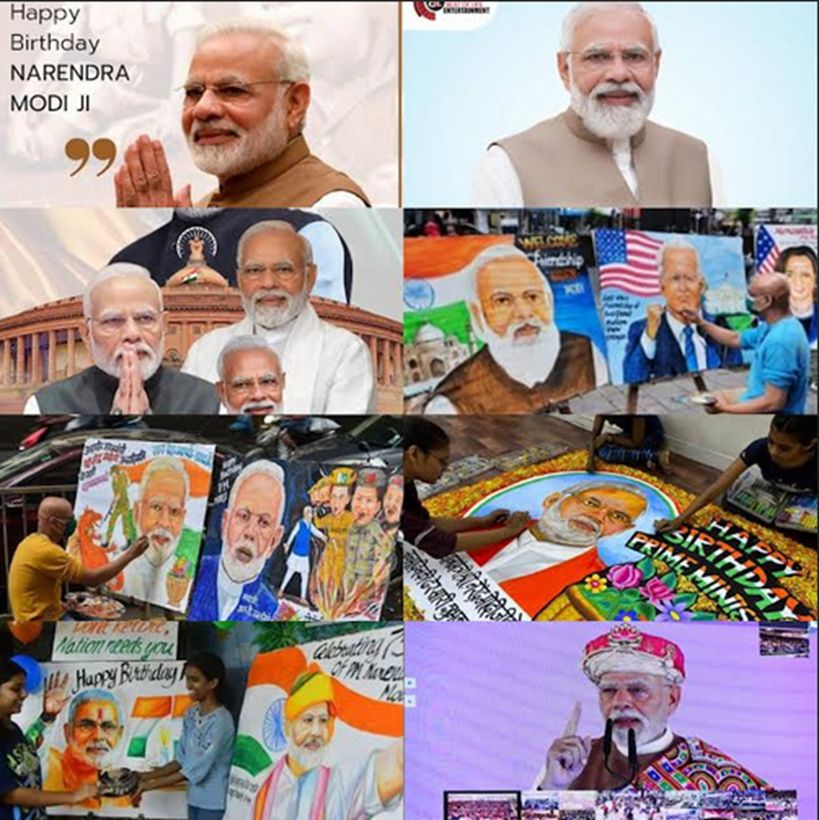
Narendra Modi’s achievement in becoming India’s second longest-serving Prime Minister is more than a milestone in days served; it reflects the evolution of Indian politics from Congress dominance to BJP leadership. His initiatives, from welfare schemes and infrastructure programs to digitalization and global diplomacy, demonstrate a leadership that has sought to combine growth with social equity. Whether he surpasses Nehru’s record or not, Modi’s tenure will be remembered for both its scale and the policy-driven transformation of India, leaving a legacy that future generations will assess not only for its length but also for the impact it had on the nation’s development trajectory. Lieutenant Governor also visited JLNM Hospital Rainawari and distributed fruits to patients as part of ‘Sewa Pakhwada’, celebrating the 75th birthday of Hon’ble Prime Minister Shri Narendra Modi. During his visit, the Lieutenant Governor engaged with patients and staff, highlighting the spirit of selfless service and community care that the campaign embodies. He emphasized that initiatives like Sewa Pakhwada, running from 17th September to 2nd October, are aimed at promoting women empowerment, health awareness, and social welfare across the Union Territory. Sinha extended his heartfelt birthday wishes to Prime Minister Modi. He remarked, “Hon’ble Prime Minister has dedicated his life to nation-building. Over the past 11 years, under his visionary leadership, India has emerged as the world’s fourth-largest economy, with the benefits of growth reaching the poor and marginalized. Around 25 crore people have been lifted out of poverty, and India’s prestige on the global stage has significantly increased. We pray for his long and healthy life.