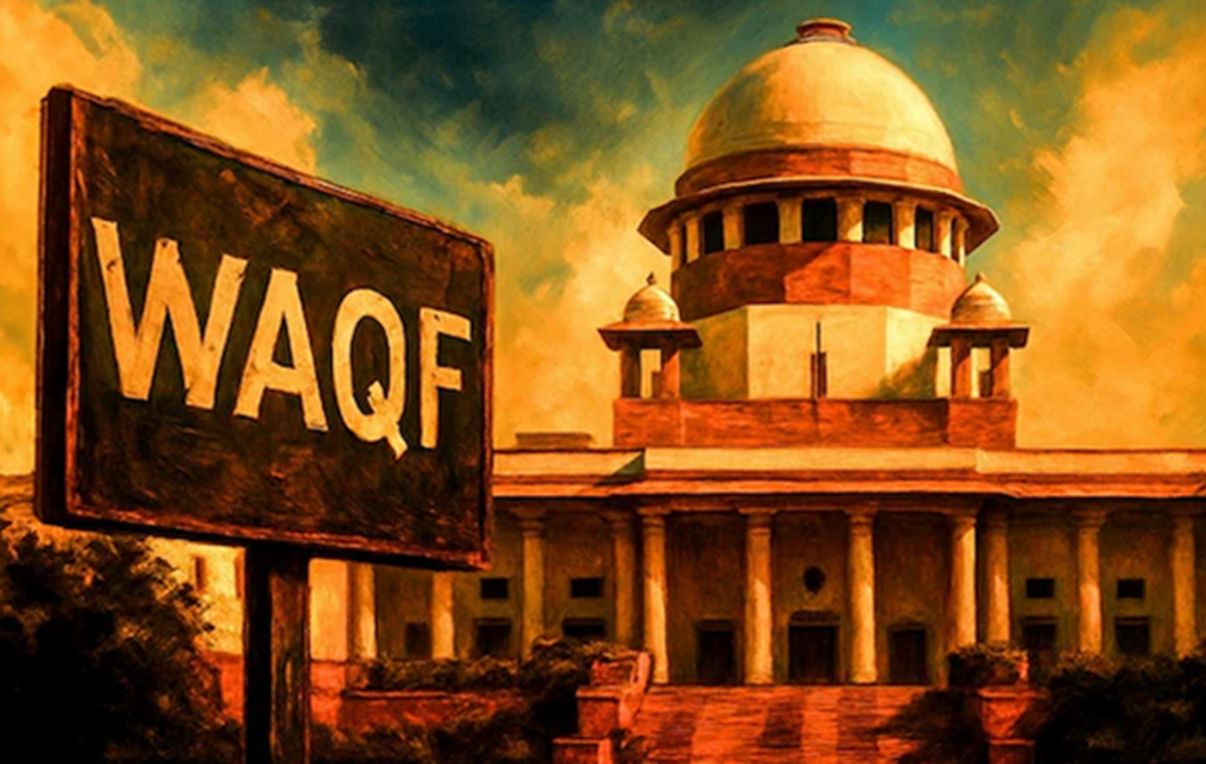
New Delhi : The Supreme Court has issued an interim stay on specific provisions of the Waqf (Amendment) Act, 2025, while upholding the presumption of constitutionality for laws passed by Parliament. The stay applies to three key provisions: the requirement for individuals to be practicing Muslims for five years to create a waqf, the authority of District Collectors to adjudicate on disputed waqf properties, and the concept of ‘waqf by user.’ The court emphasized that the provision regarding practicing Muslims is not arbitrary but requires a mechanism to verify adherence to Islam. The court also stayed the provision granting senior civil service officers the power to rule on disputed waqfs, which could have led to significant property denotifications. It asserted that such disputes should be adjudicated by the court, particularly concerning waqf properties claimed by the government. The court mandated that waqfs in question should not be dispossessed until ownership issues are resolved by a waqf tribunal, and no third-party rights can be established during this process. Regarding the concept of waqf by user, the court noted that the amended law’s deletion of this provision does not appear arbitrary, as it recognizes properties used for religious purposes without formal dedication. The court highlighted that historical waqfs lacking registration deeds cannot complain about their status after failing to register for over a century. It clarified that applications for waqf registration can be made without a deed, provided sufficient details are submitted. The court ruled that the Central Waqf Council can have a maximum of four non-Muslim members out of 22, and Waqf Boards can include no more than three non-Muslims out of 11. While it did not stay the provision requiring the Waqf Board’s Chief Executive Officer to be Muslim, it encouraged efforts to appoint a Muslim from the community. The court expressed concerns about potential misuse of the Waqf Act by individuals converting to Islam to evade legal obligations, reinforcing the need for genuine adherence to the faith for waqf creation. It concluded that the amended law’s provisions are not arbitrary and serve to ensure that only those genuinely practicing Islam can create waqfs. Additionally, the court did not stay provisions that remove waqf status from ASI-protected historical monuments or bar tribal lands from being declared as waqfs, nor did it stay the deletion of a section allowing non-Muslims to create waqfs.
Dr Pushpendra Singh Bhati sworn in as Chief Justice of J&K, Ladakh High Court
Srinagar | Sept, 9:Dr. Justice Pushpendra Singh Bhati was sworn in as the 39th Chief Justice of the High Court...
Read moreDetails