• Says “Campaign laid foundation but fight against narco-terror far from over”
• Pilot rehabilitation scheme for drug abuse victims to begin in Jammu and Kashmir divisions
• Warns drug cartels, vows toughest action against traffickers and their networks
• Calls for public support, asks citizens to report drug activity and help addicts recover
• Coffee table book released; outstanding contributors to campaign felicitated
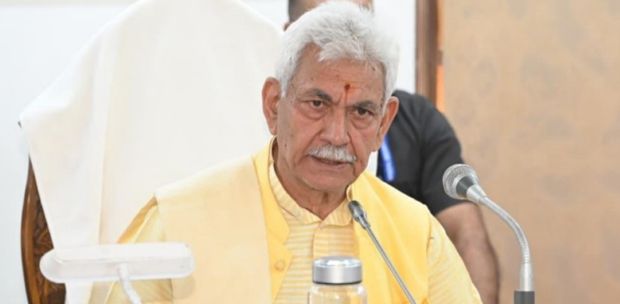
Srinagar: Lieutenant Governor Manoj Sinha on Tuesday said Jammu and Kashmir’s 100-day “Drug-Free J&K” campaign has led to the arrest of 2,581 drug traffickers, seizure of nearly 1,431 kg of narcotics, including 23.29 kg of heroin, and confiscation of assets worth over ₹188.89 crore, asserting that the administration’s mission to eliminate narco-terrorism is “far from complete.”
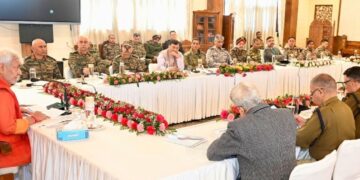
Addressing a commemorative function organised by the Social Welfare Department to mark the completion of the first 100 days of the campaign, Sinha said the government remains committed to dismantling drug cartels, disrupting narco-terror financing and strengthening rehabilitation measures for victims of substance abuse.
“The first 100 days have laid the foundation for the rigorous path ahead. The road will be tough, but our resolve to completely wipe out narco-terrorism is stronger than ever,” he said.
Highlighting the campaign’s achievements, the Lieutenant Governor said authorities have also revoked hundreds of driving licences and vehicle registrations, recommended suspension of hundreds of passports and taken action against non-compliant pharmacies to tighten enforcement against drug-related offences.
Sinha said he travelled across all 20 districts during the campaign through padyatras, interacting with families affected by drug addiction and witnessing both the pain caused by substance abuse and the public’s determination to combat the menace.
Announcing the next phase of the anti-drug initiative, he said the administration will soon roll out the “Rehabilitation and Socio-Economic Reintegration Scheme for Drug Abuse Victims, 2026” on a pilot basis in one sensitive district each in the Jammu and Kashmir divisions.
The proposed scheme will follow a structured three-year rehabilitation model, beginning with medical treatment and counselling, followed by education and employment support, and concluding with long-term relapse prevention and community reintegration.
Issuing a stern warning to drug traffickers, Sinha said those responsible for destroying the lives of young people would face exemplary punishment.
He also appealed to citizens to actively support the campaign by reporting drug-related activities, encouraging affected individuals to seek treatment and helping rehabilitated youth reintegrate into society instead of ostracising them.
The Lieutenant Governor urged parents, teachers, religious leaders and civil society organisations to sustain awareness efforts and transform the anti-drug campaign into a mass movement across Jammu and Kashmir.
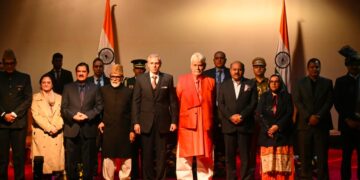
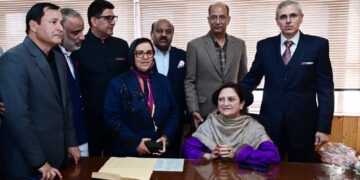
During the event, Sinha felicitated outstanding contributors to the campaign and released a coffee table book compiled by the Directorate of Information and Public Relations documenting the campaign’s outreach and impact. The programme also featured a documentary by DIPR, a cultural performance by the J&K Academy of Art, Culture and Languages, and presentations by J&K Police and the Indian Red Cross Society.
A two-minute silence was observed to pay tribute to those who lost their lives in the recent natural calamities in Jammu and Kashmir. Senior civil and police officials, public representatives, educational institutions, civil society members and youth attended the function in person and virtually.