Relief for Growers After Highway Closures, Faster, Safer Transport for Perishables
Srinagar: In a major relief to Kashmir’s horticulture sector, the Indian Railways on this week announced the launch of a dedicated daily parcel train to transport apples and other goods from the Valley to Delhi. The new service, called the Joint Parcel Product–Rapid Cargo Service (JPP-RCS), will operate between Budgam in Kashmir and Adarsh Nagar in Delhi. The train will include eight parcel vans and one luggage coach, providing a safe, faster, and more economical alternative to road transport for perishable and high-value goods.
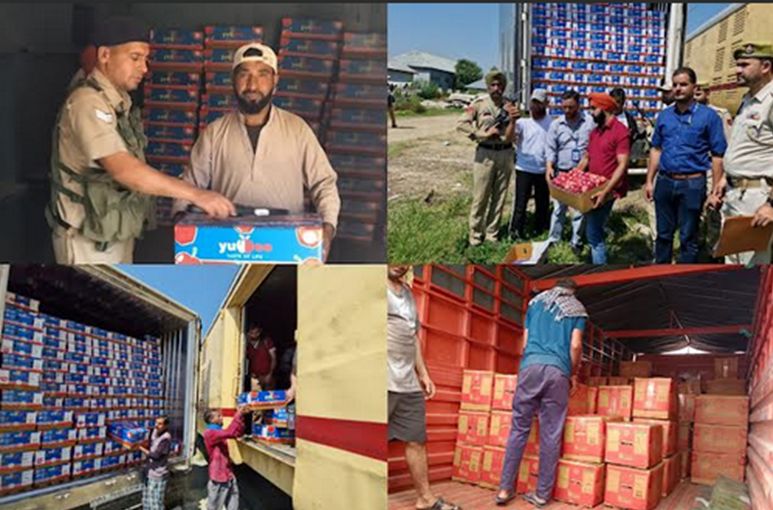
Faster, Safer Transport For Kashmir’s Produce: Railway officials said the service, cleared by the Railway Board last month, will run on a daily basis. Departing from Budgam early in the morning, the train is expected to reach Delhi within 23 hours, ensuring fruits arrive fresh in the capital markets the following day. Union Minister for Electronics and Information Technology, Railways, and Information and Broadcasting Ashwini Vaishnaw highlighted the importance of the initiative in a post on X, stating, “Empowering Kashmir’s apple growers. With the Jammu-Srinagar line operational, the Kashmir valley has better connectivity.” The Minister added that loading of two parcel vans carrying apples from Budgam to Delhi began on the same day. Divisional Railway Manager (DRM) Jammu, Vivek Kumar said that the decision was taken after continuous disruptions on the highway left traders struggling to transport goods. “The heavy rains and landslides severely hit road connectivity, creating huge problems for apple growers and traders. To ensure their produce reaches markets on time, we are resuming this parcel service,” Kumar said. Lieutenant Governor Manoj Sinha, Chief Minister Omar Abdullah, and Union Minister of State in the PMO Jitendra Singh have lauded the initiative of Indian Railways to operate daily parcel trains from Budgam to New Delhi. They extended gratitude to Prime Minister Narendra Modi and Union Railway Minister Ashwini Vaishnaw. The daily parcel train from Budgam to New Delhi will bring huge relief to apple growers. My deepest gratitude to Hon’ble PM Shri Narendra Modi Ji and Hon’ble Union Minister for Railways, Shri Ashwini Vaishnaw Ji,” Office of LG J&K posted on ‘X’. Chief Minister Omar Abdullah, while thanking the Railway Minister, pointed out that it took around a week to reach a moment of reprieve, and his “calls and endless messages” finally bore fruit for the growers of J&K. “It took about a week of close coordination between the railway ministry officials & officers in my secretariat with inputs from the J&K Agriculture Production Department to get to the point where our harvested fruit is now being transported by train. With the National Highway continuing to give us trouble, this has become a source of great relief for growers whose produce risked rotting because it wasn’t reaching the market. My thanks to @AshwiniVaishnaw Sb for responding to my calls & endless messages to get to this off the ground,” CM Omar posted on ‘X’. Union Minister of State in PMO Jitendra Singh, in a post on Facebook with a tagline “Jammu And Kashmir Update,” shared that the landmark move would facilitate the fruit growers and traders to transport stranded perishable fruit in the wake of disturbed road connectivity. “In a landmark first, today 2 VPs (parcel vans) being loaded by railways ex Budgam carrying apple for the first time ever. Destination – Jammu and Adarshnagar Delhi. The move has been taken by the Railways to facilitate the stranded perishable fruit in wake of disturbed road connectivity to facilitate traders/fruit growers/farmers etc,” he posted.
Coordination With Local Authorities: Kumar emphasized that authorities, including the Principal Chief Commercial Manager NR and DRM Jammu, are in constant contact with the state government, horticulture department, and various Fruit Growers Associations to ensure smooth operations. The Valley produces more than 70% of India’s apples, and thousands of families depend on the sector for their livelihoods. Farmers had faced mounting losses in recent weeks, with trucks stranded on blocked highways for days. Many were forced to hire alternate transport via the longer Mughal Road at significantly higher freight costs. The rail service promises to mitigate these challenges, ensuring timely delivery while cutting costs.
A Boost for Perishable Goods, Handicrafts: With the rail option now available, fruit traders are hopeful of saving both time and money. Apples, pears, walnuts, saffron, and dry fruits are among the products that will be moved on the new cargo service. Railway officials also noted that handicrafts, including pashmina shawls and carpets, could benefit from the reliable service, allowing traders to reach markets across India without the risk of highway delays. To make the service more business-friendly, the Indian Railways has established a loading and unloading facility at Bari Brahmana station in Jammu. Security will be provided by the state police at the station and onboard the train, ensuring safe transport of high-value consignments. Senior Divisional Commercial Manager (Sr. DCM) Uchit Singhal explained that the service was designed to serve both small farmers and large traders. “This is a daily service meant to benefit Kashmir’s traders. Goods like apples, saffron, walnuts, pashmina, carpets, and handicrafts will reach Delhi in less than a day, which is much quicker than road transport,” he said.
Capacity Expansion, Future Plans: The train will initially have eight parcel vans, but officials said more could be added depending on demand. Northern Railways has assured that additional parcel services can be introduced if required, providing flexibility for growers and traders alike. Officials emphasized that the initiative will not only prevent wastage of perishable produce but also give a much-needed push to Jammu and Kashmir’s economy. The railways expect the move to create new employment opportunities in logistics, packaging, and handling, further benefiting local communities. “With this service, fruits will reach consumers across India on time and in good condition. This is a reliable and cost-effective alternative for Kashmir’s growers, and it will also increase the share of railways in the freight business.”
Strategic Benefits Of The JPP-RCS: The dedicated parcel train and other recent initiatives are part of a broader strategy to strengthen freight movement in Kashmir through rail connectivity. “The dedicated cargo service is expected to cover a distance of about 845 km daily between Budgam and Delhi, using electric traction throughout the journey. The aim was to ensure efficiency while reducing costs,” he said. The JPP-RCS model, already in use in other parts of India, is part of Railways’ efforts to expand into the courier and cargo sector more aggressively. The Jammu service is the first of its kind in the region, marking a significant step toward modernizing logistics infrastructure in Kashmir.
Positive Response From Traders : The announcement has been warmly welcomed by traders, who highlighted the persistent challenges posed by the vulnerable Srinagar–Jammu highway. Fruit associations in Sopore and Shopian, the two major apple belts of Kashmir, said the rail option would help cut freight costs and ensure timely delivery, particularly during peak harvest seasons.
Economic Implications: The parcel train is expected to benefit not only the horticulture sector but also related industries, such as packaging, cold storage, and logistics. Officials estimate that timely delivery of perishable goods could reduce losses by up to 30%, providing a significant boost to growers’ incomes. Moreover, the reliable rail service may encourage investment in the region’s fruit processing and storage facilities, creating additional employment opportunities. The initiative also aligns with the government’s broader efforts to strengthen Kashmir’s economy through infrastructure and connectivity projects.
Complementing Existing Rail Freight Initiatives: The JPP-RCS train follows another major step by Indian Railways last month, when the first freight train carrying cement from Punjab to Anantnag was successfully introduced on August 9. Together, these measures reflect a concerted effort to integrate Kashmir into the national freight network, reducing dependency on road transport and improving overall supply chain resilience. Officials have indicated that the government is exploring additional cargo services for other perishable and high-value commodities, potentially expanding the network to include fruits, vegetables, dairy, and handicrafts. By linking Kashmir more efficiently to national markets, the Railways aims to foster economic growth and enhance the region’s commercial competitiveness.