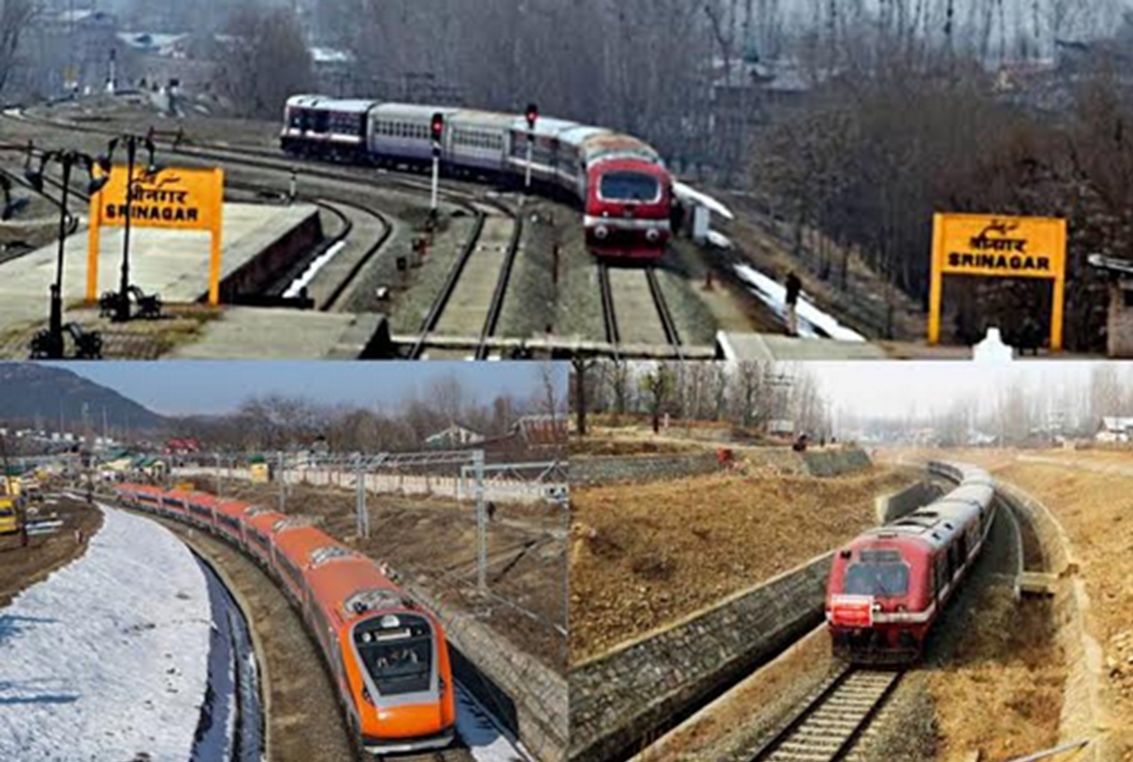
Kashmir’s Rail Network Expands From Katra In Jammu To LoC In Uri
Srinagar: In a major infrastructure push for Jammu and Kashmir, the Ministry of Railways has sanctioned two critical railway projects that are expected to transform connectivity, boost tourism, and strengthen strategic logistics in the Valley.
The projects include the construction of a new 40.2 km Baramulla–Uri railway line and the doubling of the 73.5 km Qazigund–Budgam stretch, both aimed at integrating the region more closely with the national rail network. The decision comes at a time when the Union Government is accelerating investments in road, rail, and tunnel infrastructure in the Union Territory. Officials said these railway initiatives would not only improve civilian transport but also carry immense strategic significance due to the proximity of Uri and Baramulla to the Line of Control (LoC) and the heavy dependence of the armed forces on reliable supply chains.
The Ministry of Railways has approved the construction of a new Broad Gauge (BG) line between Baramulla and Uri, covering 40.2 kilometers and connecting five existing stations. The proposed corridor will pass through rugged terrain and sensitive zones, requiring the construction of 3 Road Under Bridges (RUBs) and 9 Road Over Bridges (ROBs). Unlike earlier projects that made use of pre-acquired railway alignments, this line will require fresh land acquisition, underscoring the scale and ambition of the plan.
According to the official statement, the project will provide all-weather, dependable rail connectivity, addressing the frequent road disruptions caused by heavy snowfall, landslides, and flash floods that plague north Kashmir. At present, Uri depends on road transport via the Baramulla–Uri highway, which is often blocked during winter months. Officials highlighted that Uri, located near the Kaman Post crossing point on the LoC, has already emerged as a border tourism hub, attracting visitors to sites like the Aman Setu bridge. With a direct railway link, officials believe the region could see a sharp rise in tourist arrivals. “With the new railway line, tourism in the region is expected to receive a significant boost. The project also holds strategic importance, as Baramulla and Uri tehsils house major Indian Army establishments and lie close to the border,” a senior railway official said. For residents of Uri, long considered one of the most remote border tehsils in north Kashmir, the proposed rail line i
Alongside the Uri line, the Railways has approved the doubling of the Qazigund–Budgam railway section, covering 73.5 kilometers. At present, the line between Qazigund and Baramulla is a single-track system, creating operational bottlenecks and limiting the frequency of services. “The doubling project is of strategic importance, enabling seamless movement of military special trains carrying Army personnel, equipment, and supplies. Accordingly, it has been designated under the Hill & Strategic Corridor,” the official statement noted. The proposed doubling will run parallel to the existing line, covering 10 stations—nine crossing stations and one halt—all located within Jammu and Kashmir. The move is expected to increase capacity, reduce delays, and improve punctuality, particularly during peak hours when passenger demand is at its highest. Officials also emphasized the economic multiplier effect of the project. Faster movement of goods will support Kashmir’s fruit industry, particularly apple exports, while re
Both projects carry profound strategic significance. The Kashmir Valley, hemmed in by the Pir Panjal mountains, has limited road and rail corridors. Harsh weather and security challenges often disrupt supplies, creating a pressing need for resilient infrastructure. The Baramulla–Uri line will connect the frontier town directly to the Valley’s railway grid, providing the armed forces with a safer, faster supply chain. Similarly, the Qazigund–Budgam doubling will enable smoother operation of special trains for troops and equipment, reducing delays in mobilisation.
Tourism officials see the projects as game-changers for the sector. Uri’s transformation into a border tourism destination is already underway, but road bottlenecks remain a challenge. A direct railway link could place Uri on the mainstream tourist map, alongside Gulmarg, Pahalgam, and Sonamarg. The Qazigund–Budgam doubling will also help expand rail tourism in Kashmir. Faster trains will make day trips more viable, connecting Banihal’s gateway in Jammu with Srinagar’s city attractions and Baramulla’s heritage spots. Local businesses especially hoteliers, transporters, and traders—expect positive spillover effects once passenger traffic expands. For the horticulture sector, which is the backbone of Kashmir’s rural economy, quicker freight movement could ensure fresher deliveries to Delhi, Mumbai, and other markets.
The two new projects—Baramulla–Uri and Qazigund–Budgam doubling are therefore seen as complementary steps to prepare the Valley for its full integration into the Indian Railways ecosystem.
While the projects have been sanctioned, challenges remain. Land acquisition, especially in densely populated or sensitive border areas like Uri, may face delays. Environmental clearances will also be critical, as parts of the alignment pass through ecologically fragile zones. Engineers will need to negotiate difficult Himalayan terrain, which could involve tunnels, viaducts, and slope stabilization. Past experiences with the USBRL show that timelines in Kashmir are often extended due to geological surprises, adverse weather, and security restrictions.Despite challenges, railway officials remain confident. They argue that the projects are part of a larger vision to make J&K’s transport system resilient, reliable, and strategically secure. “The proposal marks another step towards building a resilient and strategically vital railway network in Jammu & Kashmir,” the Ministry said.