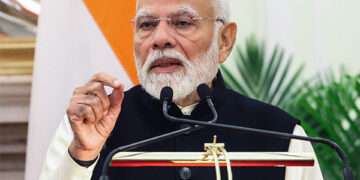
New Delhi: Prime Minister Narendra Modi on Monday chaired a high-level meeting focused on the roadmap for next-generation reforms aimed at enhancing the Ease of Living, improving the Ease of Doing Business, and fostering inclusive prosperity in India.
In a post on “X” the top micro blogging social networking site previously called twitter Prime Minister wrote “Chaired a meeting to discuss the roadmap for Next-Generation Reforms. We are committed to speedy reforms across all sectors, which will boost Ease of Living, Ease of Doing Business and prosperity.” Prime Minister had in his Independence day speech emphasized the government’s commitment to implementing speedy reforms across all sectors, which will empower entrepreneurs and reduce compliance costs for start-ups, small industries, and cottage industries. A task force has been established to re-draft current rules, laws, and policies to align with 21st-century needs and the vision of transforming India into a developed nation by 2047. The Prime Minister highlighted significant past reforms, including the abolition of over 40,000 unnecessary compliances and more than 1,500 obsolete laws, as well as recent changes in the Income Tax Act that will exempt income up to ?12 lakh from taxation, benefiting middle-class families.
PM Modi had in his Independence Speech also announced upcoming reforms in the Goods and Services Tax (GST) system, promising substantial tax reductions and increased facilities for common citizens, particularly benefiting micro, small, and medium enterprises (MSMEs). He reiterated the government’s unwavering support for farmers, fishermen, and livestock rearers, asserting that India will not compromise on their welfare. In the context of international trade, Modi mentioned ongoing negotiations for a Bilateral Trade Agreement with the United States, which seeks greater access to India’s farming and dairy sectors. He noted the challenges posed by tariffs imposed by the U.S. on Indian goods and reaffirmed that reform is a continuous process that must adapt to current demands and circumstances. Additionally, he announced significant reforms in the nuclear energy sector, allowing private sector participation to enhance India’s capabilities in this field.