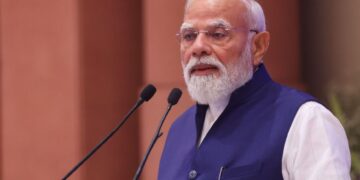
Srinagar: Prime Minister Narendra Modi on Friday met the bereaved family of Shubham Dwivedi, a 31-year-old businessman from Kanpur who was among the 28 civilians killed in the April 22 Pahalgam terror attack. During the emotional meeting held at Chakeri Airport, the Prime Minister expressed deep grief and reaffirmed his government’s commitment to fighting terrorism with unwavering resolve.
After the meeting Prime Minister Modi in a social media post said “Today, I met the family members of our Kanpur son, Shubham Dwivedi, who lost his life in the cowardly terrorist attack in Pahalgam. He expressed his gratitude to our mighty army for Operation Sindoor against terrorism. Their spirit inspires the countrymen,” Modi said in a social media post following the meeting.
“India Will Never Forget”: PM Consoles Grieving Widow, Parents: Sources privy to the interaction said the Prime Minister was visibly moved while speaking to Shubham’s widow, Ashanya Dwivedi, and his parents. Holding Ashanya’s hand, Modi assured her that the country stood shoulder to shoulder with families who had borne the brunt of terror. “Your pain is the nation’s pain. No force can break the unity and resolve of our people. What happened in Pahalgam will not be forgotten. Justice has begun with Operation Sindoor—and it will continue,” he told the grieving family.
Grief, Gratitude: Family Thanks PM Modi For Action Against Terror: Shubham’s father, Sanjay Dwivedi, said the Prime Minister’s visit brought a sense of closure and strength to the family. “When he stood before us, there was no speech—just emotion. He wasn’t there as a politician, but as someone deeply hurt by what happened. He told us that he would not rest until terrorism was uprooted.” According to Sanjay, the family did not go with any demands but only wanted to thank the Prime Minister for the decisive response. “I told him that Operation Sindoor gave us some peace. We lost our son, but at least there was no silence after the tragedy. The world saw India strike back.” Ashanya, who has become a symbol of quiet resilience, said the Prime Minister assured her that her voice mattered and would be heard again. “He told me that my strength will become the country’s strength. He said he agreed with me when I explained that the terrorists wanted to sow division and disturb peace in Kashmir. He promised another meeting and said this fight is far from over.” During the 30-minute meeting, Modi reportedly spent significant time listening rather than speaking. “He said Shubham was not just a victim but a martyr in the fight to protect India’s harmony. He said what happened in Kashmir was not just an attack on people, but an attack on peace,” Ashanya said.
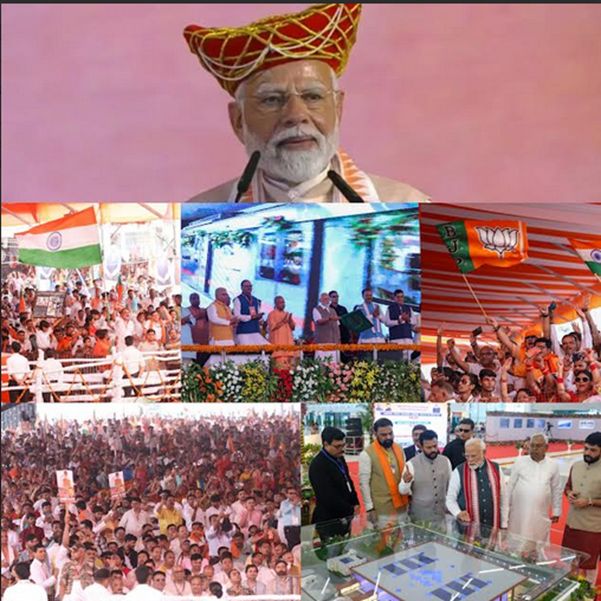
PM Modi Recalls His Bihar Vow, Says “I Returned After Fulfilling My Promise”: Later in the day, speaking at a public rally in Karakat, Bihar, the Prime Minister invoked the spiritual symbolism of Ram and reiterated his commitment to act decisively against terrorism. Referring to his earlier speech from April 23—delivered just a day after the Pahalgam attack—he said that the promise made from the soil of Bihar had been kept. “Even the name Sasaram bears the name of Ram. And like Lord Ram, this son of Bharat also believes that life may be lost, but not a promise. From this land, I had assured the nation that the masters of terrorism would be reduced to dust. Today, I return to Bihar having fulfilled that vow,” Modi declared. He recalled the images from Pahalgam—tourists and locals mercilessly targeted—and said that India’s silence was never weakness. “We hit them where it hurt. Pakistan saw it. The world saw it. The power of the ‘sindoor’ worn by our daughters, the courage in the eyes of our mothers—this is the true face of India.” He directly accused Pakistan of sheltering the masterminds behind the attack, saying, “The terrorists thought they were safe behind Pakistani military shields. But they were wrong. In one strike, we dismantled their sanctuaries.” Prime Minister Narendra Modi’s heartfelt interaction with the bereaved family of Shubham Dwivedi in Kanpur was more than a condolence visit—it was a reaffirmation of the government’s unwavering stance against terrorism. The emotional moments shared between the Prime Minister and the family underscored the human cost of militancy while also highlighting a collective national resolve to stand united against such senseless violence. Operation Sindoor, launched in the wake of the Pahalgam terror attack, has sent a powerful message across borders—that India will respond with precision, strength, and purpose when its citizens are harmed. Modi’s statement that he “returned after fulfilling his promise” serves not only as a declaration of military success but as a commitment to justice for every Indian life lost to terror. At the same time, the launch of over ₹48,000 crore worth of development projects in Bihar signals that governance is not just reactive but also forward-looking. From energy infrastructure to road connectivity and aviation expansion, the government appears intent on pairing national security with regional growth—ensuring that development, security, and unity remain intertwined pillars of its vision. Going forward, India faces the dual challenge of maintaining a strong military and strategic posture while preventing the communal fault lines that terrorists seek to exploit. As echoed by Ashanya Dwivedi, the terrorists’ true aim is not just physical destruction but the psychological and social destabilization of a peaceful society. To counter this, the Centre must continue to foster interfaith harmony, build local trust in vulnerable regions like Kashmir, and empower intelligence and defense mechanisms through modern technology and cooperation. Emotional outreach, as demonstrated by PM Modi’s meeting, must be matched with institutional support for victims’ families, community healing, and transparent justice.