A Life of Service, Silenced by Shelling: The Legacy of Raj Kumar Thapa
Srinagar: In the silence that followed a mortar shell’s deadly descent on May 7, two young lives—Zoya and Ayan Khan—were extinguished in a matter of moments.
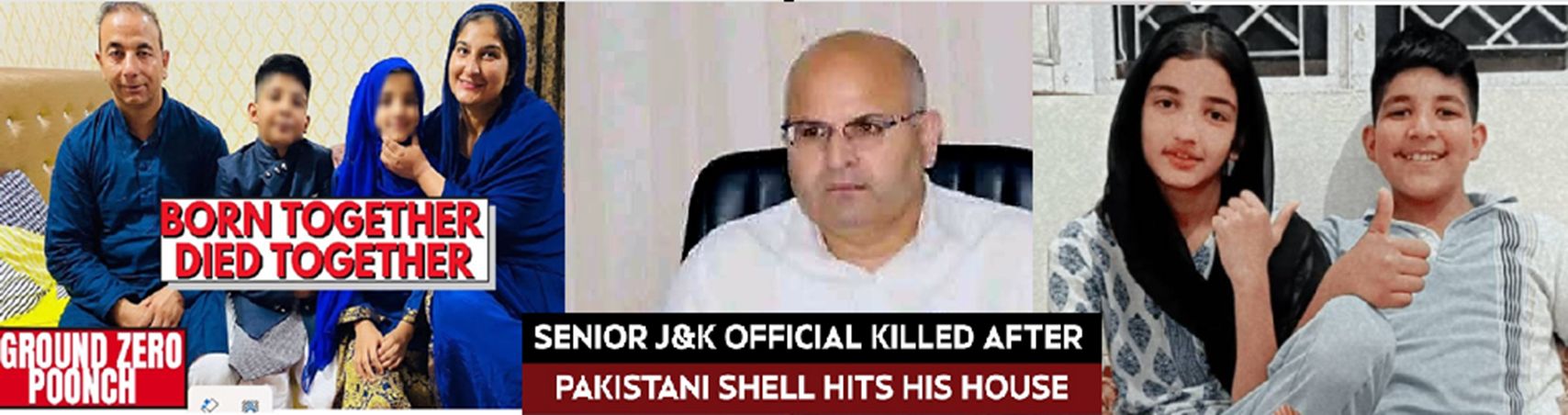
The 12-year-old twins, who had just celebrated their birthday last month, were killed when a Pakistani shell tore through their rented home in Poonch district. Their uncle and aunt died alongside them in what has become one of the most heartbreaking civilian tragedies since cross-border shelling intensified following Operation Sindoor. Their father, 48-year-old Rameez Khan, lies unconscious in the ICU of a Jammu hospital, fighting for his life—his liver shattered by shrapnel, his heart yet untouched by the knowledge that his only children are gone. The doctors have been instructed to keep him unaware, fearing that the truth might deliver a blow he would not survive. The family had moved to Poonch barely two months ago, chasing a dream of better education for the twins. That dream now lies buried under rubble and blood-soaked soil. Their mother, Ursha Khan, has been left to carry a weight no mother should bear: the memory of her children’s final screams, the haunting silence of their absence, and the grim vigil beside a critically wounded husband. Close relatives Maria and Sohail Khan, still in shock, recounted the horror of the day. “Zoya was badly wounded, and Ayan… his intestines had spilled out,” Maria said, tears choking her voice. “One of our relatives tried to save him. We thought he might survive. But within minutes, both were gone.” The shelling continued for hours, delaying medical assistance and amplifying the family’s trauma. “It took hours to even get out, let alone reach the hospital. We first went to Rajouri, then Jammu,” said Sohail, who has now appealed to the government to shift Rameez Khan to Delhi for advanced treatment. “This is beyond ceasefire violations now. Families like ours need more than condolences—they need protection, they need dignity.” The tragedy of the Khan family unfolds against a wider canvas of destruction along the Line of Control.
Since India launched Operation Sindoor in retaliation to the April 22 Pahalgam terror attack that killed 26—mostly tourists—cross-border violence has claimed at least 27 lives, including five security personnel. Drone strikes and heavy shelling from across the border have battered the districts of Poonch and Rajouri, leaving dozens injured and thousands terrified. On Sunday night, a fragile stillness finally settled over the region, after India and Pakistan agreed to an immediate halt of all military operations—on land, air, and sea. But for families like the Khans, peace has come too late. Amid this turmoil, another life was tragically cut short. Dr. Raj Kumar Thapa, a seasoned and deeply respected JKAS officer, was killed when a shell struck his government quarters in Rajouri. Posted as the Additional District Development Commissioner, Thapa was known as a people’s officer—approachable, humble, and committed. His death has left a void not only in the administration but in the hearts of all who knew him. Chief Minister Omar Abdullah visited his family at Roopnagar, embracing Thapa’s grieving father in a deeply emotional moment. “His service and sacrifice will never be forgotten,” the CM wrote on X. “The government stands firmly with his family in this hour of grief.” Only a day before his death, Thapa had been accompanying the Deputy Chief Minister on a district tour. His final hours were spent in service to the very people he died among.
A qualified MBBS doctor who joined JKAS in 2001, Thapa had handled several critical assignments—including his pivotal role in managing the Badhaal village tragedy earlier this year, where 17 people, including 13 children, died under mysterious circumstances. His legacy, colleagues say, will be one of courage, compassion, and unwavering public service. Former Deputy Chief Minister Tara Chand called him a “people’s officer,” while his colleagues recalled him as both a sharp administrator and a selfless human being. “He worked like a social worker, always ready to help,” said one official. In a social media tribute, Jehanzeb Allaqaband summed up the mood across the union territory: “An insightful mind, a gifted writer, a remarkable administrator. A heartbreaking loss.” Back in Poonch, where the smell of gunpowder still lingers in the air and broken glass litters the streets, the pain is raw. Zoya and Ayan’s schoolbags sit untouched. The echo of their laughter, once a comfort to their parents, has been replaced by silence too heavy to bear. The cost of conflict is rarely counted in human terms. But this week, Jammu and Kashmir was forced to reckon with that cost—etched into the faces of grieving families, splashed across emergency wards, and buried beneath the rubble of what was once home. Operation Sindoor may have neutralized nine terror camps in Pakistan and POK. It may have been a strategic success hailed by leaders across the political spectrum. But in homes like the Khans’ and the Thapas’, victory feels distant. Their stories are reminders that even the most justified wars leave behind scars that strategy cannot heal.