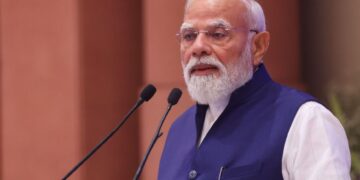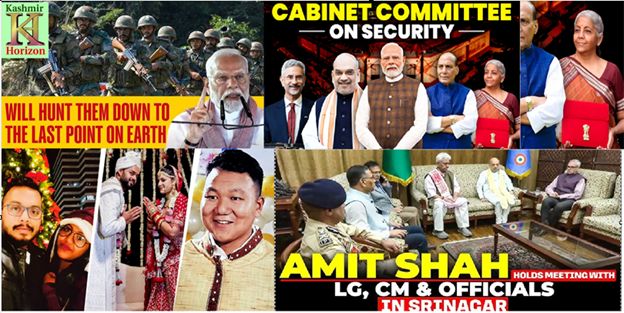
Srinagar: Prime Minister Narendra Modi this week delivered a strong and emotional response to the April 22 militant attack in Pahalgam that killed 26 civilians, including a large number of tourists. Addressing a massive rally in Madhubani, Bihar, Modi assured the nation that those behind the heinous act—both perpetrators and conspirators—would face retribution “beyond imagination.”
Opening his speech with a solemn moment of silence, Modi paid tribute to the victims and expressed the nation’s collective grief. “The pain of this attack is being felt in every corner of India, from Kargil to Kanyakumari,” he said. “These were not just tourists; they were sons, husbands, brothers, and loved ones whose lives were cut short by a mindless act of violence. In this hour of loss, the entire nation stands shoulder to shoulder with the bereaved families.” The Prime Minister declared that India’s unity, resilience, and determination would prevail over forces trying to disrupt its peace. He pledged a decisive and unwavering action plan to hunt down every individual responsible.
“Friends, today from the sacred soil, I say to the world—India will identify, track, and punish every militant and their backers. No one will be spared. We will pursue them to the ends of the earth,” Modi thundered, drawing loud applause from the gathering. While Modi refrained from explicitly naming Pakistan, his words carried an unmistakable warning. He emphasized that the remaining “ecosystem” of militancy must be dismantled. “The time has come to destroy every remaining breeding ground of militancy. The masterminds who plotted this cowardly assault will face consequences that they cannot even imagine,” he said. “The resolve of 140 crore Indians will now break the back of those who think they can harm us.”
Diplomatic Retaliation Begins: In a swift and coordinated move following the attack, New Delhi has initiated a series of retaliatory diplomatic measures aimed at Pakistan, which India suspects harbors militant groups operating in Kashmir. On Wednesday, the Ministry of External Affairs announced the downgrading of diplomatic ties with Islamabad. This includes the expulsion of Pakistani military officials from India, a suspension of key bilateral agreements such as the Indus Waters Treaty of 1960, and the closure of the Attari land transit route, a key point of people-to-people and goods exchange. Further tightening the screws, India suspended visa services for Pakistani nationals effective immediately and revoked all existing visas, with effect from April 27. Medical visas will remain valid until April 29. Pakistani citizens currently residing in India have been instructed to leave before their visa expiry dates. These steps mark one of the sharpest diplomatic offensives by India in recent years, reflecting the seriousness with which the government views the Pahalgam attack.
Nation Mourns, Grieves Together: The militant attack has sent shockwaves throughout the country, igniting grief and anger across states. Heart-wrenching scenes played out as last rites of the victims were performed in Odisha, Gujarat, Rajasthan, Karnataka, and other states. Images of grieving families—some clinging to coffins draped in the Indian tricolour, others holding framed photographs of their loved ones—captured the magnitude of the human loss. In towns and villages, candlelight vigils were held, and prayers were offered for the departed souls. Political leaders across the spectrum, religious groups, and ordinary citizens came together in solidarity. Many termed the Pahalgam attack as not just an assault on individuals but an attack on India’s idea of hospitality, culture, and collective spirit.
Global Support Pours In: Acknowledging the overwhelming international support India has received, Modi expressed gratitude to world leaders and citizens of different countries. “Everyone who believes in humanity stands with India today,” he said. “I thank the governments, leaders, and people across the globe who have shown solidarity with us in these difficult times. Their support strengthens our resolve to act decisively against militancy.” Several countries, including the United States, France, Japan, and Australia, issued strong condemnations of the attack, terming it a barbaric assault on innocent civilians. Global organizations, including the United Nations, also called for swift action against the perpetrators and for strengthening efforts to combat militancy across the region.
Peace, Development; A National Imperative: In his rally address, Modi reaffirmed the critical link between peace, security, and India’s aspirations for rapid development. “Friends, for India to develop at the pace we desire, peace and security are non-negotiable. We will ensure both, no matter what it takes. This is our solemn commitment to every citizen,” he said. Modi emphasized that India’s growing economic power, global standing, and aspirations for a better future would not be derailed by militant designs. He urged citizens to stay united, vigilant, and determined. “We must not allow fear to dictate our lives. India’s future will be built on courage, sacrifice, and collective strength,” he said.
Pahalgam Attack; A Grim Reminder: The Pahalgam incident has served as a grim reminder that militancy, though weakened over the years, still poses a serious threat to the fragile peace in Kashmir and to India’s internal security at large. Security experts have pointed out that the targeting of tourists is part of a deliberate strategy by militant groups to dent the region’s resurgent tourism sector, which had been witnessing record footfall after years of decline. The attack unfolded when a convoy of tourist vehicles traveling from Srinagar to Pahalgam was ambushed near a dense forest stretch. Armed militants opened fire indiscriminately, causing chaos and heavy casualties. Despite quick reaction teams arriving at the scene, the ambush left little room for rescue within the critical first few minutes. Authorities believe that a new hybrid group, made up of local recruits and foreign mercenaries, may have been behind the assault. Search operations are underway across several South Kashmir districts, with additional security forces deployed to secure highways, tourist hotspots, and major towns.
Road Ahead;No Room For Complacency: Analysts argue that India’s response must go beyond immediate retaliation and aim for a sustained strategy to dismantle militant networks, both at home and across borders. There is growing consensus that diplomatic isolation of Pakistan, tightening financial restrictions on militant groups, and strengthening counter-insurgency infrastructure in Kashmir are critical steps. At the same time, political outreach aimed at winning hearts and minds in the Valley will remain essential. “Security and engagement must go hand in hand. Otherwise, the cycle of violence risks repeating itself,” noted a former Indian Army officer who served in Kashmir. As the nation mourns the innocent lives lost in Pahalgam, it also stands at a defining moment. The path ahead demands unity, resilience, and a refusal to bow to the forces of violence. Prime Minister Modi’s message from Madhubani underlines a pivotal shift: India is determined not just to respond, but to rewrite the rules of engagement with those who challenge its peace. The attack may have shaken the conscience of the country, but it has also ignited a collective will—to remember, to resist, and to rebuild stronger than ever.
CM Omar led Govt approves land for mobile towers in underserved areas across J&K
Says “Initiative will help extend reliable connectivity to remote, border communities” Srinagar, | Oct: 06:The Jammu and Kashmir Government, headed...
Read moreDetails