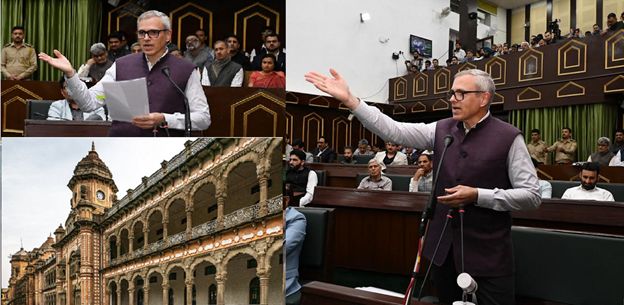
“45 heritage projects are currently in progress, with an additional 73 sites identified for conservation under Phase-II of the UT-level heritage revival scheme. Government is committed to protect religious and cultural landmarks. Our heritage is a testament to our history and identity. Through these initiatives, we aim to revive the cultural glory of J&K”
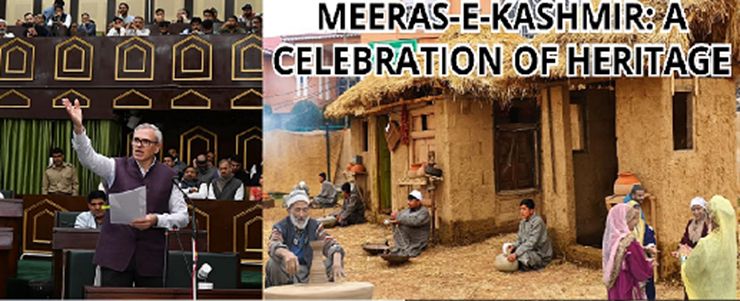
In a resolute effort to preserve and rejuvenate the rich cultural and historical legacy of Jammu and Kashmir, the Government has embarked on an ambitious heritage conservation journey. Chief Minister Omar Abdullah, who also holds the portfolio of the Department of Culture, announced this week that 45 heritage projects are currently in progress, with an additional 73 sites identified for conservation under Phase-II of the UT-level heritage revival scheme. Addressing the Legislative Assembly, CM Omar highlighted the importance of safeguarding Jammu and Kashmir’s architectural heritage, emphasizing the Government’s commitment to protecting religious and cultural landmarks. “Our heritage is a testament to our history and identity. Through these initiatives, we aim to revive the cultural glory of J&K,” he said.
Progress In Heritage Conservation: Under the capital expenditure (CAPEX) budget, 15 heritage projects were undertaken between 2019 and 2024. Additionally, 33 projects under the first phase of the Government scheme launched in 2022 are currently underway. The Government has also initiated seven crucial projects for the Mubarak Mandi Heritage Complex in Jammu, a site of immense historical importance. CM Omar said that Rs 310.71 crore has been sanctioned for CAPEX and the UT-level scheme for the first and second phases. Out of this, Rs 86.40 crore has been utilized so far. The comprehensive approach includes architectural restoration, digital documentation, and community engagement to ensure long-term sustainability.
Mubarak Mandi Heritage Complex; A Jewel In Restoration: The Mubarak Mandi Heritage Complex, once the royal residence of the Dogra dynasty, is a key focus of the Government’s conservation efforts. Rs 59.69 crore has been sanctioned for seven projects at the complex, with Rs 17.70 crore worth of work already completed. Overlooking the Tawi River, the complex holds immense architectural and historical value. Declared a protected monument in 2005, the Mubarak Mandi Jammu Heritage Society (MMJHS) was constituted in 2006 to oversee its preservation. The first vision document for its conservation was prepared by INTACH in 2008, with a comprehensive master plan approved in 2019. The complex has been divided into six zones, including a Public Zone, Knowledge Centre, and Crafts Bazaar.
Broader Conservation Efforts Across J&K: Highlighting the broader efforts, CM Omar said that the Government is committed to the holistic revival of heritage sites across the region. Legal protection is ensured through the Directorate of Archives, Archaeology, and Museums. Systematic surveys are conducted to identify historical monuments needing urgent restoration. “We are leveraging modern technology, including 3D mapping and digital archiving, to document heritage sites. Ancient manuscripts are being digitized for future generations,” CM Omar said.
Projects Under CAPEX Budget: The CAPEX budget has facilitated the restoration of several prominent sites, including:
- Mansar Haveli, Samba – ₹61 lakh (₹19.61 lakh spent)
- Samba Fort, Samba – ₹113.57 lakh (₹77.91 lakh spent)
- General Zorawar Singh Palace, Reasi – ₹104.92 lakh (₹0.81 lakh spent)
- Narstahan Monument, Tral, Pulwama – ₹172.29 lakh (₹107.60 lakh spent)
- Old SPS Museum Building, Srinagar – ₹252.40 lakh (₹208.28 lakh spent)
These efforts reflect the Government’s commitment to preserving not only monuments but also the stories they hold.
Promoting Heritage Tourism: Tourism is a vital part of Jammu and Kashmir’s economy, and heritage tourism has immense potential to attract visitors. The Government’s focus on preserving historical sites is expected to boost tourism, create jobs, and foster economic development. “Tourists today seek more than just scenic beauty; they want to experience the culture and history of a place. Our heritage sites will offer them a glimpse into our rich past,” CM Omar noted.
Challenges, Community Involvement: While the Government is making significant progress, challenges such as funding constraints and execution delays have hindered some projects. Despite the lack of direct funding from the Government of India, the UT administration continues to utilize CAPEX funds and dedicated schemes to keep the momentum going. “Community involvement is crucial for sustainable heritage conservation. Local communities are the custodians of our cultural legacy, and their participation ensures that restoration efforts are rooted in authenticity,” said an official from the Department of Culture.
Impact Of Conservation On Cultural Identity: Restoring heritage sites goes beyond preserving structures; it reinforces cultural identity. Religious and cultural heritage sites reflect the diverse history of Jammu and Kashmir, fostering a sense of pride among its people. “Heritage conservation is not just about walls and stones; it’s about preserving our roots. It’s a way of telling our future generations who we are and where we come from,” said a local historian.
Future Plans, Sustainability: The Government has prepared detailed project reports for the 73 identified sites under Phase-II. These include forts, religious places, and heritage buildings. The focus remains on ensuring long-term sustainability through adaptive reuse, where heritage buildings are repurposed for cultural events, museums, and community spaces. Climate change and urbanization pose additional threats to heritage sites. The Government is conducting climate impact assessments and implementing measures to protect these sites from natural disasters.
Encouraging Youth Participation: Youth engagement is an essential part of the Government’s heritage revival strategy. Skilling initiatives and educational programs are being organized to inspire young people to take pride in their heritage. “Our youth must be the torchbearers of our cultural legacy. By involving them in heritage conservation, we ensure that our traditions continue to thrive,” CM Omar emphasized.
“As Jammu and Kashmir strides towards a future that respects its past, the ongoing and upcoming heritage conservation projects stand as symbols of resilience and renewal. By protecting its cultural landmarks, the region is not just preserving buildings but also nurturing the soul of its civilization. “Our heritage is our identity. Preserving it is not just a duty; it is a legacy we leave for generations to come”
A Vision For The Future: As Jammu and Kashmir continues its journey of heritage revival, the Government’s commitment remains steadfast. With 45 projects in progress and 73 more on the horizon, the region is poised to become a beacon of cultural heritage in India. “Preserving our heritage is a responsibility we owe to our ancestors and our future generations. Through these efforts, we aim to create a vibrant, culturally rich Jammu and Kashmir that stands as a testament to our glorious past,” CM Omar concluded. The path ahead for heritage conservation in Jammu and Kashmir involves a multi-faceted approach that integrates preservation with sustainable development. The Government aims to leverage public-private partnerships (PPP) to accelerate the completion of ongoing projects and initiate new ones. By engaging corporate stakeholders and non-Governmental organizations (NGOs), funding constraints can be mitigated, ensuring a steady flow of resources. Technology will continue to play a crucial role in the way forward. Digital tools such as 3D mapping, virtual reality (VR) tours, and Geographic Information Systems (GIS) will not only document heritage sites but also enhance their accessibility for researchers, tourists, and the general public. Moreover, adaptive reuse of heritage buildings for cultural events, museums, and community spaces will ensure their relevance in modern society. Education and community involvement remain cornerstones of the Government’s strategy. Workshops, heritage walks, and school programs are being organized to instill a sense of ownership and pride among the youth. Special focus is being placed on training local artisans and craftsmen to ensure the continuity of traditional skills. Furthermore, environmental sustainability is being prioritized. Climate change impact assessments are integral to conservation planning, with measures in place to safeguard heritage sites from natural disasters and urban encroachment. Developing eco-friendly tourism models around heritage sites will help balance conservation efforts with economic benefits. The Government also plans to introduce legislative reforms to enhance the legal protection of heritage sites. Stricter penalties for vandalism and encroachment, coupled with incentives for private conservation efforts, will create a more robust framework for heritage preservation.
Kashmir Horizon View: The journey of heritage revival in Jammu and Kashmir is a testament to the region’s rich cultural tapestry and the Government’s unwavering commitment to preserving it for future generations. With 45 projects in progress and 73 more identified, the initiative reflects a holistic approach that blends tradition with modernity. Heritage conservation is not merely about restoring old structures; it is about keeping history alive. It provides a window into the past, offering valuable lessons and a sense of identity to the present and future generations. The revival of sites like the Mubarak Mandi Heritage Complex not only honors the legacy of the Dogra dynasty but also serves as a beacon for cultural pride. Challenges such as funding gaps and execution delays persist, but the Government’s adaptive strategies and community involvement offer hope for overcoming these hurdles. The emphasis on digital documentation, sustainable tourism, and youth engagement ensures that the initiative is forward-looking. As Jammu and Kashmir strides towards a future that respects its past, the ongoing and upcoming heritage conservation projects stand as symbols of resilience and renewal. By protecting its cultural landmarks, the region is not just preserving buildings but also nurturing the soul of its civilization. “Our heritage is our identity. Preserving it is not just a duty; it is a legacy we leave for generations to come,” CM Omar Abdullah added.
(In commitment to continuous improvement the “Team Kashmir Horizon” invites it’s valuable readers to share their valuable feedback and suggestions with the “Team Kashmir Horizon”. The insights of readers will surely play a vital role in improving the content quality of “Kashmir Horizon” and contribute more for the empowerment of people. Please feel free to reach out to us at editor@ thekashmirhorizon.com. Team “Kashmir Horizon” eagerly anticipates thoughts and ideas of it’s readers, which will help us serve people and even more effectively. The inputs of valuable readers are highly valued as “Kashmir Horizon” strives to provide it’s readers the best possible experience.)