• Agricultural Reforms, HADP to Boost Farm Incomes
• Youth, Women Key to Rural Economic Transformation
• Urges Youth to Preserve Dogra Language, Traditions
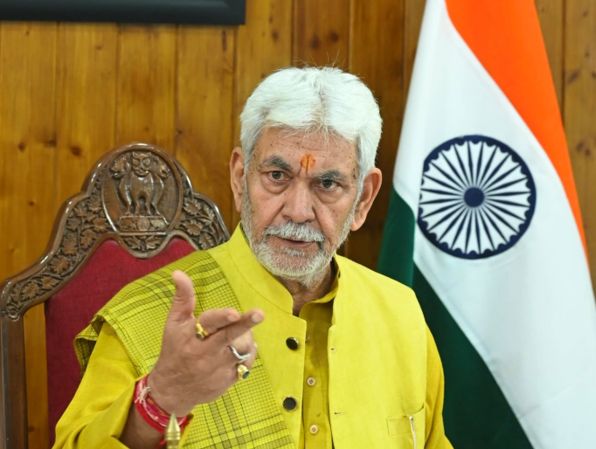
Jammu | Nov, 24: Lieutenant Governor Manoj Sinha on Tuesday called for strengthening the agricultural economy, empowering farmers and preserving Dogra cultural heritage while addressing the annual Jhiri Mela, where he paid homage to Baba Jitto and Bua Kaudi.
Describing the annual fair as a symbol of faith, cultural heritage and collective consciousness, Sinha said Baba Jitto’s sacrifice represented the struggle for farmers’ dignity, rights and self-respect.
He said Baba Jitto’s message transcended caste, class and community and formed part of the country’s shared heritage. His struggle, he added, was not merely about a crop but about standing against injustice and protecting the dignity of hardworking farmers.
Calling for a collective approach to development, the LG said building a developed Jammu and Kashmir was essential to contributing towards a developed India. He stressed that truth, hard work and mutual respect must remain the foundation of society.
Highlighting the contribution of farmers, Sinha said every individual must remember the hard work of those who bring food to the table.
He referred to the impact of the Holistic Agriculture Development Programme (HADP), saying agricultural reforms, modern infrastructure, diversification and market-oriented interventions were creating new opportunities in agriculture, horticulture and dairy sectors.
He urged farmers, particularly small and marginal cultivators, to adopt modern technologies and align production with emerging market requirements.
The LG also advocated greater millet cultivation, describing it as a climate-resilient option amid irregular rainfall, rising temperatures and declining groundwater levels.
Calling upon young people to explore opportunities in agriculture and allied sectors, Sinha said technology, entrepreneurship and scientific farming practices could make agriculture more productive and profitable.
He said Jammu and Kashmir’s agricultural landscape offered considerable scope for innovation and employment, urging youth to view farming as a viable economic opportunity rather than merely a traditional occupation.
Highlighting women’s contribution, he said women farmers, self-help groups and rural entrepreneurs were increasingly driving economic self-reliance.
He pointed to their growing involvement in handicrafts, local products, food processing and small enterprises, and called for greater opportunities in education, skill development and entrepreneurship for rural women.
Emphasising the importance of cultural identity, Sinha urged young people to take pride in their language, folk traditions and regional history.
He called upon youth to interact with elders, learn traditional songs and folk tales and document local history using digital platforms to preserve Dogra heritage for future generations.
He said technology could help introduce the region’s cultural identity to audiences across the country and the world.
The LG said the administration was making continuous efforts to improve infrastructure and ensure the smooth organisation of the annual fair.
During the visit, he inspected exhibition stalls set up by government departments, agricultural entrepreneurs, self-help groups and farmers. A short play depicting the lives of Baba Jitto and Bua Kaudi, along with cultural performances, formed part of the programme.
The event was attended by Member of Parliament Jugal Kishore Sharma, MLAs Surinder Kumar and Prof. Gharu Ram Bhagat, Additional Chief Secretary Chandraker Bharti, Divisional Commissioner Jammu Vikas Kundal, IGP Jammu Tejinder Singh and other senior officials, progressive farmers and prominent citizens.
Meanwhile, in a separate development, the J&K Government has approved the transfer of 320 kanals and four marlas of land to the Agriculture Production Department for establishing modern fruit and vegetable markets in Baramulla, Pulwama and Kulgam.
The proposed facilities include 50 kanals at Palhallan in Baramulla, 20 kanals and four marlas at Nowdal in Pulwama and 250 kanals at Kulgam.
The markets are expected to provide organised marketing facilities, electronic weighing, digital payments, grading, sorting, storage and transportation infrastructure, helping reduce post-harvest losses and improve farmers’ access to remunerative prices.
The initiative is also expected to strengthen agricultural supply chains and generate employment in trading, logistics and allied activities.