Centre shoulders 90 per cent of rooftop solar subsidy in J&K,
Leaving UT contribution at a modest 9.5 per cent
Installations surge but affordability, delayed payments & weak local incentives raise questions over administration’s commitment
Srinagar|Nov, 20 : Jammu and Kashmir wants its households to embrace solar energy, reduce dependence on the electricity grid and move towards cleaner power. But when it comes to putting its own money behind that ambition, the Union Territory’s contribution appears considerably less ambitious.
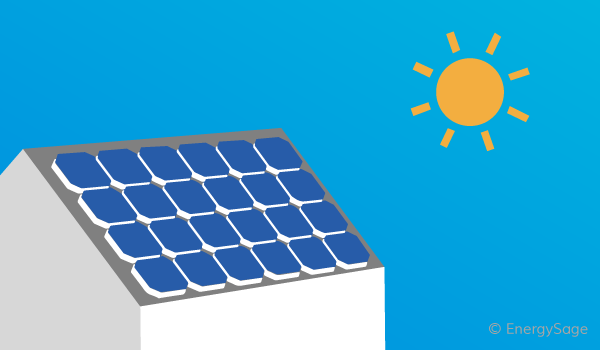
Under the Pradhan Mantri Surya Ghar: Muft Bijli Yojana, the Centre provides up to Rs 85,800 in financial assistance to an eligible household in Jammu and Kashmir for installing a three-kilowatt rooftop solar system. The UT Administration adds just Rs 9,000, taking the combined subsidy to Rs 94,800.
The contrast becomes difficult to ignore when J&K is compared with Ladakh. Despite sharing the same broad special-category central subsidy structure, Ladakh provides an additional Rs 50,000 from its own resources for a three-kW installation, taking the total assistance to Rs 1,35,800. J&K provides Rs 41,000 less.
Delhi, meanwhile, offers an additional State subsidy of Rs 78,000, taking the combined assistance to Rs 1,63,800, subject to the applicable scheme conditions.
The disparity raises a fundamental question: if solar energy is a strategic necessity for a power-deficit region such as Jammu and Kashmir, why is its own financial commitment so limited?
The figures reveal an uncomfortable imbalance. Of the Rs 94,800 subsidy available for a three-kW residential installation in J&K, the Union Government bears approximately 90.5 per cent, while the UT contributes only 9.5 per cent.
In other words, the solar transition in J&K is being financed overwhelmingly by the Centre, with the local administration contributing a relatively small amount despite the region’s particular energy challenges.
The comparison with Ladakh is particularly significant. Both regions face difficult geographical conditions, seasonal variations, logistical constraints and a need to strengthen energy security. Yet their approaches to incentivising household solar adoption are markedly different.
Ladakh’s Power Development Department has introduced an additional subsidy of Rs 20,000 per kW for the first two kW and a further amount that takes its total UT contribution to Rs 50,000 for a three-kW installation.
Consequently, a household in Ladakh can receive total financial assistance of Rs 1.35 lakh, against Rs 94,800 in J&K.
The difference is not merely a matter of accounting. It directly affects the amount a household must arrange from its own pocket.
According to the indicative cost structure published by Jammu and Kashmir Bank, a three-kW rooftop solar installation costs Rs 1.59 lakh. After the combined subsidy of Rs 94,800, the beneficiary’s indicative contribution stands at Rs 64,200.
Under Ladakh’s published subsidy structure, the same central assistance combined with its higher UT contribution would leave a substantially smaller financial burden, assuming an equivalent installation cost.
J&K’s lower contribution is therefore a policy choice that deserves public scrutiny, particularly when the administration is encouraging households to invest in renewable energy.
The problem is not that J&K has made no progress. In fact, the pace of installations has accelerated considerably.
According to the State/UT-wise data submitted by the Ministry of New and Renewable Energy in Parliament, J&K had recorded 560 rooftop solar installations during February-December 2024.
The number increased dramatically to 17,939 during 2025. Another 6,661 installations were recorded between January 1 and March 5, 2026.
This means J&K recorded 25,160 installations across these three reporting periods, including more than 24,000 during 2025 and the first two months of 2026.
The acceleration is encouraging, but it also exposes the scale of the untapped opportunity.
As of December 31, 2025, J&K had 18,497 installations benefiting 18,505 households, against 5.15 lakh installations in Gujarat, 3.91 lakh in Maharashtra and 3.26 lakh in Uttar Pradesh.
While the Centre provides financial assistance of up to ₹78,000 for a 3 kW residential rooftop solar system in general-category States and ₹85,800 in special-category regions such as J&K, several governments have announced substantial additional subsidies from their own resources.
Delhi, for instance, provides an additional ₹78,000, taking the total assistance to ₹1.56 lakh. Odisha offers an additional ₹60,000, while Goa’s reported top-up is ₹62,500. Uttar Pradesh and Bihar have also announced additional assistance of ₹30,000 and ₹20,000 respectively. Ladakh, meanwhile, provides an additional ₹50,000, taking the combined assistance to ₹1.35 lakh for an eligible 3 kW system.
Against this backdrop, Jammu and Kashmir’s additional contribution of ₹3,000 per kW, capped at ₹9,000, appears comparatively low. With the Centre’s ₹85,800 assistance, an eligible household in J&K receives a total subsidy of ₹94,800—₹41,000 less than the assistance available in Ladakh and substantially below the reported packages in Delhi, Goa and Odisha.
On March 31, 2026, Chief Minister Omar Abdullah informed the House that Rs 3.80 crore had been disbursed as the UT subsidy among 4,288 beneficiaries.
Of this, Rs 1.80 crore went to 2,053 beneficiaries under the Kashmir Power Distribution Corporation Limited, while Rs 2 crore was disbursed among 2,235 beneficiaries under the Jammu Power Distribution Corporation Limited.
The Chief Minister acknowledged that delays in releasing the UT component, wherever applicable, were primarily linked to verification of installations, scrutiny of supporting documents and integration of the disbursement process with the National Portal.
He assured the House that pending amounts would be released after completion of the necessary formalities.
However, this explanation points towards another challenge confronting the scheme: a subsidy is meaningful only when it reaches the beneficiary within a reasonable period.
For households that have already invested substantial amounts in rooftop solar systems, delays in receiving the promised assistance can undermine confidence in the programme.
The administration must therefore make the disbursement process transparent, publish the number of pending claims and establish a time-bound mechanism for clearing eligible payments.
There is another dimension to J&K’s solar story that deserves attention.The UT has made considerable progress in solarising government buildings. According to data placed before Parliament, 5,548 government buildings in J&K had been solarised with a cumulative rooftop solar capacity of 49.90 MW as of November 4, 2025.
This is a significant achievement, particularly when compared with Ladakh, which had solarised 990 government buildings with an installed capacity of 5.06 MW.
However, the numbers also expose a distinction between government-led installations and household adoption.
Under PM Surya Ghar, central financial assistance is meant for eligible residential consumers. Government buildings do not receive the same central subsidy under the scheme. Their solarisation requires separate funding and implementation arrangements.