Move Beyond Comfort of Domestic Market, Compete Globally
Put ‘India First’ in Investment Strategies for Next Two Decades
India Fastest-Growing Economy, 50 Cr Lifted Out of Poverty, Global Data Reveals It
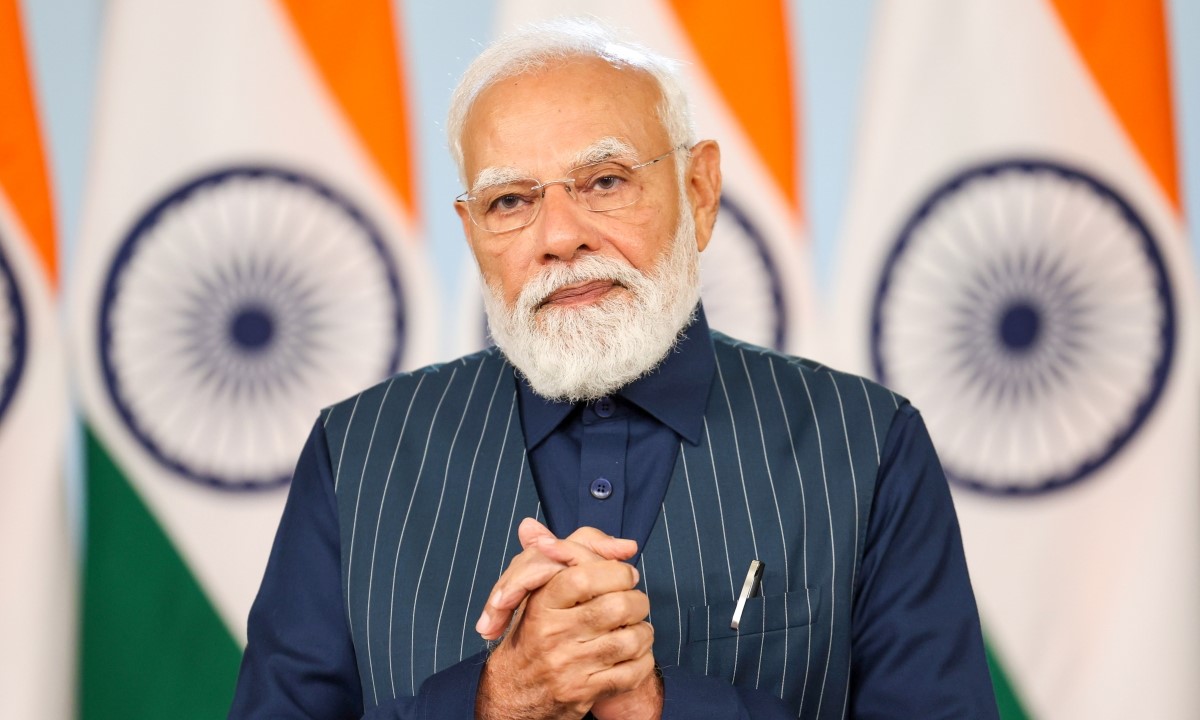
New Delhi| Nov, 19 : Prime Minister Narendra Modi on Thursday called on Indian industry to raise product quality standards, expand its international presence and move beyond the comfort of a large domestic market, stressing that businesses must offer Indian consumers the same quality of products that they export to global markets.
Addressing the annual convention of the industry body FICCI, Modi cautioned India Inc against treating the country’s 140-crore population as a guaranteed market for products of any standard.
Pointing to the continued use of the term ‘export quality’ as a selling pitch in India, he questioned why domestic consumers should have to settle for products that do not meet the highest quality benchmarks. He urged businesses to make quality improvement a priority and compete more aggressively in international markets.
The Prime Minister also invited industry leaders to openly suggest further reforms that could accelerate India’s economic growth, assuring them that the government was receptive to feedback.
Taking a swipe at the experience of businesses under previous administrations, PM Modi said, “The industry should not hesitate to communicate its concerns or recommendations to the present government, which he described as a government of friends.”
Emphasising the importance of long-term business decisions, Modi urged corporates to place ‘India First’ at the centre of their investment strategies over the next two decades.
“Such an approach would strengthen the country’s self-reliance while creating fresh opportunities for businesses,” he said. He also called on industry leaders to increase investments in agriculture and allied sectors, noting that these areas would be important for India’s future growth.
Highlighting the country’s economic progress over the past 12-13 years, Modi said India had witnessed rapid economic expansion alongside a significant reduction in poverty. Referring to a recent World Bank report, he said nearly 50 crore people had moved out of poverty during this period.
The Prime Minister also highlighted tax reforms undertaken by his government, pointing out that the basic corporate tax rate had been brought down from 30 per cent in 2014 to 22 per cent. He further noted that individuals earning up to Rs 12 lakh annually were now exempt from income tax under the new tax regime.
However, while acknowledging the tax relief extended to businesses, Modi questioned whether companies had translated these benefits into higher employee strength and better wages. He stressed that economic progress must be inclusive and that businesses should contribute to improving employment opportunities and incomes.
He further said a nation’s development depended on recognising the contribution of farmers, small entrepreneurs, industries, wealth creators and taxpayers. Respecting these stakeholders, rather than engaging in constant criticism, was essential for building a stronger economy, he added.
On India’s external economic performance, Modi said the country continued to be the world’s fastest-growing major economy, with growth projected at around 7 per cent. He also highlighted that merchandise exports touched nearly USD 50 billion in October, marking the highest monthly figure on record.
The Prime Minister attributed the improvement in India’s growth outlook to its economic performance, noting that international institutions and rating agencies, including Moody’s Ratings, S&P Global Ratings, Fitch Ratings, the World Bank and the Asian Development Bank, had revised their growth projections upwards.
The Prime Minister also invited industry leaders to openly suggest further reforms that could accelerate India’s economic growth, assuring them that the government was receptive to feedback.
Emphasising the importance of long-term business decisions, Modi urged corporates to place ‘India First’ at the centre of their investment strategies over the next two decades.
He said, “Such an approach would strengthen the country’s self-reliance while creating fresh opportunities for businesses.”