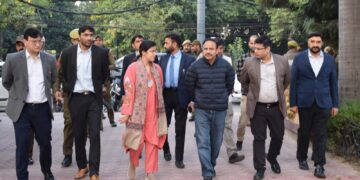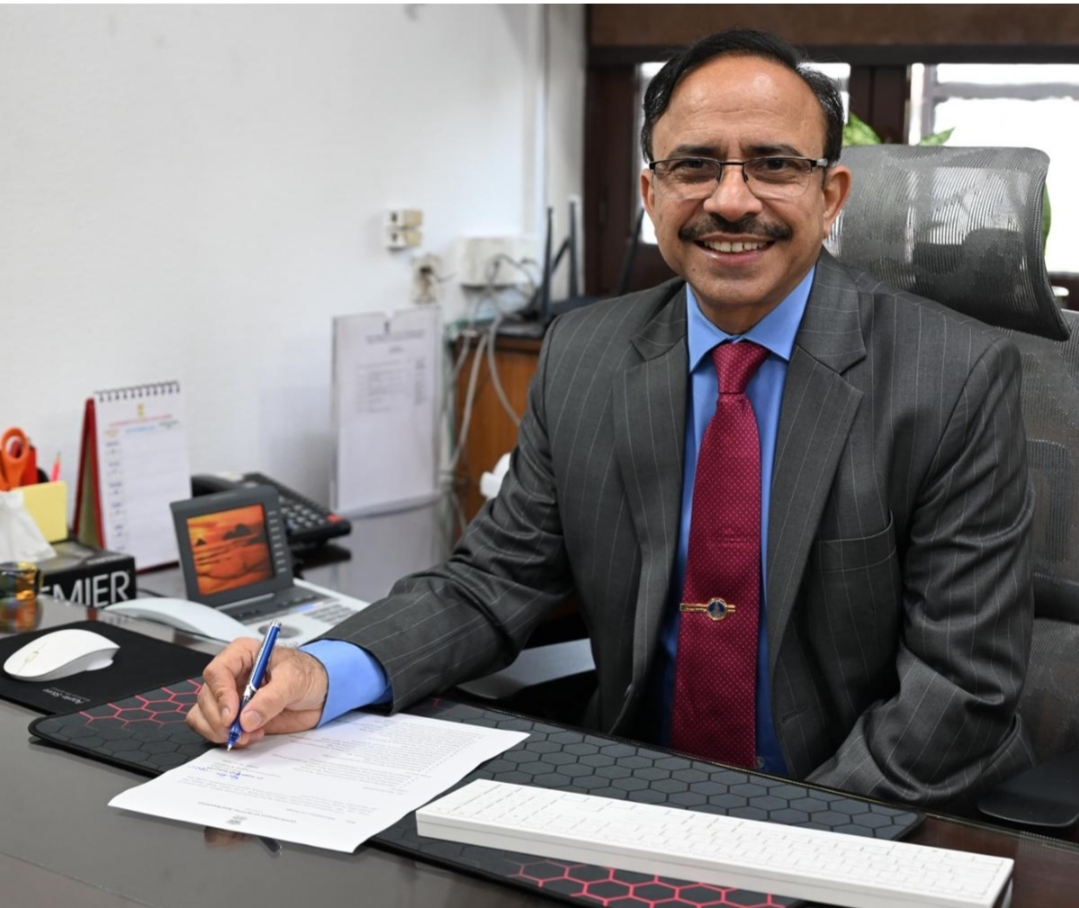
Srinagar, November 20: Welcoming Dr Sajjan Singh Yadav, IAS, as the new Chief Secretary of Jammu & Kashmir, Ahmad Ayaz, a prominent social activist and political analyst, has expressed hope that his tenure will bring renewed focus on good governance, transparency, administrative accountability and efficient public service delivery.
Ayaz said that as the administrative head of the Union Territory, the Chief Secretary has a pivotal responsibility to ensure that governance translates into tangible improvements in the everyday lives of ordinary citizens, rather than remaining confined to official meetings, government orders, file movements and departmental reviews.
He said several critical areas deserve immediate administrative attention:
1. Effective and Time-bound Grievance Redressal: Every department must have a dedicated, accessible and responsive grievance redressal mechanism like Srinagar Municipal Corporation Srinagar and Kashmir Power Development Corporation . Public complaints should be monitored regularly and resolved within stipulated timelines. Merely forwarding complaints from one office to another or marking them as disposed of without addressing the actual grievance defeats the very purpose of the system.
2. Effective Implementation of the Public Services Guarantee Act: Statutory timelines prescribed for the delivery of public services must be strictly enforced. For instance, a Fard (revenue extract), which is required to be issued within the prescribed 10-day timeline, often takes considerably longer at Tehsil offices. Such delays defeat the purpose of the legislation. Responsibility must be fixed wherever timelines are violated without valid justification.
3. Uniform and Hassle-free Implementation of Government Schemes: All government schemes and welfare programmes must reach eligible beneficiaries fairly, uniformly and within stipulated timelines across every district. Citizens should not face unnecessary bureaucratic hurdles, repeated visits to government offices or dependence on personal influence to access their legitimate entitlements.
4. Combating Corruption Through Systemic Reforms: Corruption remains a serious challenge to effective governance in J&K. Addressing it requires sustained institutional intervention, transparency in decision-making, regular field inspections and strict accountability at every level. Action must not be selective or confined to lower-ranking employees. Supervisory and senior officers must also be held answerable for persistent irregularities and administrative failures.
5. Performance-based Assessment and Administrative Accountability: The performance of departments and officers should be assessed on actual service delivery and results on the ground, rather than merely the number of files processed, meetings conducted or official reports submitted. Regular performance audits and measurable service-delivery indicators should form an integral part of administrative reviews.
6. Uniformity, Fairness and Integrity in Governance: There must be no selective application of rules, preferential treatment or arbitrary exercise of administrative discretion. Government policies, decisions and welfare measures must be implemented consistently and fairly across the Union Territory. Transparency, integrity, impartiality and fairness must guide every administrative decision.
Ayaz said the new Chief Secretary has an important opportunity to strengthen public confidence in the administration through visible, measurable and result-oriented interventions. This requires not merely reviewing departmental performance from offices, but also undertaking regular field assessments and directly evaluating the difficulties faced by citizens.
He emphasised that the ultimate test of good governance is not how efficiently the government functions within its offices, but how effectively it responds to the needs, expectations and grievances of ordinary people.
Ayaz wished Dr Sajjan Singh Yadav IAS a productive and successful tenure, expressing hope that people-centric governance, transparency, integrity, fairness and accountability would remain at the centre of his administrative priorities.